Engineering
There are 10 times more engineers and technicians employed by CERN than research physicists. Why?
The physics programme at CERN presents engineers with varied challenges at the forefront of technology, from the atomic scale to the colossal. Engineers build and test the machines and systems that physicists rely on, and technicians to keep these systems running smoothly, performing repairs and upgrades where necessary.
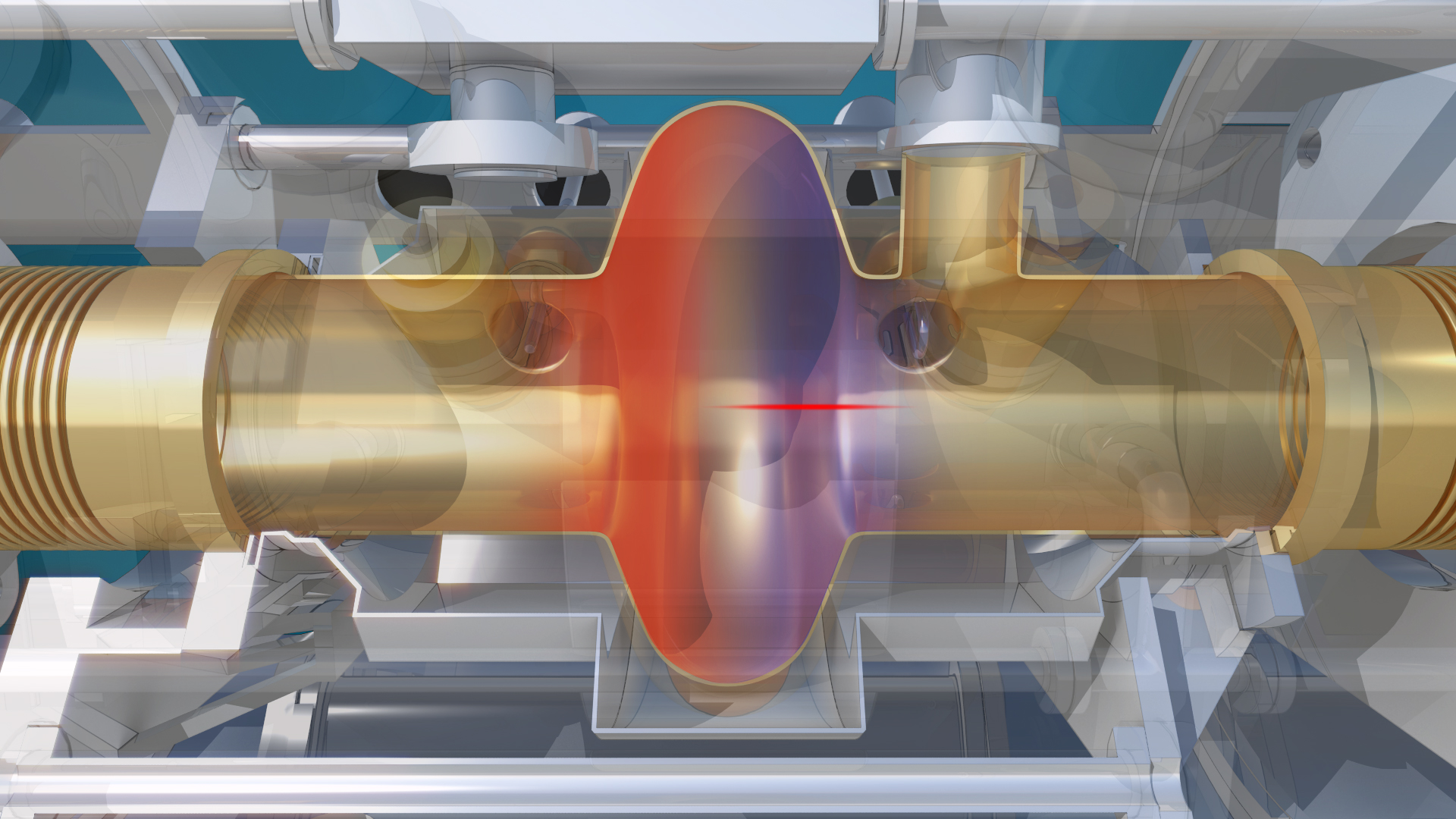
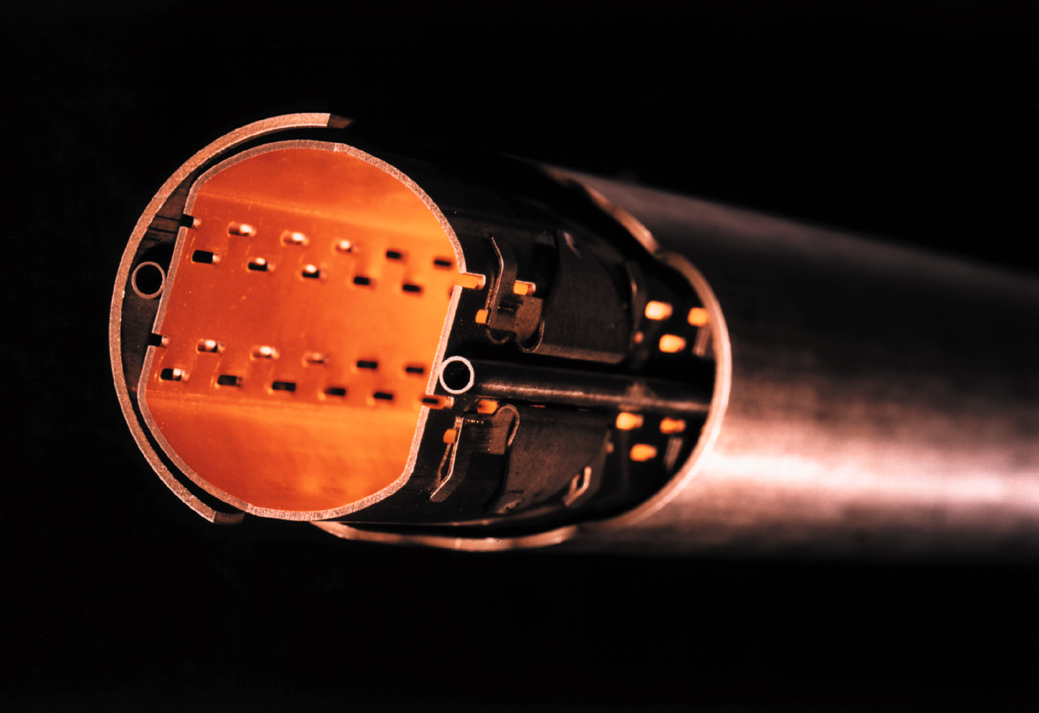
Building a particle accelerator, for example, can require civil engineering: digging tunnels and installing large infrastructure projects. Other engineers and technicians assemble components: radiofrequency cavities must be crafted to just the right shape and size to boost particles along accelerators; thousands of huge, custom-built electromagnets focus particle beams and guide them around bends in circular accelerators; and the world's largest cryogenic system cools magnets on the Large Hadron Collider (LHC) to close to absolute zero, so that the wires supplying their electricity can work in a superconducting state, without losing energy to resistance.
Detectors present other engineering challenges. Their components and subsystems are designed, built and tested separately, before they are joined together to work in harmony. Kilometres of wiring and thousands of electrical components make particle detectors a complex feat of engineering.
Engineers are vital to CERN's activities – to push the boundaries of experimental physics, they're building some of the most advanced machines in the world.
Engineering
Cryogenics: Low temperatures, high performance
CERN's cryogenic systems cool over 1000 magnets on the LHC to temperatures close to absolute zero, where matter takes on some unusual properties
Pulling together: Superconducting electromagnets
Particles zipping round the LHC at close to the speed of light must follow precise paths. Powerful magnets keep the beams stable, accurate and safe
Powering CERN
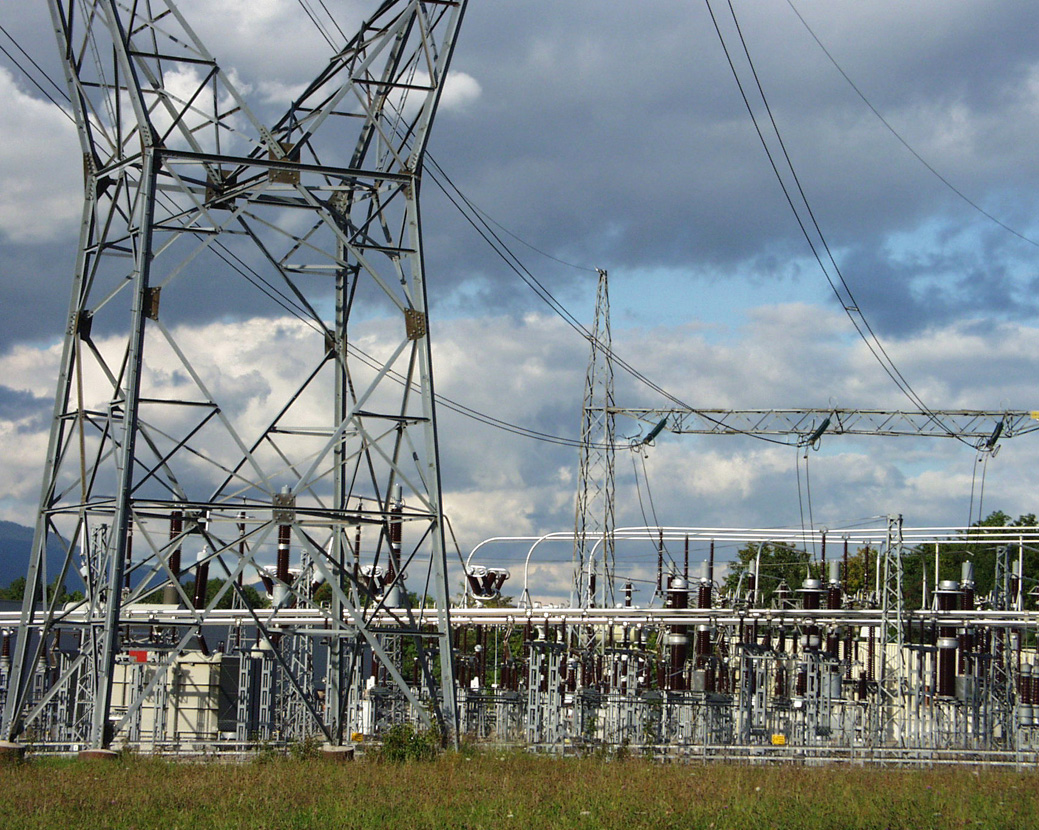
It takes a lot of electricity to power the world's largest scientific experiment – but superconducting wires can help keep those energy costs down
A vacuum as empty as interstellar space
With the first start-up of beams in 2008, the Large Hadron Collider (LHC) became the biggest operational vacuum system in the world
Radiofrequency cavities
Metallic chambers along particle accelerators contain electromagnetic fields that accelerate passing particles in tightly controlled bunches
Stochastic cooling
Simon van der Meer invented the stochastic cooling technique at CERN to reduce the energy spread and angular divergence of beams of charged particles
Superconductivity
Below a certain temperature, materials enter a superconducting state and offer no resistance to the passage of electrical current
Storing antimatter
Because antimatter annihilates in a flash of energy when it interacts with regular matter, storing it presents a challenge
Restarting the LHC: Why 13 Tev?
The LHC was designed to run at a maximum collision energy of 14 TeV, so why has CERN decided to start the second run at a lower energy?