
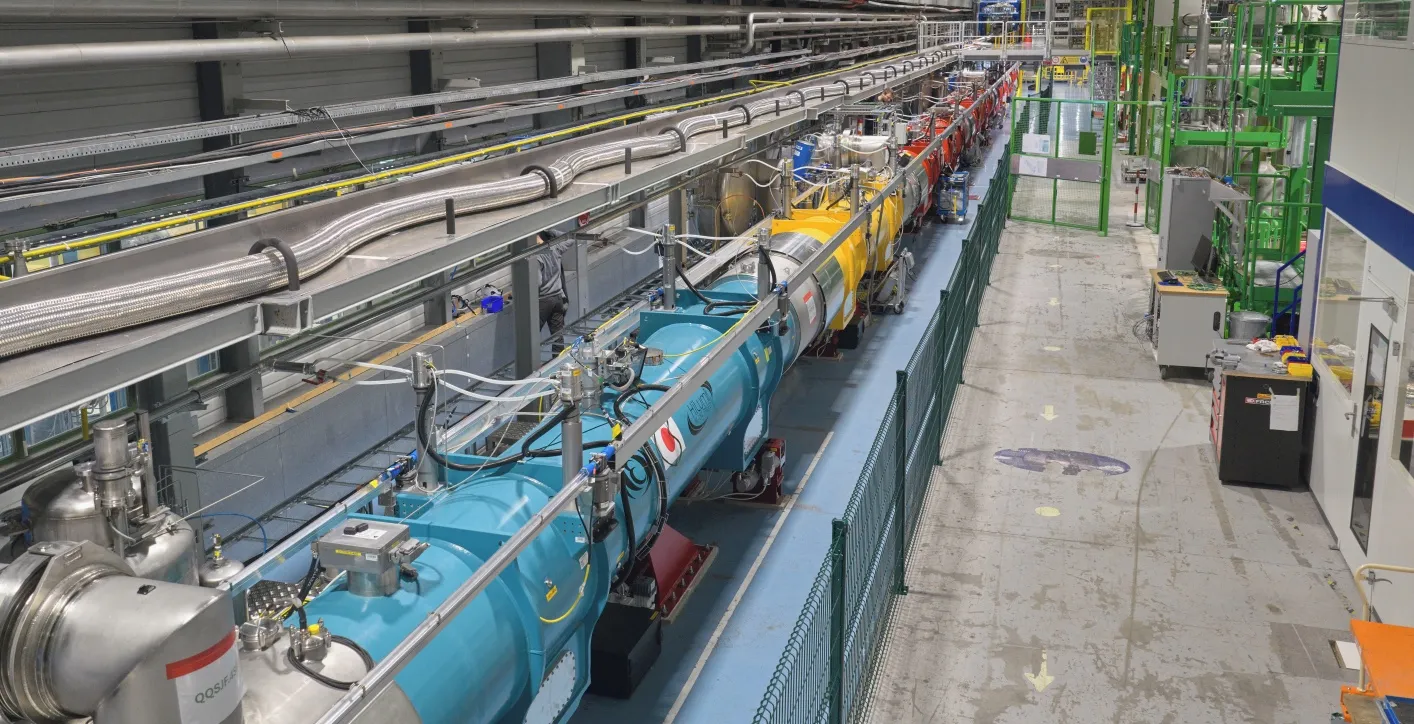
HiLumi LHC media kit
Resources for journalists about the HiLumi LHC Project
The High-Luminosity Large Hadron Collider (HiLumi LHC)
HiLumi LHC is a major upgrade of CERN’s existing 27‑kilometre Large Hadron Collider on the French–Swiss border, designed to deliver about ten times more collisions and data than the LHC’s original design. HiLumi LHC will start operations around 2030 and run into the 2040s.
By producing far more collisions, the HiLumi LHC will allow physicists to measure the Higgs boson in much greater detail, study extremely rare processes and increase the chances of spotting signs of new physics beyond the Standard Model. When in operation, the HiLumi LHC is expected to produce at least 15 million Higgs bosons per year, compared to around three million recorded during LHC operation in 2017, giving researchers a much sharper picture of how fundamental particles behave.
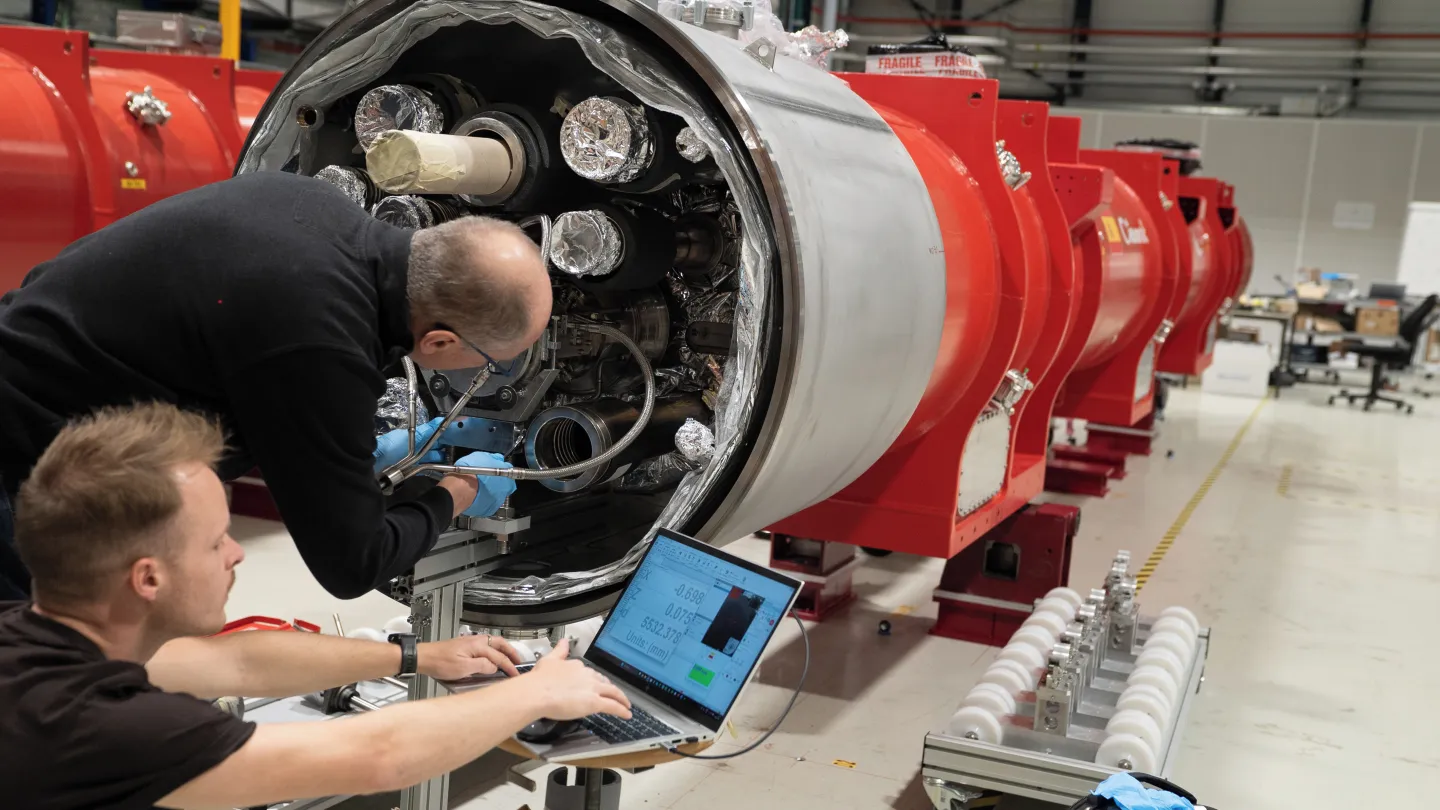
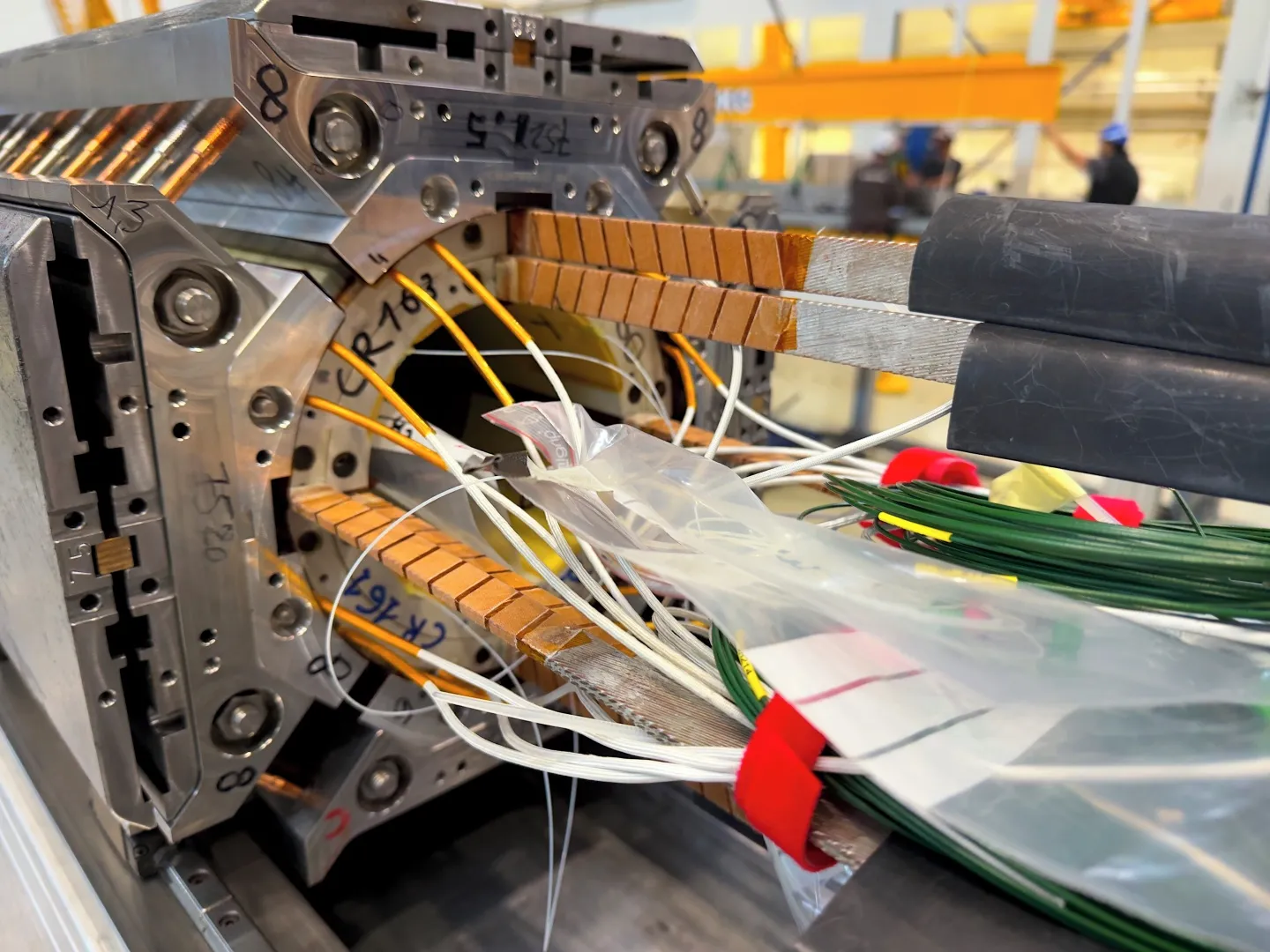
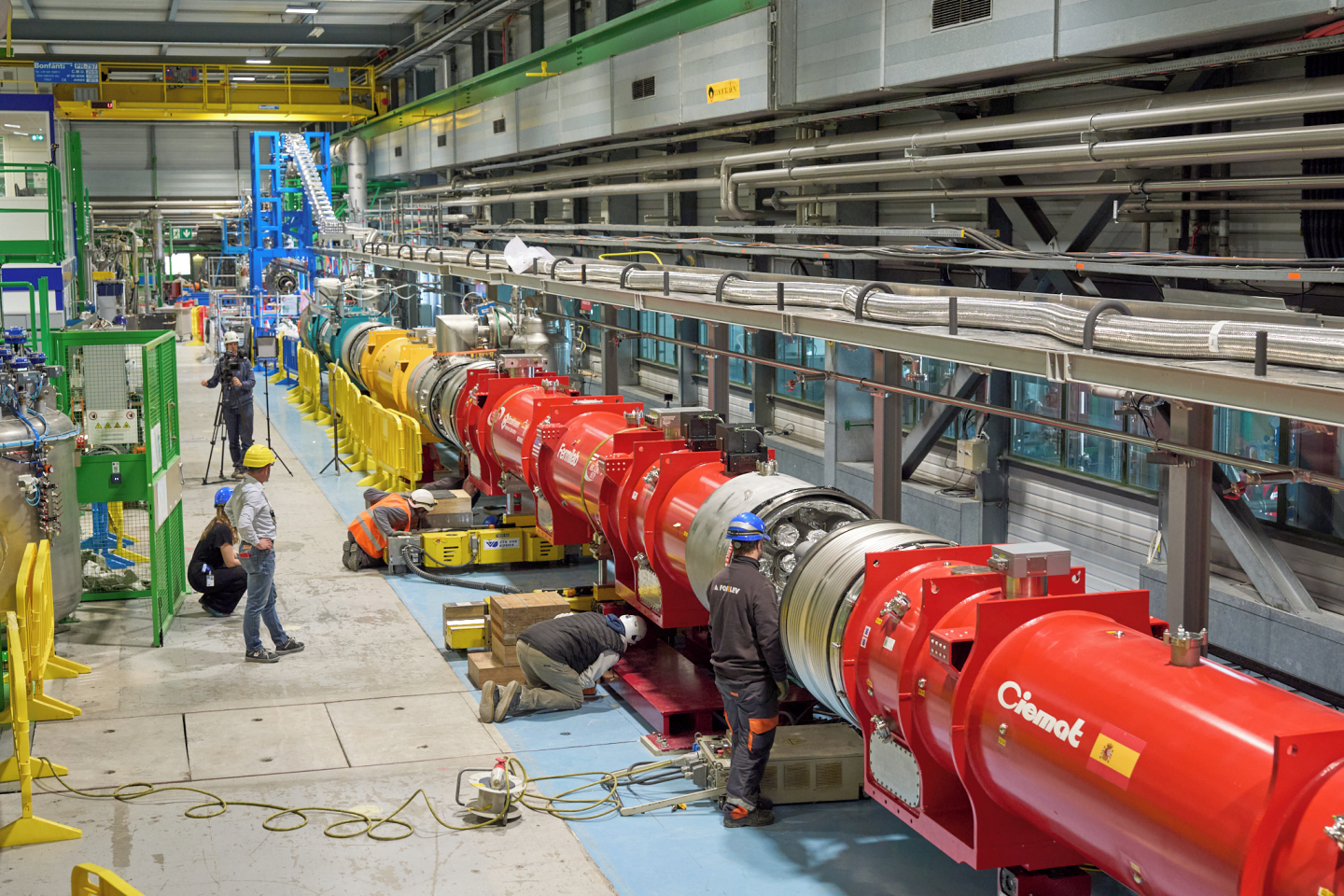
Civil‑engineering work for the HiLumi LHC began in 2018, providing new underground caverns, galleries and surface buildings. In parallel, key components such as superconducting quadrupole magnets, crab cavities, collimators and superconducting links have moved into series production and testing. A full‑scale test stand known as the Inner Triplet String is now being cooled to 1.9 kelvin to validate the new magnet and cryogenic systems before installation during the LHC’s Long Shutdown 3, which is expected to start in 2026.
Watch a short film about the HiLumi LHC:
Download the film here
The High-Luminosity LHC is the largest project undertaken by CERN for the past 20 years. Coupled with advanced new data tools and upgraded detectors, it will shed light on the first instants and possible fate of the Universe. The HiLumi LHC will also explore uncharted territory and could reveal something completely new and unexpected.
Mark Thomson, CERN Director-General
HiLumi LHC in brief
What is the HiLumi LHC?
A high‑luminosity upgrade of the existing Large Hadron Collider.
Objective: increase the integrated luminosity (total number of collisions over time) by a factor of 10 beyond the LHC’s design value.
Start of operations anticipated around 2030, and running till 2040s
What is the tentative timeline?
2016: HiLumi LHC project approved by CERN Council.
2018: Start of civil‑engineering work at the ATLAS and CMS sites.
2026: Expected start of Long Shutdown 3 (LS3), during which the LHC will be transformed into the HiLumi LHC and major ATLAS and CMS upgrades will be installed
Around 2030: Start of HiLumi LHC operation, followed by about a decade of running.
Key figures
Luminosity increase goal: factor of 10 beyond LHC design value.
Higgs statistics: over its lifetime, the High-Luminosity LHC could produce about 380 million Higgs bosons, compared with roughly 55 million Higgs bosons produced since the start of the LHC.
User community: more than 17,000 scientists from over 100 nationalities use the LHC and will benefit from the upgrade.
Resources
Press contact:
CERN Press office
press@cern.ch