

Austria
MEMBER STATE
since 1959

Content reviewed and updated on 1 September, 2026.
26.1 MCHF
Annual contribution
2.1 %
Share of CERN budget
73 people
Employed by CERN
127 people
Associated with CERN
15.9 MCHF
5-year industrial return
Country Overview
Since joining CERN in 1959, Austria has been an active participant in CERN’s scientific programme. CERN offered the ideal framework for Austria to achieve international standards of research quickly and efficiently. In 1966, the Institute of High Energy Physics of the Austrian Academy of Sciences was founded in Vienna, while a particle-physics group was established at the University of Innsbruck. Two physicists of Austrian origin later served as Directors-General of CERN: Victor Weisskopf (1961-1965) and Willibald Jentschke (1971-1975).
Austrian physicists have since been involved in successive generations of CERN experiments, from the Intersecting Storage Rings (ISR) to the Large Hadron Collider. Today, Austrian participation is coordinated through universities and research institutes across the country, including the Marietta Blau Institute for Particle Physics (MBI). Austrian researchers continue to contribute to CERN through experimental and theoretical research, detector development and accelerator science, while also participating in studies and technology development for future projects such as the Future Circular Collider (FCC).
Scientific & Technical Contributions
Austrian institutes contribute to CERN through experimental and theoretical particle physics, detector development, computing and accelerator science. Their activities span a broad range of research programmes, from studies of the fundamental laws of nature to the development of technologies required for future experiments and facilities. Austrian teams play an active role both in the Large Hadron Collider programme and in a number of non-LHC experiments across CERN’s accelerator complex.
Overview of Austria’s participation in CERN’s experimental programme
Industry & Innovation
Austrian companies contribute to CERN through the supply of technologies, services and specialised equipment used in the construction and operation of the Laboratory’s scientific infrastructure. Areas of expertise include civil engineering and underground construction, electronics, precision engineering, detector technologies and industrial control systems. Through their work with CERN, Austrian firms support activities ranging from particle detectors and accelerator systems to large-scale infrastructure projects.
🇦🇹 Industrial Liaison Officer for Austria
Austrian companies interested in working with CERN can explore procurement opportunities through CERN’s Business with CERN platform. In addition to information on upcoming tenders and supplier registration, the platform provides practical guidance on doing business with CERN and access to events that bring together industry and large international research infrastructures. It also offers insights into CERN’s procurement needs and the technologies and services required to support its scientific programme.
The relationship between CERN and Austria also extends beyond procurement. A notable example is MedAustron in Wiener Neustadt, a particle therapy and research centre whose accelerator design is based on the Proton-Ion Medical Machine Study (PIMMS), developed at CERN with European partners. The collaboration contributed to the specification, procurement, testing and commissioning of the facility’s accelerator systems. Today, MedAustron applies particle beams to cancer treatment and research, illustrating how technologies developed for fundamental physics can be adapted for use in medicine.

Education, Training & Careers
Austria’s participation in CERN extends well beyond research. Each year, Austrian students, teachers, engineers, technicians and researchers take part in CERN’s educational and professional development programmes, gaining experience in an international scientific environment. From school education and university studies to early-career opportunities and professional positions, CERN offers a wide range of pathways for Austrians to engage with science, technology and innovation. The skills, knowledge and international networks developed at CERN continue to benefit Austria’s research, education and industrial communities long after participants return home.
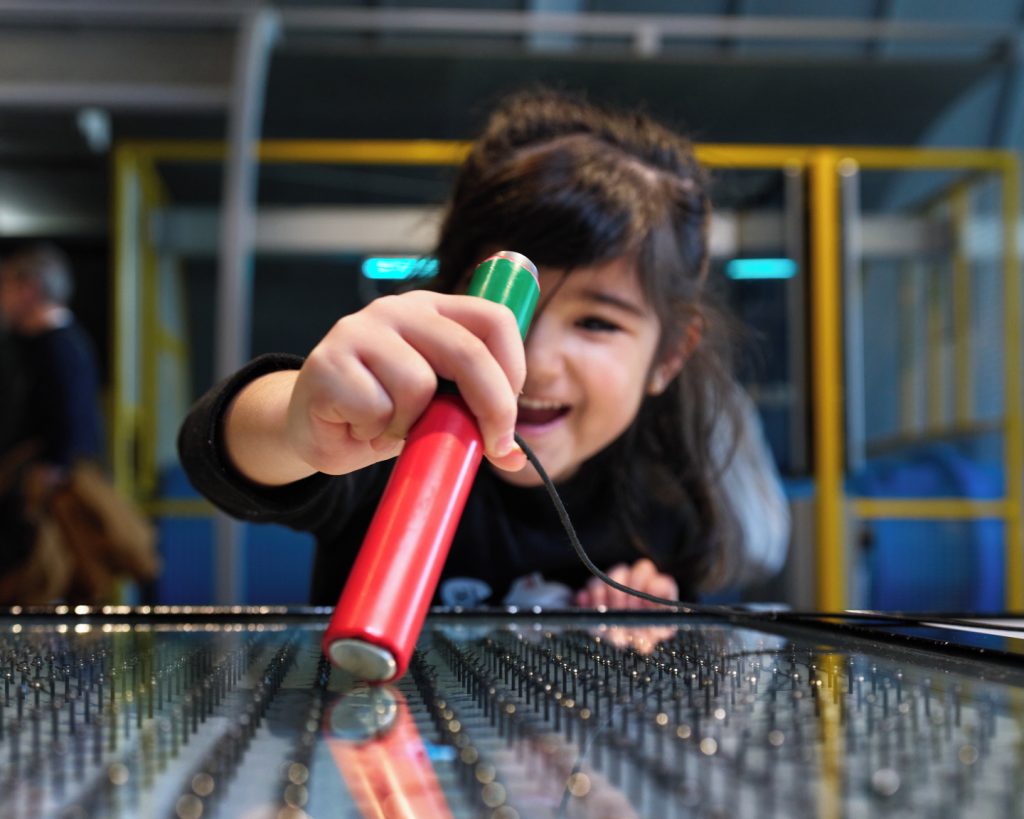
Interested in CERN? Discover the programmes, training opportunities and career paths available to Austrian nationals, from school and university education to professional careers at the world’s leading laboratory for particle physics.
Student Programmes
Students from Austria can gain hands-on experience at CERN through a variety of programmes at undergraduate, master’s and doctoral levels. Opportunities include summer studentships, technical and administrative studentships and doctoral research projects. Here, Austria maintains a long-standing agreement with CERN that supports doctoral students carrying out technology-focused research in collaboration with Austrian universities.
Teacher Programmes
Teachers from Austria can engage with CERN through the Austrian Teacher Programme, which brings in-service high-school science teachers to the Laboratory for lectures, workshops and visits to its scientific facilities. In addition, Austrian teachers can participate in CERN’s International Teacher Programmes, which bring together science teachers from all around the world to explore developments in particle physics, accelerator science and related technologies.
Careers at CERN
CERN offers career opportunities across a wide range of disciplines, including physics, engineering, computing, administration, communications, finance and technical services. Austrian nationals can apply for staff positions, fellowships and early-career programmes, working in an international environment that brings together expertise from around the world. The experience gained at CERN equips professionals with skills that are valued both within and beyond research.
Alumni & Networks
The CERN Alumni Network helps former students, researchers, engineers and staff stay connected as they continue their careers in research, industry, education and public service, maintaining ties with CERN and the wider scientific community. Austria also participates in networks such as the European Particle Physics Communication Network (EPPCN) and the International Particle Physics Outreach Group (IPPOG), which support education, outreach and communication in particle physics.
Contacts
José Miguel Jimenez
Head of Relations with Member States
Jeff Wiener
Advisor for Relations with Member States
Markus Brugger
🇦🇹 Management Liaison Officer for Austria
Permanent Mission of Austria to the United Nations Office and specialized institutions in Geneva