
Tag: heavy ion
To recreate conditions similar to those of the very early universe, powerful accelerators make head-on collisions between massive ions, such as gold or lead nuclei. Learn more about CERN’s heavy ion collisions here.
-

Accelerator Report: LHC performance stays on track and is cruising towards the target
As the 2025 LHC run enters its final ten weeks, strong performance pushes luminosity past 90 inverse femtobarns, while lead-ion preparations are ahead of schedule
-
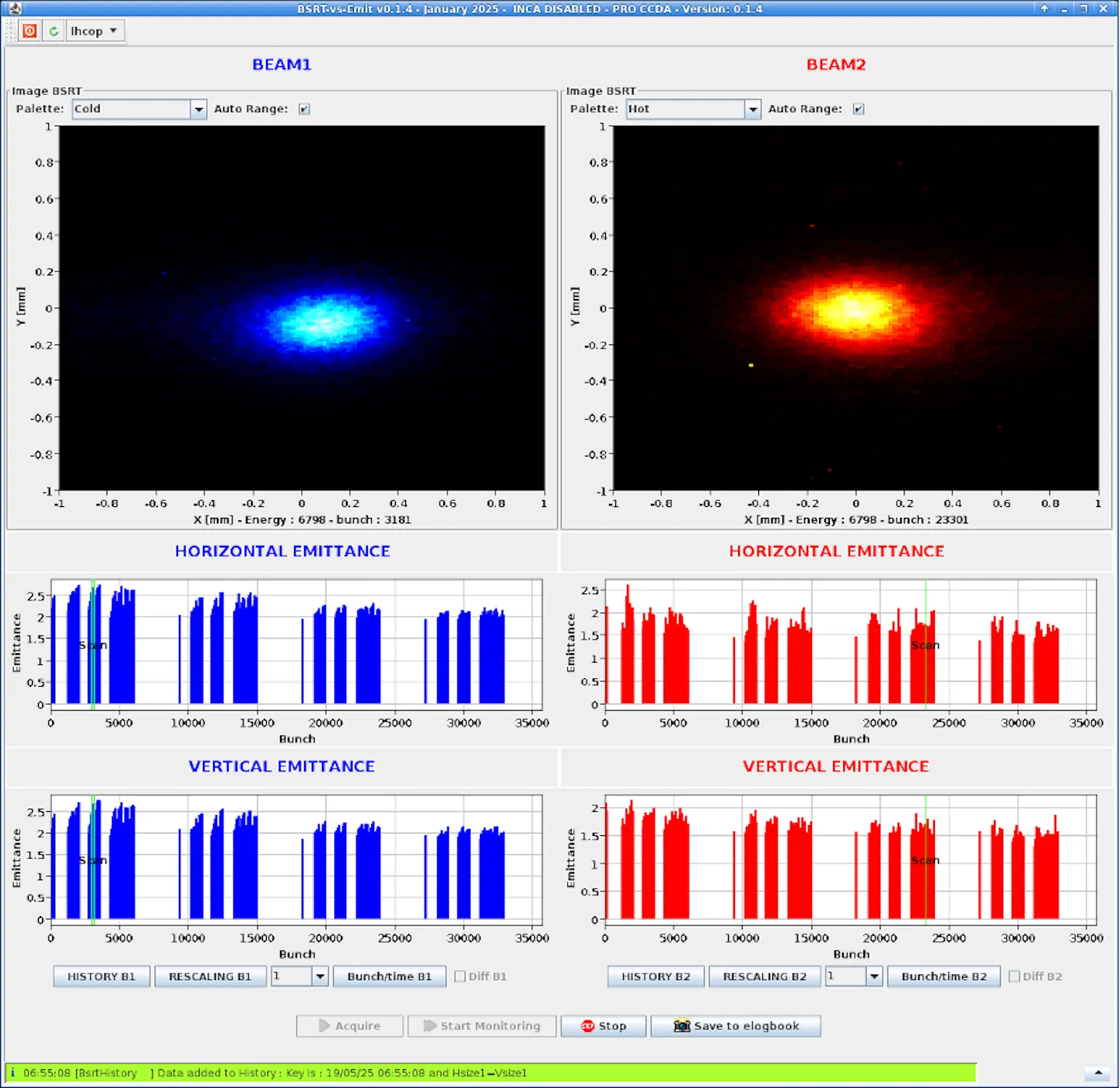
Accelerator Report: The LHC reached 1200 bunches per beam – full intensity is in sight!
On 19 May, the LHC reached 1200 bunches per beam, a level that is considered meaningful for physics. The full intensity of 2460 bunches per beam could be achieved before the end of the week
-

ALICE finds first ever evidence of the antimatter partner of hyperhelium-4
The finding also represents the first evidence of the heaviest antimatter hypernucleus yet at the LHC
-

Accelerator Report: The excellent 2024 LHC run ended abruptly
The LHC was scheduled to conclude its outstanding 2024 run on 25 November, but a massive magnet quench brought it to an end two days early
-
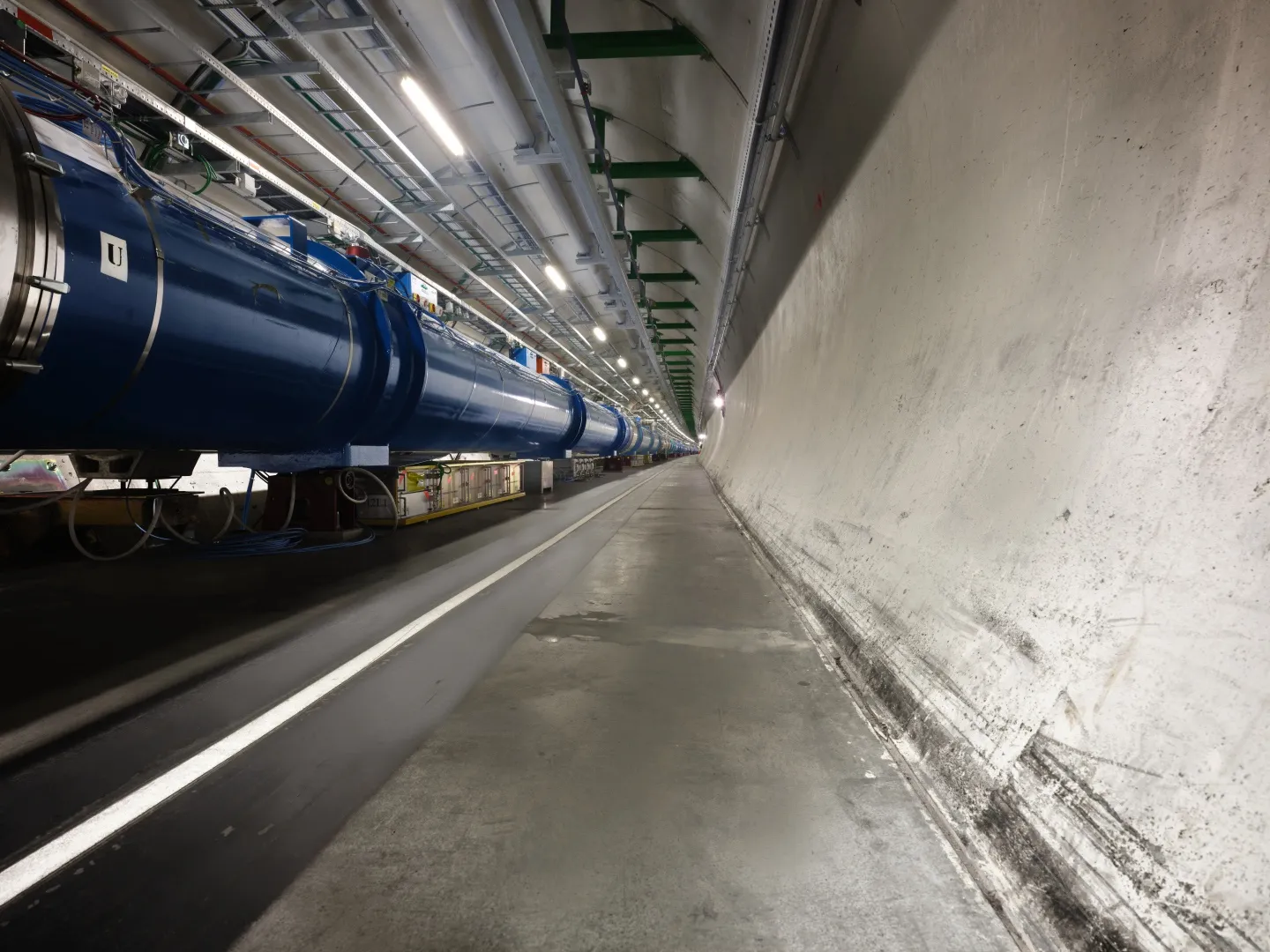
Record data for the LHC in 2024
The LHC’s tenth year of operation ends with exceptional data collection
-

ATLAS observes top quarks in lead–lead collisions
The result opens a new window into the study of the quark–gluon plasma that is believed to have filled the Universe briefly after the Big Bang
-

Accelerator Report: Lead ions at the heart of the accelerator complex
Lead-ion physics at the LHC and the SPS North Area is already under way and progressing well. The final lead-ion user in the PS East Area started its physics run on 13 November
-
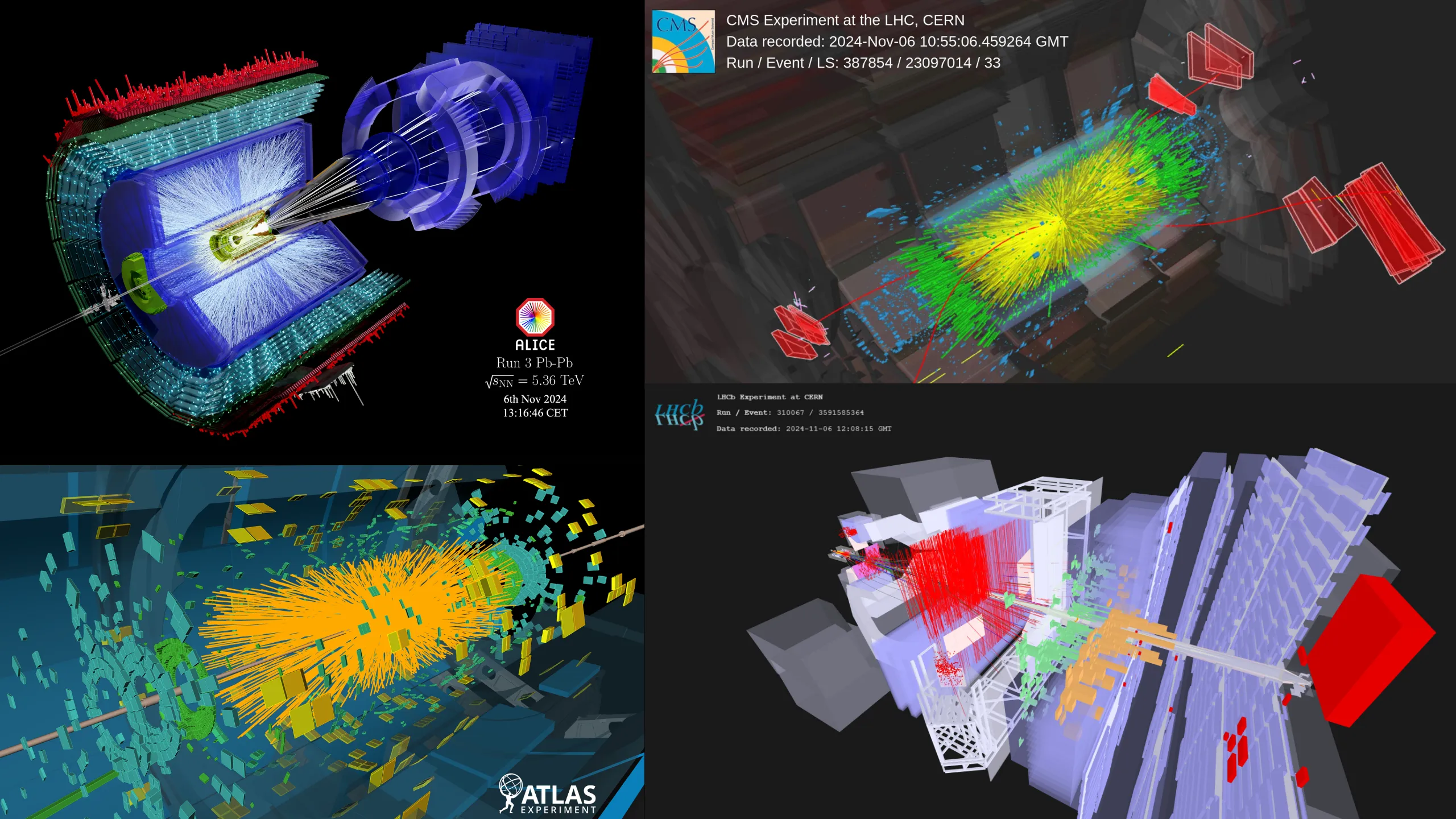
Heavy-ion run at the LHC begins
For the next 17 days, every minute counts when it comes to taking lead–lead collision data
-

Accelerator Report: Lead ions take the stage
As the LHC and SPS wrap up their 2024 proton run, teams are making final preparations for the lead-ion physics run starting on 4 November
-
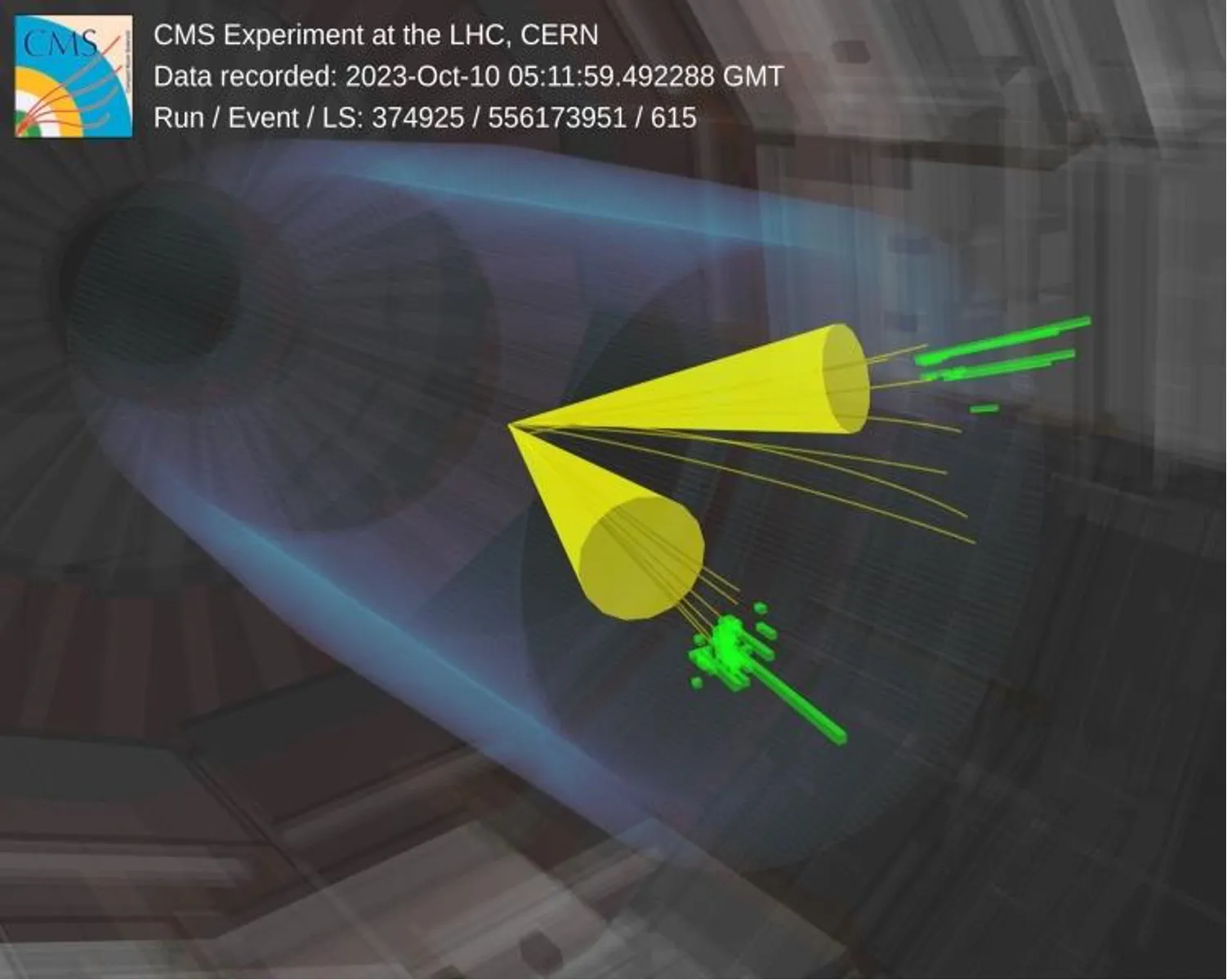
CMS uses photons to probe the structure of nuclei
Using data from the first heavy-ion run of LHC Run 3 in 2023, the experiment presents the first-ever measurement of D0 meson production in photon-lead collisions