
Category: At CERN
-
ATLAS and CMS experiments present Higgs search status
Geneva, 13 December 2011. In a seminar held at CERN1 today, the ATLAS2 and CMS3 experiments presented the status of their searches for the Standard Model Higgs boson. Their results are based on the analysis of considerably more data than those presented at the summer conferences, sufficient to make significant progress in the search for
-
First Prix Ars Electronica Collide@CERN laureate announced
Geneva, 6 December 2011. The first Prix1 Ars Electronica2 Collide @ CERN3 was today awarded to the 28-year-old German artist, Julius Von Bismarck for the quality of his ideas and his ability to make playful creative collisions between the arts and science. With a growing international reputation for his diverse and experimental artistic practice, Von
-
CERN has 2020 vision for LHC upgrade
Geneva, 16 November 2011. CERN1 today kicked off the High Luminosity LHC study with a workshop bringing together scientists and engineers from some 14 European institutions, supported through the European Commission’s seventh Framework programme (FP7), along with others from Japan and the USA. The goal is to prepare the ground for an LHC luminosity upgrade
-
LHC proton run for 2011 reaches successful conclusion
Geneva, 31 October 2011. After some 180 days of running and four hundred trillion (4×10¹⁴) proton proton collisions, the LHC’s 2011 proton run came to an end at 5.15pm yesterday evening. For the second year running, the LHC team has largely surpassed its operational objectives, steadily increasing the rate at which the LHC has delivered
-
CERN, ESS, and ERF organize the first international workshop on better energy management for Big Science
Lund, 13 October 2011. For the first time, international experts on energy and representatives from large-scale laboratories are getting together to explore new ideas on energy management, identify best practices and implement ways of effective collaboration. This community meets today in Lund, Sweden, at the European Spallation Source (ESS) for a 2-day workshop co-organized by
-
CERN sets course for extra-low-energy antiprotons
Geneva, 28 September 2011. The kick-off meeting for ELENA, the Extra Low Energy Antiproton Ring, starts today at CERN1. Approved by CERN Council in June this year, ELENA is scheduled to deliver its first antiprotons in 2016. This week’s kick-off meeting brings together scientists from Canada, Denmark, France, Germany, Japan, Sweden, the UK and the
-
OPERA experiment reports anomaly in flight time of neutrinos from CERN to Gran Sasso
UPDATE 8 June 2012 Neutrinos sent from CERN to Gran Sasso respect the cosmic speed limit At the 25th International Conference on Neutrino Physics and Astrophysics in Kyoto today, CERN Research Director Sergio Bertolucci presented results on the time of flight of neutrinos from CERN to the INFN Gran Sasso Laboratory on behalf of four
-

Israel to become Associate Member State of CERN
Geneva 16 September 2011. CERN1 Director General Rolf Heuer and Israeli Ambassador and Permanent Representative of Israel to the United Nations Office and other International Organizations in Geneva, H.E. Mr. Aharon Leshno-Yaar today signed a document admitting Israel to CERN Associate Membership, subject to ratification by the Knesset. Following ratification, Israel will become an Associate
-
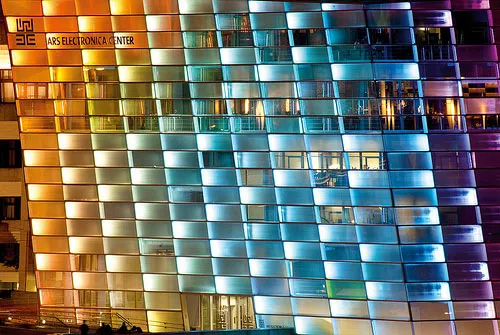
CERN announces the Collide@CERN artists’ residency programme
Geneva, 2 September 2011. A new kind of collision will soon be taking place at CERN1’s Geneva laboratory. The Collide @ CERN artists’ residency programme means that, as well as colliding particles, CERN will be bringing scientific and artistic creativity into contact. The programme was announced today at the Ars Electronica festival in Linz, Austria.
-
CERN’s LHCb experiment takes precision physics to a new level
Geneva, 26 August 2011. Results to be presented by CERN1’s LHCb experiment at the biennial Lepton-Photon conference in Mumbai, India on Saturday 27 August are becoming the most precise yet on particles called B mesons, which provide a way to investigate matter-antimatter asymmetry. The LHCb experiment studies this phenomenon by observing the way B mesons