
Category: Experiments
-

ProtoDUNE’s argon filling underway
This will be a significant step towards testing ProtoDUNE for the next era of neutrino research
-

AMS’s second new life
After more than a decade in space, the AMS detector on the ISS is due for another upgrade. With its augmented potential for discovery, it will be able to investigate dark-matter-like signatures from cosmic rays
-

ATLAS congratulates its 2023 Thesis Awards winners
The ATLAS collaboration celebrated the achievements of its exceptional PhD students at its recent Thesis Awards ceremony. Discover the names of the seven award winners
-
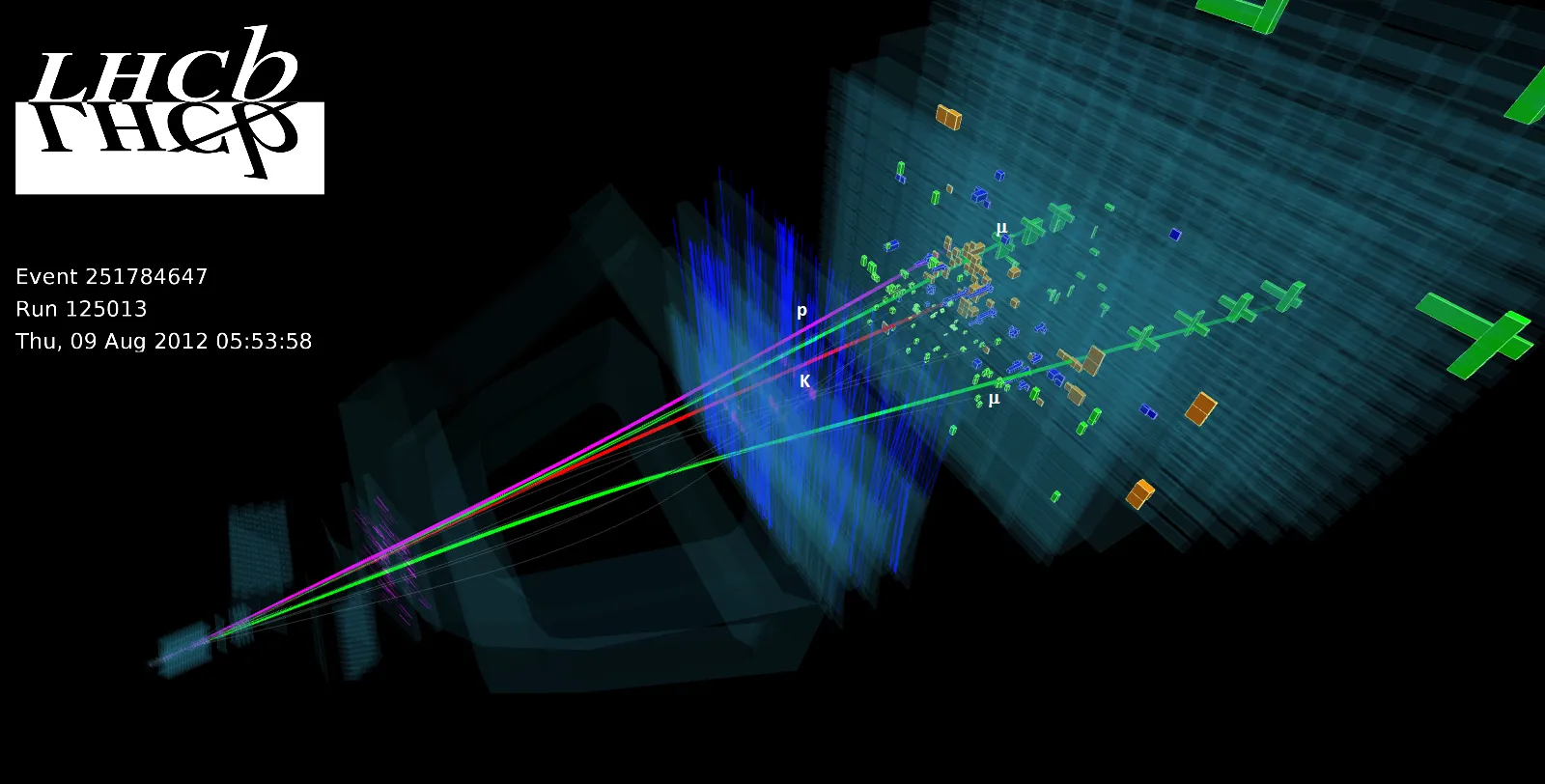
LHCb experiment releases all of its Run 1 proton–proton data
The latest release makes LHCb research data, used by researchers to produce a number of significant results, available to anyone for a wide range of physics studies
-

ALICE bags about twelve billion heavy-ion collisions
The whopping number of collisions recorded by ALICE during the recent five-week heavy-ion run of the LHC is 40 times greater than the total recorded by the experiment in its previous periods of heavy-ion data taking, from 2010 to 2018
-

LIVE: from the CERN Control Centre with the four largest LHC experiments
Join scientists from the four largest LHC experiments and other experts, live at the CERN Control Centre on 2 November 2023, 3 p.m. CET, for a recap of the first heavy-ion run of the LHC Run 3
-

LHCb sends gift to PANDA
The decommissioned outer tracker of CERN’s LHCb experiment embarked on a one-week journey to the FAIR facility in Darmstadt, Germany, where it will be used by the PANDA experiment to study how subatomic particles build up matter
-
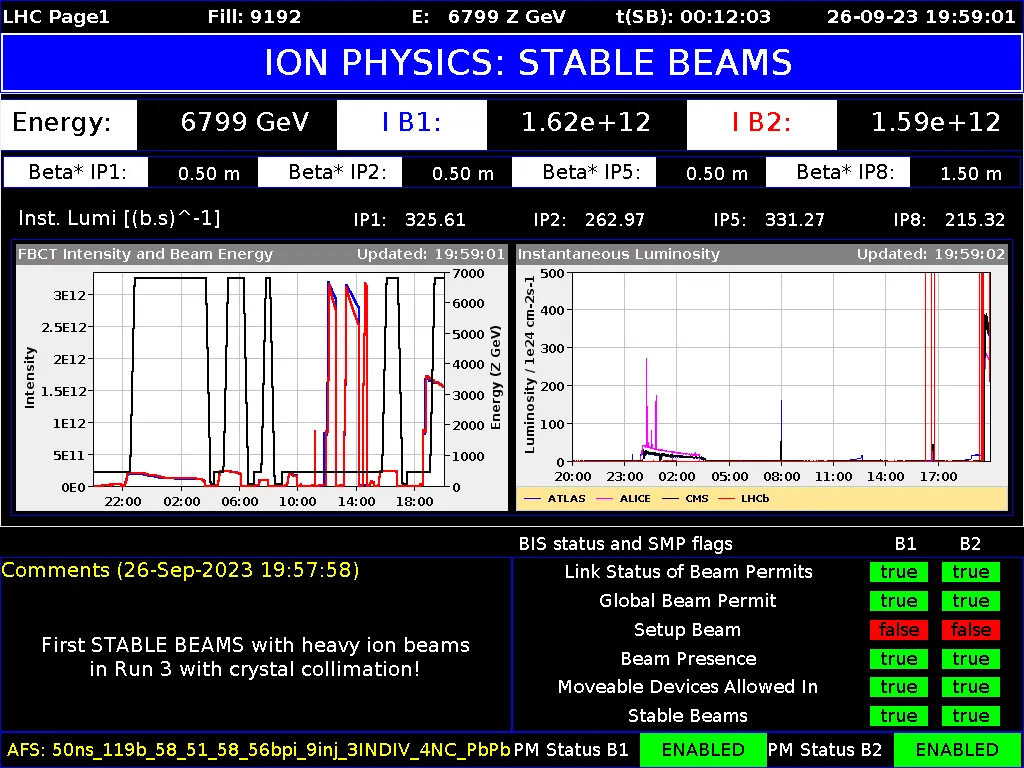
The LHC lead-ion collision run starts
For the coming 5 weeks the LHC experiments will be taking data for their heavy-ion physics programmes
-

Dark boson searches at CERN’s North Area
With their latest dark-matter searches, both the NA62 and NA64 experiments start probing several well motivated light dark-matter models
-

With FLOTUS, aerosol precursor vapours age more quickly
FLOTUS is a new addition to the CLOUD experiment at CERN. By accelerating the oxidation of organic vapours before injecting them into the CLOUD chamber, FLOTUS allows more complex atmospheric phenomena to be studied