
Experiments
A range of experiments at CERN investigate physics from cosmic rays to supersymmetry
Diverse experiments at CERN
CERN is home to a wide range of experiments. Scientists from institutes all over the world form experimental collaborations to carry out a diverse research programme, ensuring that CERN covers a wealth of topics in physics, from the Standard Model to supersymmetry and from exotic isotopes to cosmic rays.
Several collaborations run experiments using the Large Hadron Collider (LHC), the most powerful accelerator in the world. In addition, fixed-target experiments, antimatter experiments and experimental facilities make use of the LHC injector chain.
Accelerators use electromagnetic fields to accelerate and steer particles. Radiofrequency cavities boost the particle beams, while magnets focus the beams and bend their trajectory.
In a circular accelerator, the particles repeat the same circuit for as long as necessary, getting an energy boost at each turn. In theory, the energy could be increased over and over again. However, the more energy the particles have, the more powerful the magnetic fields have to be to keep them in their circular orbit.
A linear accelerator, on the contrary, is exclusively formed of accelerating structures since the particles do not need to be deflected, but they only benefit from a single acceleration pass. In this case, increasing the energy means increasing the length of the accelerator.
As physicists have explored higher and higher energies, accelerators have become larger and larger: the size of an accelerator is a compromise between energy, the radius of curvature (if it’s circular), the feasibility and the cost.
Colliders are accelerators that generate head-on collisions between particles. Thanks to this technique, the collision energy is higher because the energy of the two particles is added together.
The Large Hadron Collider is the largest and most powerful collider in the world. It boosts the particles in a loop 27 kilometres in circumference at an energy of 6.5 TeV (teraelectronvolts), generating collisions at an energy of 13 TeV.
The type of particles, the energy of the collisions and the luminosity are among the important characteristics of an accelerator.
An accelerator can circulate a lot of different particles, provided that they have an electric charge so that they can be accelerated with an electromagnetic field. The CERN accelerator complex accelerates protons, but also nuclei of ionized atoms (ions), such as the nuclei of lead, argon or xenon atoms. Some LHC runs are thus dedicated to lead-ion collisions. The ISOLDE facility accelerates beams of exotic nuclei for nuclear physics studies.
The energy of a particle is measured in electronvolts. One electronvolt is the energy gained by an electron that accelerates through a one-volt electrical field. As they race around the LHC, the protons acquire an energy of 6.5 million million electronvolts, known as 6.5 tera-electronvolts or TeV. It is the highest energy reached by an accelerator, but in everyday terms, this is a ridiculously tiny energy; roughly the energy of a safety pin dropped from a height of just two centimetres. But an accelerator concentrates that energy at the infinitesimal scale to obtain very high concentrations of energy close to those that existed just after the Big Bang.
Luminosity is a key indicator of an accelerator’s performance: it indicates the number of potential collisions per surface unit over a given period of time. The instantaneous luminosity is expressed in cm-2s-1 and the integrated luminosity, corresponding to the number of collisions that can occur over a given period, is measured in inverse femtobarn. One inverse femtobarn corresponds to 100 million millions (potential) collisions.
CERN operates a complex of nine accelerators and two decelerators. These accelerators supply experiments or are used as injectors, accelerating particles for larger accelerators. Some, such as the Proton Synchrotron (PS) or Super Proton Synchrotron (SPS) do both at once, preparing particles for experiments that they supply directly and injecting into larger accelerators.
The Large Hadron Collider is supplied with protons by a chain of four accelerators that boost the particles and divide them into bunches.
The accelerators are controlled by operators 24 hours a day from the CERN Control Centre.
LHC experiments
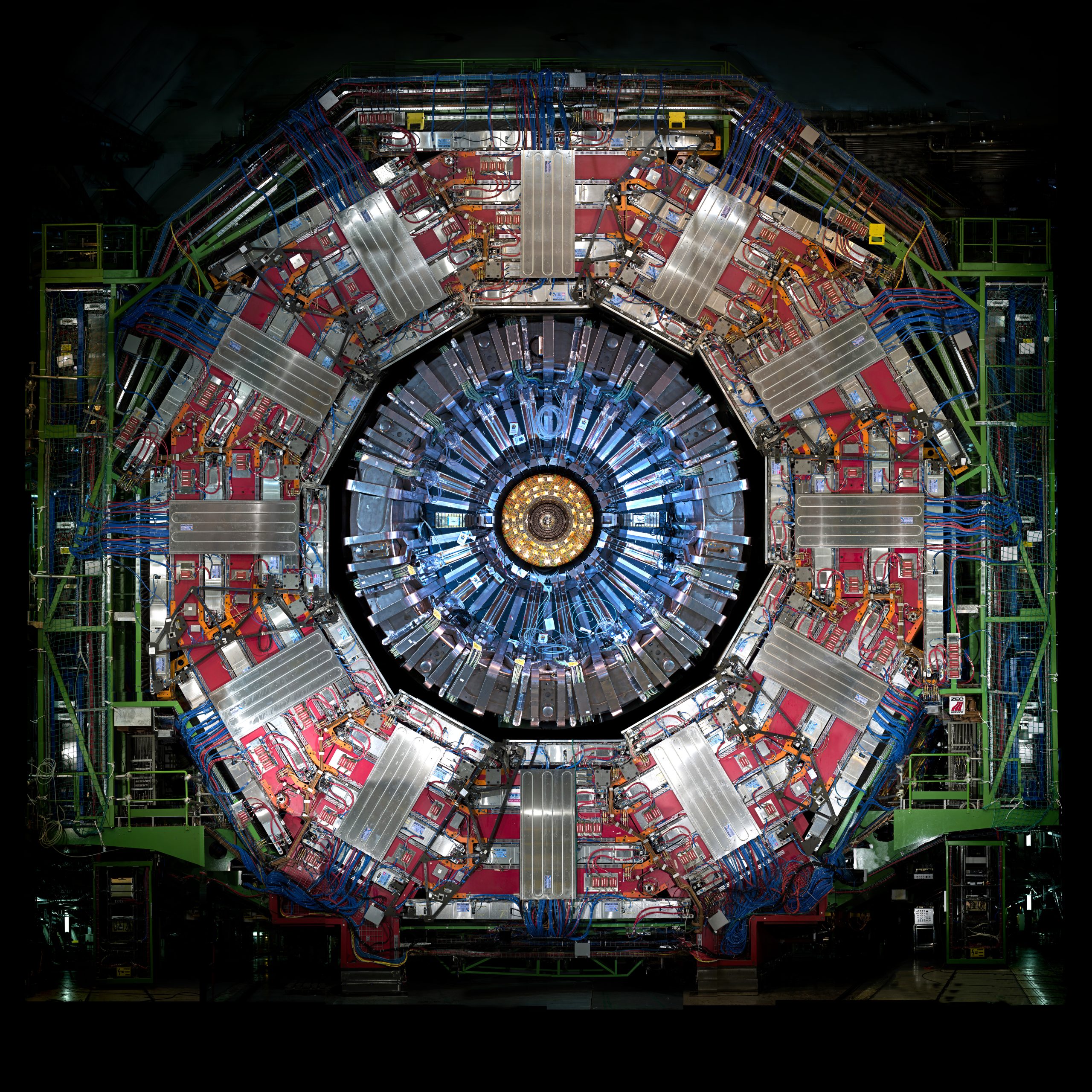
Nine experiments at the Large Hadron Collider (LHC) use detectors to analyse the myriad of particles produced by collisions in the accelerator. These experiments are run by collaborations of scientists from institutes all over the world. Each experiment is distinct and characterised by its detectors.
The biggest of these experiments, ATLAS and CMS, use general-purpose detectors to investigate the largest range of physics possible. Having two independently designed detectors is vital for cross-confirmation of any new discoveries made. ALICE and LHCb have detectors specialised for focussing on specific phenomena. These four detectors sit underground in huge caverns on the LHC ring.
The smallest experiments on the LHC are TOTEM and LHCf, which focus on “forward particles” – protons or heavy ions that brush past each other rather than meeting head on when the beams collide. TOTEM uses detectors positioned on either side of the CMS interaction point, while LHCf is made up of two detectors which sit along the LHC beamline, at 140 metres either side of the ATLAS collision point. MoEDAL-MAPP uses detectors deployed near LHCb to search for a hypothetical particle called the magnetic monopole. FASER and SND@LHC, the two newest LHC experiments, are situated close to the ATLAS collision point in order to search for light new particles and to study neutrinos.


Fixed-target experiments
In “fixed-target” experiments, a beam of accelerated particles is directed at a solid, liquid or gas target, which itself can be part of the detection system.
The SPS also feeds the North Area (NA), which houses a number of experiments. NA61/SHINE studies a phase transition between hadrons and quark-gluon plasma, and conducts measurements for experiments involving cosmic rays and long-baseline neutrino oscillations. NA62 uses protons from the SPS to study rare decays of kaons. NA63directs beams of electrons and positrons onto a variety of targets to study radiation processes in strong electromagnetic fields. NA64 is looking for new particles that would mediate an unknown interaction between visible matter and dark matter. NA65 studies the production of tau neutrinos. UA9 is investigating how crystals could help to steer particle beams in high-energy colliders.
The CLOUD experiment uses beams from the Proton Synchrotron (PS) to investigate a possible link between cosmic rays and cloud formation.
DIRAC, which is now analysing data, is investigating the strong force between quarks. COMPASS which looked at the structure of hadrons – particles made of quarks – concluded in 2022.




Physics Beyond Colliders
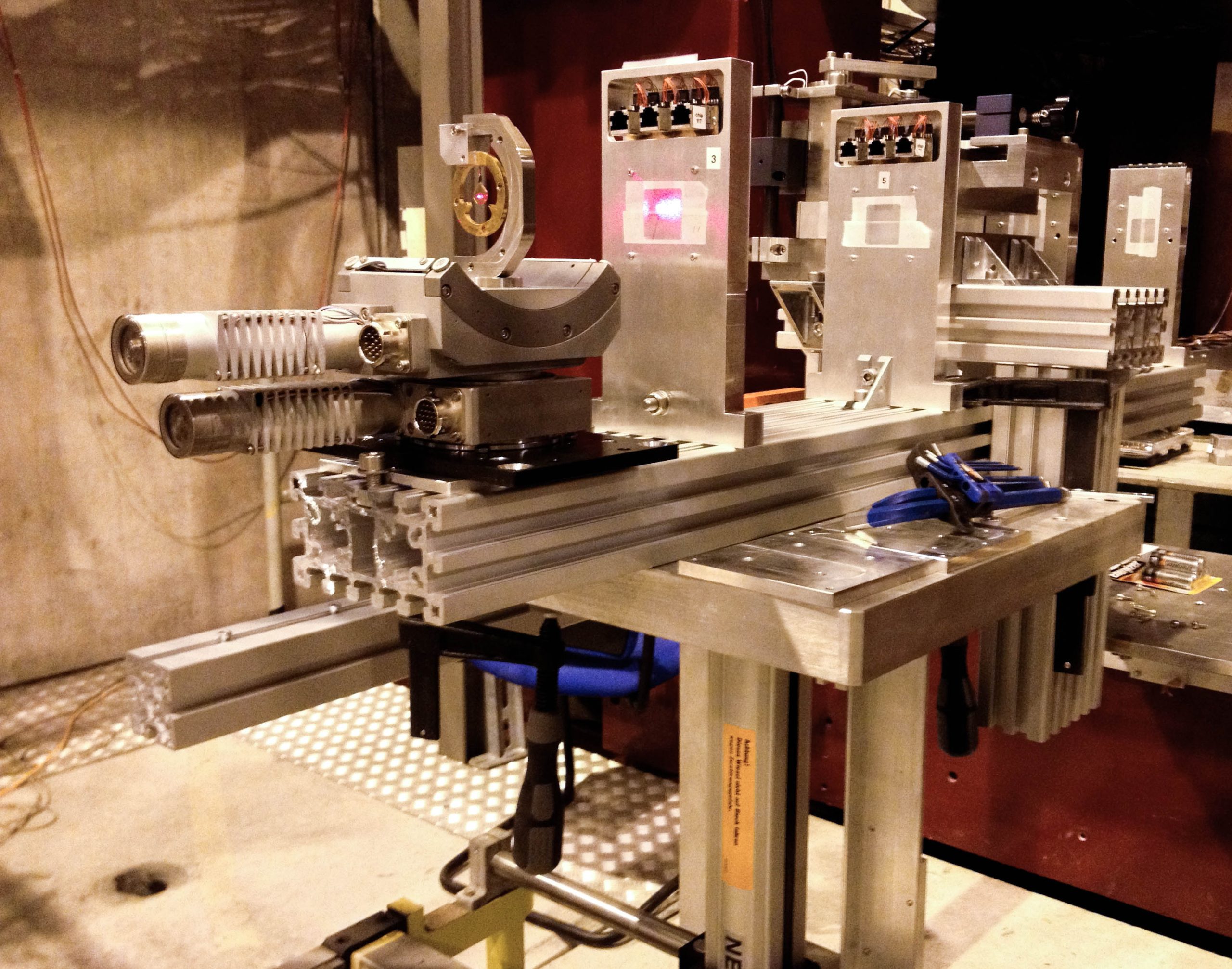
Physics Beyond Colliders (PBC) is an exploratory study aimed at exploiting the full scientific potential of CERN’s complex of accelerators and experiment areas.


Experimental facilities
Experimental facilities at CERN include ISOLDE, MEDICIS, the neutron time-of-flight facility (n_TOF) and the CERN Neutrino Platform.


Non-accelerator experiments
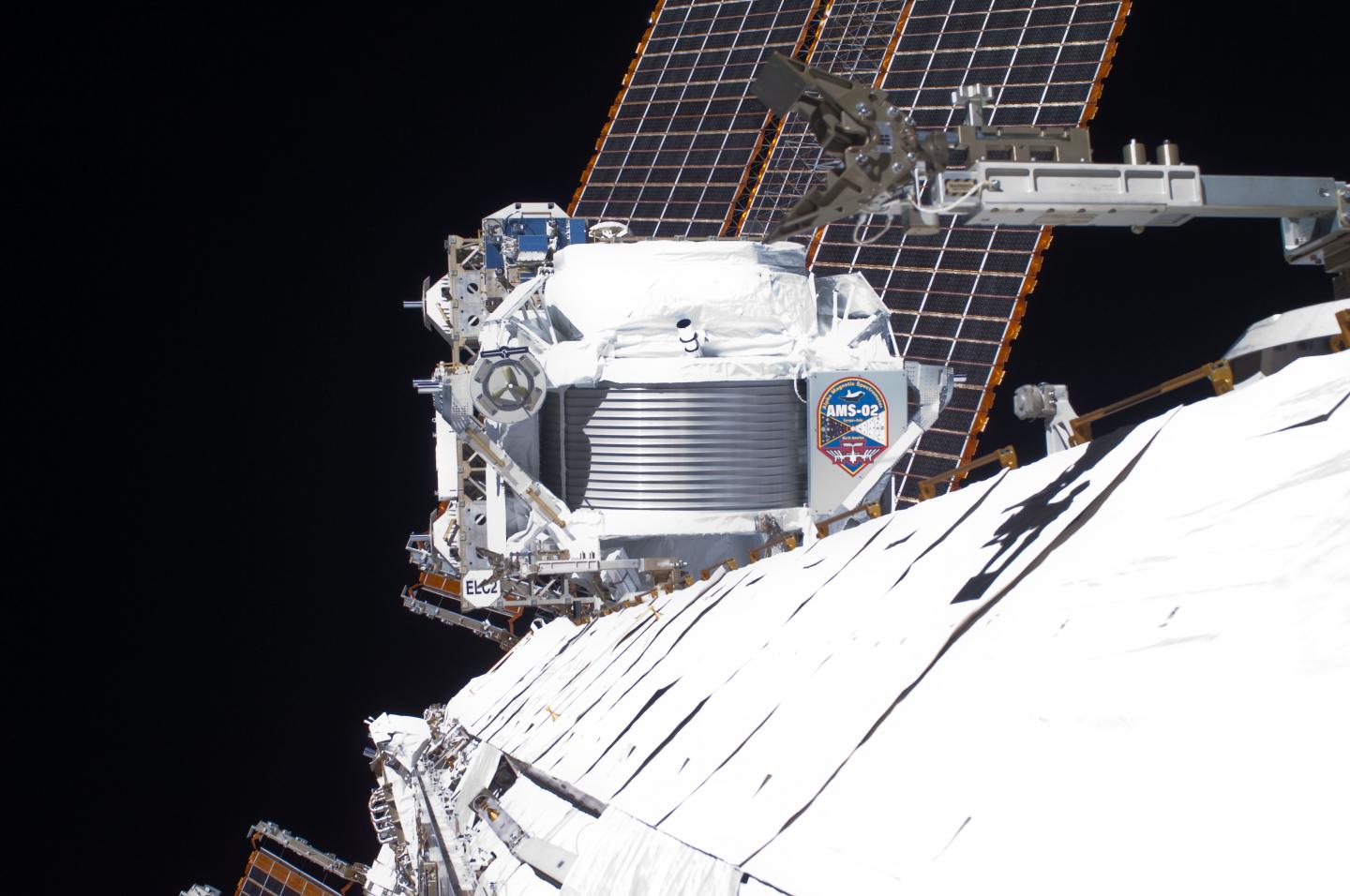
Not all experiments rely on CERN’s accelerator complex. AMS, for example, is a CERN-recognised experiment located on the International Space Station, which has its control centre at CERN. The CAST and OSQAR experiments looking for hypothetical dark matter particles called axions, are now completed and are currently analysing their data.
Past experiments
CERN’s experimental programme has consisted of hundreds of experiments spanning decades.
Among these were pioneering experiments for electroweak physics, a branch of physics that unifies the electromagnetic and weak fundamental forces. In 1958, an experiment at the Synchrocyclotron discovered a rare pion decay that spread CERN’s name around the world. Then in 1973, the Gargamelle bubble chamber presented first direct evidence of the weak neutral current. Ten years later, CERN physicists working on the UA1 and UA2 detectors announced the discovery of the W boson in January and Z boson in June – the two carriers of the electroweak force. Two key scientists behind the discoveries – Carlo Rubbia and Simon van der Meer – received the Nobel prize in physics in 1984.
From 1989, the Large Electron-Positron collider (LEP) enabled the ALEPH, DELPHI, L3 and OPAL experiments to put the Standard Model of particle physics on a strong experimental basis. In 2000, LEP made way for the construction of the Large Hadron Collider (LHC) in the same tunnel.
CERN’s huge contributions to electroweak physics are just some of the highlights of the experiments over the years.