Our material can be used on the condition that it is properly credited to CERN and that you agree to our terms of use. If you have any question related to our copyright rules, please contact us.
Here you will find images, videos and files about CERN accelerator.
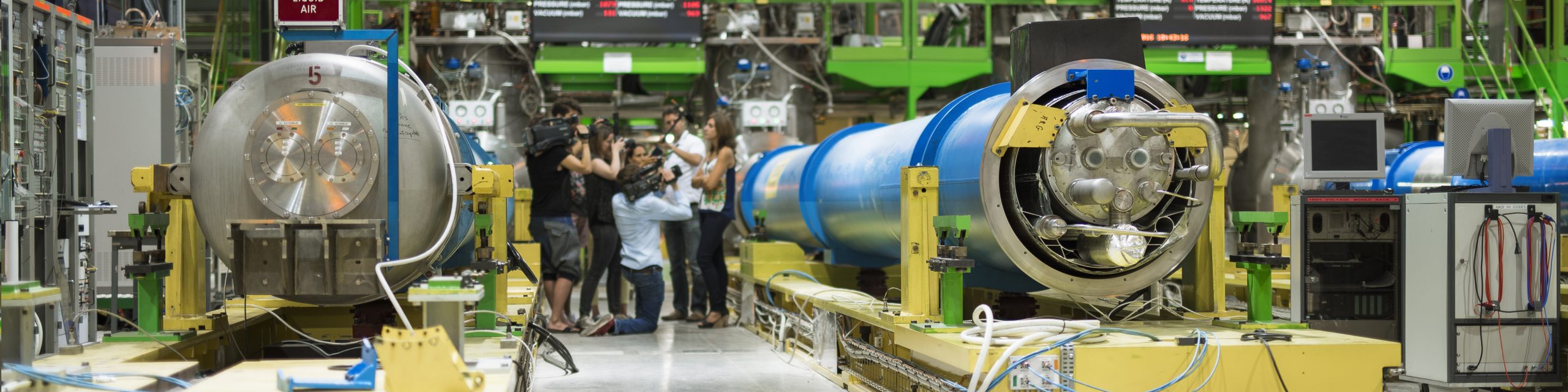
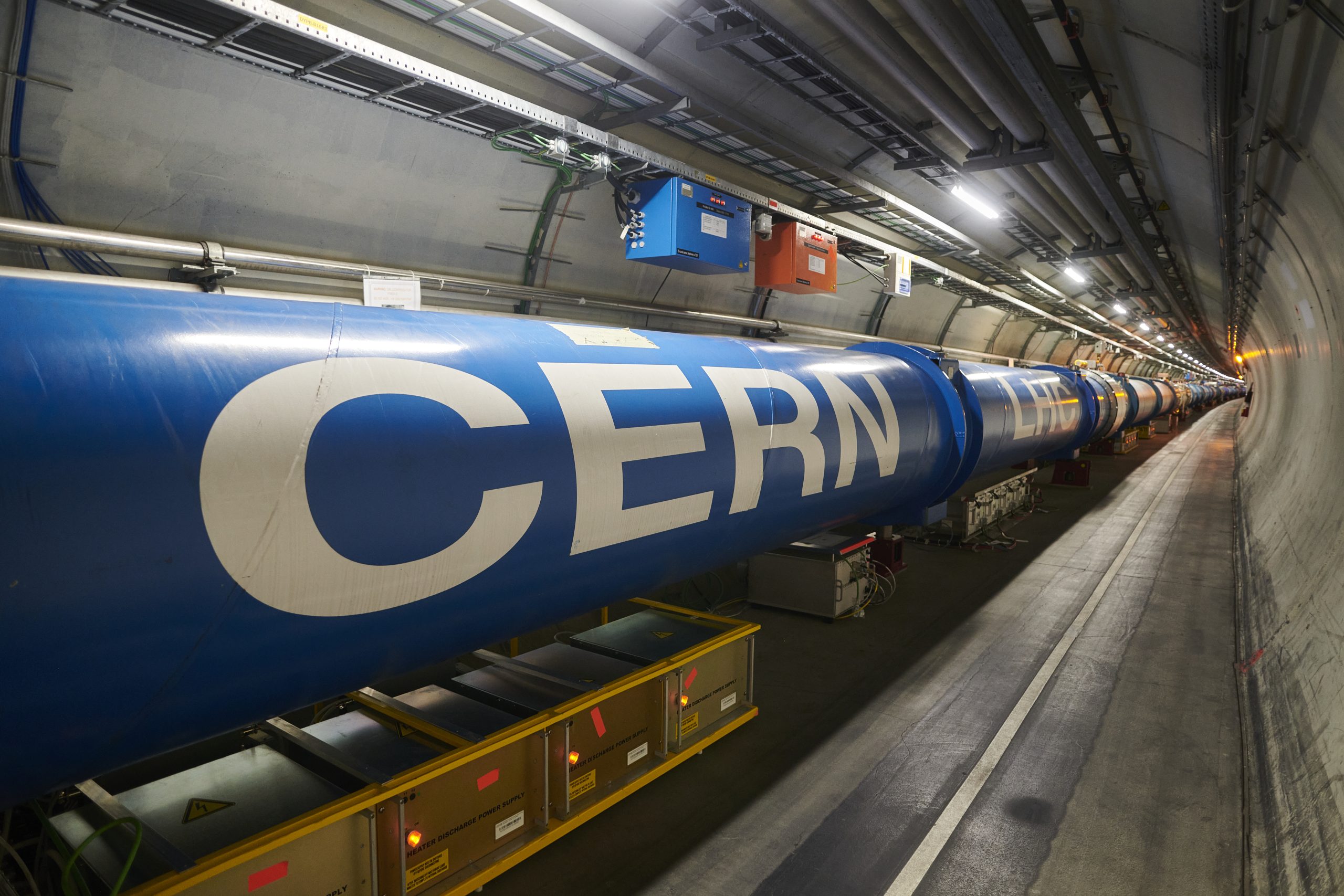
ImagesA chain of LHC dipole magnets inside the tunnel at point 1 (ATLAS) towards the end of Long Shutdown 2 (LS2).When the Large Hadron Collider (LHC) begins Run 3 next year, operators aim to increase the energy of the proton beams to an unprecedented 6.8 TeV. Source: CERN (CDS) A chain of LHC dipole magnets inside the tunnel at point 1 (ATLAS) towards the end of Long Shutdown 2 (LS2).When the Large Hadron Collider (LHC) begins Run 3 next year, operators aim to increase the energy of the proton beams to an unprecedented 6.8 TeV. Source: CERN (CDS) A chain of LHC dipole magnets inside the tunnel at point 1 (ATLAS) towards the end of Long Shutdown 2 (LS2).When the Large Hadron Collider (LHC) begins Run 3 next year, operators aim to increase the energy of the proton beams to an unprecedented 6.8 TeV. Source: CERN (CDS) VideosAnimation of a radiofrequency cavity for the LHC. Source: CERN (CDS) 3D animation of an LHC quadrupole magnet showing beam focussing. Source: CERN (CDS) 3D animation of an LHC dipole with the two beam pipes visible and beams represented traveling in opposite directions. Source: CERN (CDS) FilesInfographic of main work on the LHC superconducting magnets during LS2. Source: CERN (CDS) Infographic of main work on the LHC superconducting magnets during the second long shutdown LS2 (2019-20). Source: CERN (CDS)
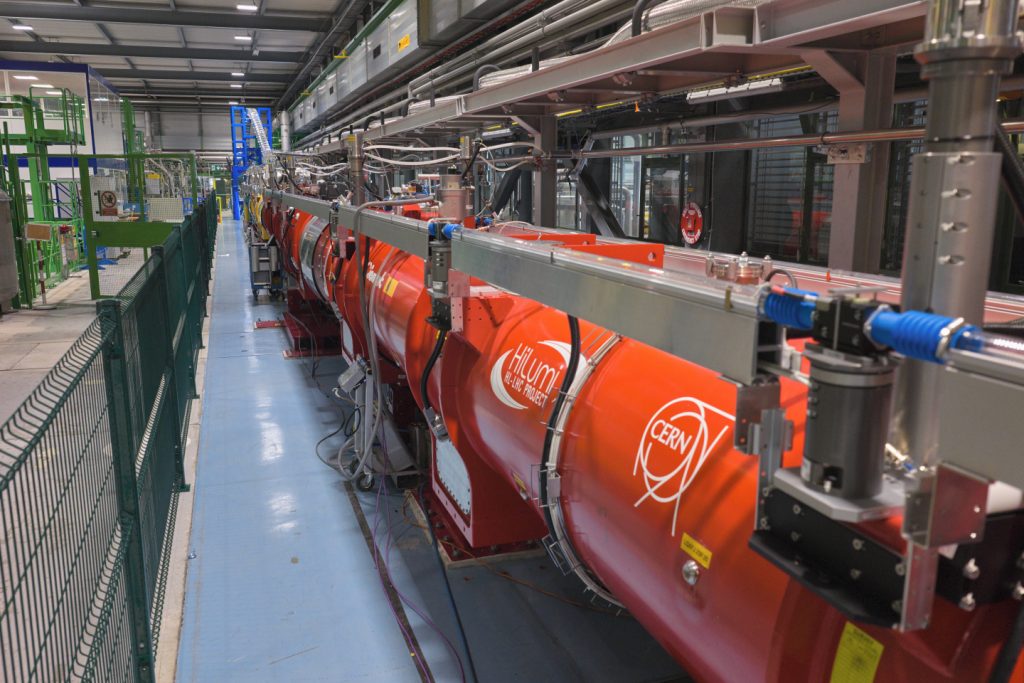
ImagesSource: CERN (CDS) Source: CERN (CDS) The surface complex consist of five buildings near the CMS site, Pt5, in France. Three are constructed from reinforced concrete to house noisy equipment such as helium compressors, cooling towers, water pumps, chillers and ventilation units. The other two buildings have steel-frame structures to house electrical distribution cabinets, a helium refrigerator cold-box and the shaft access system. The buildings are interconnected via buried technical galleries. Source: CERN (CDS) The surface complex consist of five buildings near the CMS site, Pt5, in France. Three are constructed from reinforced concrete to house noisy equipment such as helium compressors, cooling towers, water pumps, chillers and ventilation units. The other two buildings have steel-frame structures to house electrical distribution cabinets, a helium refrigerator cold-box and the shaft access system. The buildings are interconnected via buried technical galleries. Source: CERN (CDS) The surface complex near the ATLAS detector (Pt1) consists of five buildings. Three are constructed from reinforced concrete to house noisy equipment such as helium compressors, cooling towers, water pumps, chillers and ventilation units. The other two buildings have steel-frame structures to house electrical distribution cabinets, a helium refrigerator cold-box and the shaft access system. The buildings are interconnected via buried technical galleries. Source: CERN (CDS) 16 superconducting “crab” cavities for the ATLAS and CMS experiments to tilt the beams before collisions. Source: CERN (CDS) Support structure for the new triplet quadrupole magnet for the high luminosity LHC project. Source: CERN (CDS) Connection of the prototype of the superconducting link and general view – June 2020. Source: CERN (CDS) On 2 September, Oliver Brüning, HL-LHC Project Leader, was invited by Stefano Redaelli, WP5 leader, to visit the workshop where the crystal primary collimators (TCPCs) are being assembled. The purpose of the visit was to inspect the TCPC assemblies before mounting the bent crystals in them, and before closing their vacuum tanks, prior to the installation in the LHC tunnel. Source: CERN (CDS) Civil engineering is completed for HL-LHC (HiLumi) project at Point 1. CERN’s HiLumi is the High Luminosity LHC Project aiming to increase the collision rate as to maximise physics data taking of its detectors. The civil-engineering work started in April 2018. Source: CERN (CDS) Civil engineering is completed for HL-LHC (HiLumi) project at Point 1. CERN’s HiLumi is the High Luminosity LHC Project aiming to increase the collision rate as to maximise physics data taking of its detectors. The civil-engineering work started in April 2018. Source: CERN (CDS) HighLuminosity LHC CRAB Cavitiy installation for testing with beam in the SPS tunnel (BA6). Source: CERN (CDS) New CCT Magnets in 927. Source: CERN (CDS) New CCT Magnets in 927. Source: CERN (CDS) CERN Director-General Fabiola Gianotti places the time capsule at point 1 of the LHC. Source: CERN (CDS) HL-LHC P1 Concrete coating. Source: CERN (CDS) Civil engineering for the High-Luminosity LHC (HL-LHC) 2018. Source: CERN (CDS) Source: CERN (CDS) VideosDrone edit of the upgraded infrastructure for HL-LHC in Point 1 . Source: CERN (CDS) Files
ImagesSoon after midnight on November 30 the LHC beats its new world record with two beams ramped to 1.18 TeV simultaneously. The beams were dumped 45 minutes later. Source: CERN (CDS) Soon after midnight on November 30 the LHC beats its new world record with two beams ramped to 1.18 TeV simultaneously. The beams were dumped 45 minutes later. Source: CERN (CDS) Soon after midnight on November 30 the LHC beats its new world record with two beams ramped to 1.18 TeV simultaneously. The beams were dumped 45 minutes later. Source: CERN (CDS) Soon after midnight on November 30 the LHC beats its new world record with two beams ramped to 1.18 TeV simultaneously. The beams were dumped 45 minutes later. Source: CERN (CDS) Soon after midnight on November 30 the LHC beats its new world record with two beams ramped to 1.18 TeV simultaneously. The beams were dumped 45 minutes later. Source: CERN (CDS) during the night of 20 May, protons collided in the Large Hadron Collider (LHC) at the record-breaking energy of 13 TeV for the first time. These pictures show the LHC operations team on the morning of 21 of May. Source: CERN (CDS) this plot show when a collision appear. Source: CERN (CDS) during the night of 20 May, protons collided in the Large Hadron Collider (LHC) at the record-breaking energy of 13 TeV for the first time. These pictures show the LHC operations team on the morning of 21 of May. Source: CERN (CDS) Source: CERN (CDS) Source: CERN (CDS) Source: CERN (CDS) Source: CERN (CDS) Source: CERN (CDS) The CERN Control Centre (CCC) that combines all the control rooms for the accelerators, the cryogenic system and the technical infrastructure came into operation on 1st February. On 1st February, at 2.00 p.m., Patrick Villeton Pachot started the first Technical Infrastructure shift at the brand new CERN Control Centre. Source: CERN (CDS) Source: CERN (CDS) Source: CERN (CDS) VideosFiles
ImagesSource: CERN (CDS) The ring will accumulate lead ions for the LHC. The aim of the LEIR team: producing the kind of beam required for first lead-ion collisions in the LHC in 2008. Source: CERN (CDS) Source: CERN (CDS) Some shots of the SPS. Source: CERN (CDS) Laboratoire où sont effectuées les opération pour revêtir les chambres à vide des aimants du SPS de carbone. Source: CERN (CDS) Survey Operators in tunnel PS and picture of magnet with case open. Source: CERN (CDS) General views of the PS Booster with upgrade completed during Long Shutdown 2 (LS2). Source: CERN (CDS) Pictures taken around the booster. Source: CERN (CDS) The Linac4 accelerator Copyright: Robert Hradil, Monika Majer/ProStudio22.ch. Source: CERN (CDS) The Antiproton Decelerator (AD) is a storage ring at the CERN laboratory in Geneva. It started operation in 2000. It decelerates antiprotons before sending them to several experiments studying antimatter : ALPHA, ASACUSA, ATRAP and ACE. Source: CERN (CDS) Some shots of the SPS. Source: CERN (CDS) VideosA tour of CERN’s new injector in the accelerators’ chain, LINAC4. Source: CERN (CDS) Geneva, 9 May 2017. At a ceremony today, CERN inaugurated its linear accelerator, Linac 4, the newest accelerator acquisition since the Large Hadron Collider (LHC). Linac 4 is due to feed the CERN accelerator complex with particle beams of higher energy, which will allow the LHC to reach higher luminosity by 2021. After an extensive testing period, Linac 4 will be connected to CERN’s accelerator complex during the upcoming long technical shut down in 2019-20. Linac 4 will replace Linac 2, which has been in service since 1978. It will become the first step in CERN’s accelerator chain, delivering proton beams to a wide range of experiments. Source: CERN (CDS) footage of the PS in 4K. Source: CERN (CDS) General footage of the SPS during the LS1. Source: CERN (CDS) pre color grading. Source: CERN (CDS) SPS footage LS2 BMCC 6K. Source: CERN (CDS) Files
ImagesCDSINTERNAL|MediaArchive|Migrated from: \cern.chdfsServicesMediaArchivePhotoMasters198585036368503636.jpg. Source: CERN (CDS) CDSINTERNAL|MediaArchive|Migrated from: \cern.chdfsServicesMediaArchivePhotoMasters198585107768510776.jpg. Source: CERN (CDS) CDSINTERNAL|MediaArchive|Migrated from: \cern.chdfsServicesMediaArchivePhotoMasters199090041029004102.JPEG. Source: CERN (CDS) CDSINTERNAL|MediaArchive|Migrated from: \cern.chdfsServicesMediaArchivePhotoMasters199191070099107009.jpeg. Source: CERN (CDS) CDSINTERNAL|MediaArchive|Migrated from: \cern.chdfsServicesMediaArchivePhotoMasters199191070119107011.jpg. Source: CERN (CDS) Engineers work in a clean room on one of the superconducting cavities for the upgrade to the LEP accelerator, known as LEP-2. The use of superconductors allow higher electric fields to be produced so that higher beam energies can be reached. Source: CERN (CDS) The storage cavity is part of the LEP main accelerating structure. The image shows a collection of storage cavities which had been dismantled. Source: CERN (CDS) The LHC will be built inside the same tunnel as an existing accelerator, the Large Electron Positron (LEP) collider which came on stream in 1989. LEP will be removed from the tunnel at the end of this year to make way for the LHC. Here technicians make delicate adjustments to one of LEPs thousands of magnets. Source: CERN (CDS) Engineers remove the copper (non-superconducting) radio-frequency cavities located near to the L3 experiment at the Large Electron-Positron (LEP) collider, which closed in 2000. Source: CERN (CDS) Neutrinos produced by decays of the products of collisions between protons accelerated at the Super Proton Synchrotron (SPS) and a graphite fixed target at CERN pass through the Earth to a huge detector at Gran Sasso in Italy. During their 732 km journey they will reach a maximum depth in the Earth of 11.4 km. Source: CERN (CDS) Protons accelerated in the Super Proton Synchrotron (SPS) at CERN collide with a graphite target producing mainly pions and kaons, particles with short lifetimes, which will decay in the decay tube, producing muon neutrinos. Some of these neutrinos are expected to change into another type called the tau neutrino that will be looked for by a huge detector 732 km away in Gran Sasso, Italy. Source: CERN (CDS) The last of the 3280 dipole magnets from the Large Electron-Positron (LEP) collider is seen on its journey to the surface on 12 February 2002. The LEP era, which began at CERN in 1989 and ended 2000, comes to an end. Source: CERN (CDS) CDSINTERNAL|MediaArchive|Migrated from: \cern.chdfsServicesMediaArchivePhotoMasters2005511019511019.jpg. Source: CERN (CDS) The CERN Neutrinos to Gran Sasso (CNGS) target ‘magazine’ of five target units. Each unit contains a series of 10-cm long graphite rods distributed over a length of 2 m. It is designed to maximize the number of secondary particles produced and hence the number of neutrinos. One unit is used at a time to prevent over heating. Source: CERN (CDS) VideosFiles
Here you will find images, videos and files about experiments at CERN.
ImagesInside ALICE detector empty skeleton. Source: CERN (CDS) ALICE empty structure after modules removal. Source: CERN (CDS) ALICE Schematics as during RUN2 (low resolution). Source: CERN (CDS) Installation of the Outer Barrel of the new silicon Inner Tracking System of ALICE inside the solenoidal magnet. Source: CERN (CDS) The refurbished detector, the Time Projection Chamber (TPC), was lowered into the ALICE cavern and installed in the experiment in August. Source: CERN (CDS) The refurbished detector, the Time Projection Chamber (TPC), was lowered into the ALICE cavern and installed in the experiment in August. Source: CERN (CDS) The refurbished detector, the Time Projection Chamber (TPC), was lowered into the ALICE cavern and installed in the experiment in August. Source: CERN (CDS) The ALICE O2 FLP (First Layer Processor) farm consists of 200 computers in charge of the detector readout. They will transfer data from the detector electronics over more than 8000 optical links with a total throughput of 3.5 TByte/s, aggregate the input data, and send them over the network for processing by the EPN (Event Processor Node) cluster. Source: CERN (CDS) Insertion of the new beampipe of the ALICE detector during LS2 (Long Shutdown2) upgrade. Source: CERN (CDS) Installation of the A-side of the FIT (Fast Interaction Trigger) detector in the ALICE cavern during LS2 (June 2021). Source: CERN (CDS) Two new detectors, constructed and tested during LS2, were installed inside the ALICE magnet. One is the Muon Forward Tracker (MFT) and the other is the Fast Interaction Trigger (FIT), which will have to deal with a much higher collision rate during the High Luminosity (HL-LHC) data runs. Source: CERN (CDS) Installation of the Outer Barrel (OB) of the new Inner Tracking System (ITS) in the ALICE detector at Point 2 during LS2. Source: CERN (CDS) The refurbished detector, the Time Projection Chamber (TPC), was lowered into the ALICE cavern and installed in the experiment in August. Source: CERN (CDS) One of the first lead-lead collisions at the Large Hadron Collider, recorded by the ALICE detector in November 2010. In this collision of lead nuclei at a small impact parameter (central collision), 1209 positively-charged (darker tracks) and 1197 negatively-charged (lighter tracks) particles are produced, about 80 percent are pions. The curvature of a track in the magnetic field of ALICE (0.5 T) is inversely proportional to the momentum of the particle. The cylinder is the Time Projection Chamber of ALICE, with a diameter of 5 m and a length of 5 m, recording the charged particles in three dimensions with the equivalent of 500 million pixels. Source: CERN (CDS) Events with low, medium and high multiplicities in pp collisions at 7 TeV, recorded at the LHC by ALICE in June 2010. The big cylinder is the Time Projection Chamber of ALICE, with a diameter of 5 m and a length of 5 m, the inner red-green-blue cylinders are the Inner Tracking System. Source: CERN (CDS) One of the first heavy-ion collisions with stable beams recorded by ALICE on 25 November 2015. Source: CERN (CDS) As the number of proton collisions (the blue lines) increase, the more of these so-called strange hadrons are seen (as shown by the red squares in the graph). Source: CERN (CDS) CDSINTERNAL|MediaArchive|Migrated from: \cern.chdfsServicesMediaArchivePhotoMasters2003307012307012.jpg. Source: CERN (CDS) Members of the mechanical assembly team insert the last few crystals into the first module of ALICE’s photon spectrometer. These crystals are made from lead-tungstate, a crystal as clear as glass but with nearly four times the density. When a high-energy particle passes through one of these crystals it will scintillate, emitting a flash of light allowing the energy of photons, electrons and positrons to be measured. Source: CERN (CDS) Source: CERN (CDS) The huge iron yoke in the cavern at Point 2 in the LHC tunnel is prepared for the installation of the ALICE experiment. The yoke is being reused from the previous L3 experiment that was located at the same point during the LEP project from 1989 to 2000. ALICE will be inserted piece by piece into the cradle where it will be used to study collisions between two beams of lead ions. Source: CERN (CDS) Source: CERN (CDS) Source: CERN (CDS) Source: CERN (CDS) VideosLS2 Highlights footage. Source: CERN (CDS) B-roll footage of work during the beampipe installation into the ALICE TPC, LS2 September 2020. Source: CERN (CDS) General video about the ALICE experiment. Source: CERN (CDS)
ImagesATLAS new small wheel C lowering. Source: CERN (CDS) Display of a candidate Higgs-boson event decaying to two muons, H→μμ, from proton-proton collisions recorded by ATLAS in 2015 at a collision energy of 13 TeV (run 281411, event 312608026). The event contains two muons (red tracks) with invariant mass m(μ,μ)=124 GeV and two forward jets (yellow cones) with invariant mass m(jet,jet)=1237 GeV. Source: CERN (CDS) Since the start of LS2, ATLAS has undergone an intense maintenance and consolidation programme to meet the challenges of Run 3 of the LHC, and fully exploit the available physics opportunities. This includes the installation and commissioning of new detectors and electronics thus enhancing the Level-1 trigger and rate capabilities of the experiment. Data-taking activities during the long shutdown have encompassed standalone runs of individual systems, combined runs involving several or all available systems, and cosmic-ray data taking. Moreover, ten “Milestone” weeks (i.e. combined data-taking runs with all available systems) took place during LS2 with the most recent during the LHC pilot run. Source: CERN (CDS) Since the start of LS2, ATLAS has undergone an intense maintenance and consolidation programme to meet the challenges of Run 3 of the LHC, and fully exploit the available physics opportunities. This includes the installation and commissioning of new detectors and electronics thus enhancing the Level-1 trigger and rate capabilities of the experiment. Data-taking activities during the long shutdown have encompassed standalone runs of individual systems, combined runs involving several or all available systems, and cosmic-ray data taking. Moreover, ten “Milestone” weeks (i.e. combined data-taking runs with all available systems) took place during LS2 with the most recent during the LHC pilot run. Source: CERN (CDS) Since the start of LS2, ATLAS has undergone an intense maintenance and consolidation programme to meet the challenges of Run 3 of the LHC, and fully exploit the available physics opportunities. This includes the installation and commissioning of new detectors and electronics thus enhancing the Level-1 trigger and rate capabilities of the experiment. Data-taking activities during the long shutdown have encompassed standalone runs of individual systems, combined runs involving several or all available systems, and cosmic-ray data taking. Moreover, ten “Milestone” weeks (i.e. combined data-taking runs with all available systems) took place during LS2 with the most recent during the LHC pilot run. Source: CERN (CDS) Metrology of AFP detector package just before installation in tunnel. Quartz bars of Time-of-FLight system are visible on the left whereas a set of four 3-D silicon trackers (SiT) is on the right. (Marko Milovanovic). Source: CERN (CDS) Construction of Micromegas at Building 899 (BB5) and Small Strip Thin-gap Chambers at B180 for the ATLAS New Small Wheel (NSW). Source: CERN (CDS) The first electron Feature Extractor (eFEX) received from the production manufacturing run. Visible are the four Processor FPGAs (under copper heatsinks) and the Control FPGA (large black heatsink), and the Minipod opto-electrical receivers and transmitters, connecter via fibre optics. Source: CERN (CDS) The Back-end LAr electronics installed in the hall adjacent to the experiment cavern. On the left, the four tall blue racks with coloured cables are for the new digital trigger and FEX systems. On the right up, up to the end of the row, the smaller racks with black cables are for the analog legacy trigger. Image: C. Camincher. Source: CERN (CDS) Construction of Micromegas at Building 899 (BB5) and Small Strip Thin-gap Chambers at B180 for the ATLAS New Small Wheel (NSW). Source: CERN (CDS) The 100 tonnes wheel is lowered 80 metres underground in the ATLAS cavern at the LHC level. The NSW consists in a set of new precision tracking detectors based on the Micromegas technology and new trigger detectors Small Strip Thin Gap Chambers. The production of these detectors involves 9 countries worldwide. Source: CERN (CDS) One of the early collision events with stable beams recorded by ATLAS on 23 April 2016, with two reconstructed muon candidates. The trajectories of the two muons are shown in red. The bottom right picture is a zoom-in of the middle endcap MDT and TGC stations traversed by the muons; green crosses represent the TGC measurements, while the red tubes and the red circles represent, respectively, the hit MDT tubes and the associated drift circles recorded. Source: CERN (CDS) Display of a candidate event for a W boson decaying into one muon and one neutrino from proton-proton collisions recorded by ATLAS with LHC stable beams at a collision energy of 7 TeV. The muon (red line) has a transverse momentum of 32.8 GeV and the missing transverse energy is 52.4 GeV (cyan blue line), resulting in a transverse mass of 82.9 GeV of the di-lepton system. Little hadronic activity is measured, indicating a small transverse momentum of the W boson candidate. The event was recorded in June 2011 and was used for the measurement of the W boson mass. Event details: Run Number 183081, Event Number 101291517. Source: CERN (CDS) An event display of light-by-light scattering in ultra-peripheral lead+lead collisions at 5.02 TeV with the ATLAS detector at the LHC. The event 461251458 from run 287931 recorded on 13 December 2015 at 09:51:07 is shown. Two back-to-back photons with an invariant mass of 24 GeV with no additional activity in the detector are presented. All calorimeter cells with E>500 MeV are shown. Source: CERN (CDS) Photos of the massive mural of the ATLAS detector at CERN Point 1 painted by artist Josef Kristofoletti. The mural is located at the ATLAS Experiment site, and it shows on two walls the detector with a collision event superimposed. The event on the large wall shows a depiction of how a Higgs boson may look like in ATLAS. Source: CERN (CDS) Movement of the Big wheel half way through to its final position. Source: CERN (CDS) The Calorimeters at final position ready for run 2 on ATLAS cavern side A. Source: CERN (CDS) Source: CERN (CDS) The Calorimeters at final position ready for run 2 on ATLAS cavern side A. Source: CERN (CDS) The eight toroid magnets can be seen surrounding the barrel calorimeter with its integrated solenoid that is later moved into the middle of the detector. This calorimeter will measure the energies of particles produced when protons collide in the centre of the detector. Roger Ruber (KEK), leading the solenoid commissioning at CERN, standing in the middle of the barrel toroid. Source: CERN (CDS) VideosBeams of articles generated by the LHC accelerator collide at the centre of the ATLAS detector. Event production in time is represented. Source: CERN (CDS) LS2 Highlights footage. Source: CERN (CDS) ATLAS Footage from the crane. Source: CERN (CDS) ATLAS small wheel highlights 2021. Source: CERN (CDS) Looping video introduction to the ATLAS Experiment, featured on ATLAS public website. Source: CERN (CDS) Files
Non edited footage with music for social media CMS last GEMs installation. Source: CERN (CDS)
Files
ImagesVideosFiles
ImagesVideosFiles
Here you will find images, videos and files about physics
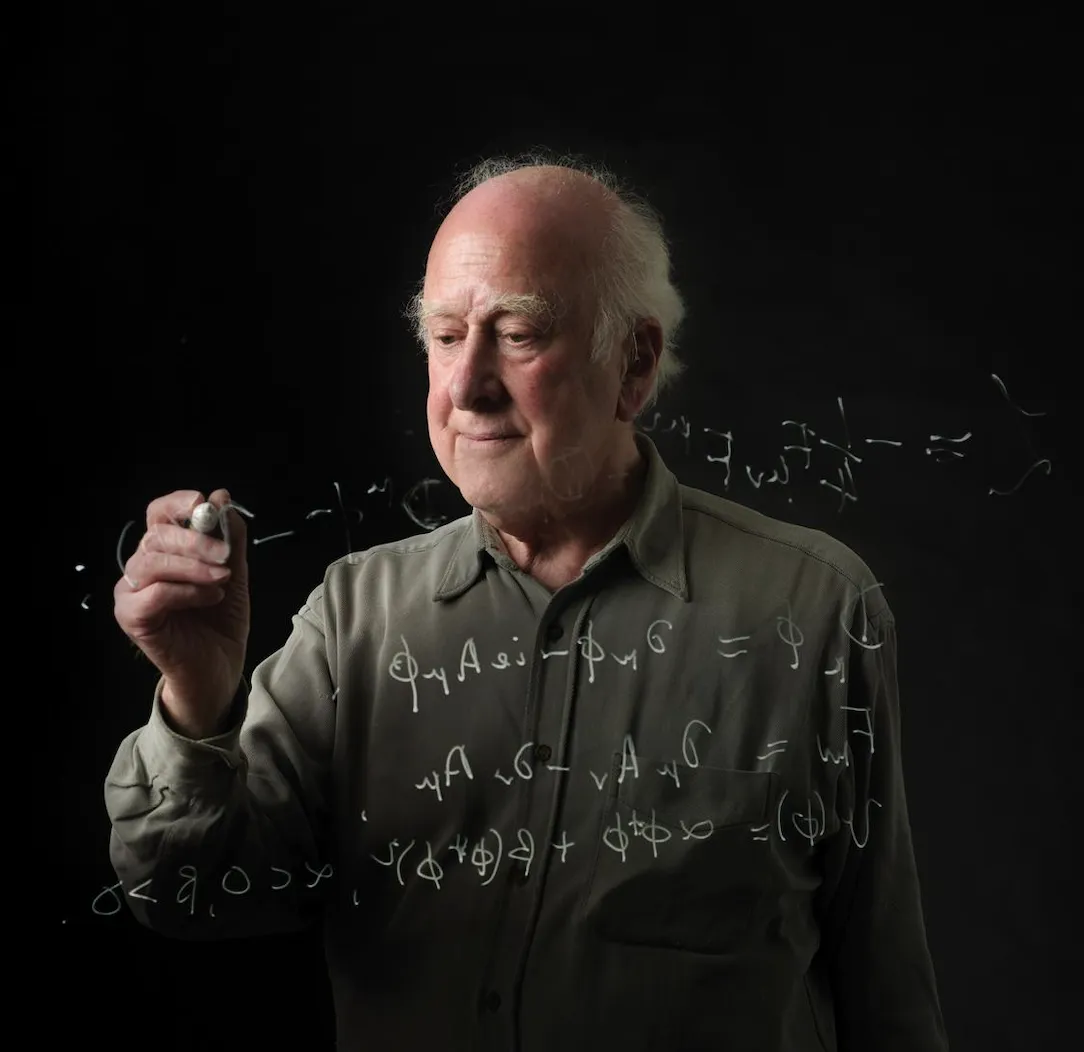
ImagesSource: CERN (CDS) At CERN on 4 July, the ATLAS and CMS collaborations present evidence in the LHC data for a particle consistent with a Higgs boson, the particle linked to the mechanism proposed in the 1960s to give mass to the W, Z and other particles. Source: CERN (CDS) Source: CERN (CDS) Source: CERN (CDS) Source: CERN (CDS) Source: CERN (CDS) At CERN on 4 July, the ATLAS and CMS collaborations present evidence in the LHC data for a particle consistent with a Higgs boson, the particle linked to the mechanism proposed in the 1960s to give mass to the W, Z and other particles. Source: CERN (CDS) At CERN on 4 July, the ATLAS and CMS collaborations present evidence in the LHC data for a particle consistent with a Higgs boson, the particle linked to the mechanism proposed in the 1960s to give mass to the W, Z and other particles. Source: CERN (CDS) At CERN on 4 July, the ATLAS and CMS collaborations present evidence in the LHC data for a particle consistent with a Higgs boson, the particle linked to the mechanism proposed in the 1960s to give mass to the W, Z and other particles. Source: CERN (CDS) At CERN on 4 July, the ATLAS and CMS collaborations present evidence in the LHC data for a particle consistent with a Higgs boson, the particle linked to the mechanism proposed in the 1960s to give mass to the W, Z and other particles. Source: CERN (CDS) Source: CERN (CDS) Source: CERN (CDS) Source: CERN (CDS) Source: CERN (CDS) Source: CERN (CDS) Source: CERN (CDS) Source: CERN (CDS) A graphic artistic view of the Brout-Englert-Higgs Field. Source: CERN (CDS) Event display of a H -> 2e2mu candidate event with m(4l) = 122.6 (123.9) GeV without (with) Z mass constraint. The masses of the lepton pairs are 87.9 GeV and 19.6 GeV. The event was recorded by ATLAS on 18-Jun-2012, 11:07:47 CEST in run number 205113 as event number 12611816. Zoom into the tracking detector. Muon tracks are colored red, electron tracks and clusters in the LAr calorimeter are colored green. Source: CERN (CDS) Figure 1. Event recorded with the CMS detector in 2012 at a proton-proton centre of mass energy of 8 TeV. The event shows characteristics expected from the decay of the SM Higgs boson to a pair of photons (dashed yellow lines and green towers). The event could also be due to known standard model background processes. Source: CERN (CDS) At CERN on 4 July, the ATLAS and CMS collaborations present evidence in the LHC data for a particle consistent with a Higgs boson, the particle linked to the mechanism proposed in the 1960s to give mass to the W, Z and other particles. Source: CERN (CDS) VideosSource: CERN (CDS) 11sec animation of a Higgs->ZZ->4mu candidate being created CMS . Real CMS proton-proton collision events in which 4 high energy muons (light blue lines) are observed. The event shows characteristics expected from the decay of a Higgs boson but is also consistent with background Standard Model physics processes. Source: CERN (CDS) Source: CERN (CDS) Interview to Francois Englert, theoretical physicist, on the results of the Higgs boson searches announced at the seminar at CERN on July 4 2012. Professor Englert comments the results and explains his role in the Higgs field theory – English version. Source: CERN (CDS) Peter Higgs answers questions about his feelings following the announcement of the discovery of a new particle by ATLAS and CMS that looks like the Higgs boson, at a seminar at CERN on July 4, 2012. He also explains his role in the proposal of a Higgs mechanism. Source: CERN (CDS) Interview to Fabiola Gianotti, spokesperson ATLAS collaboration, on the results of the searches for the Higgs boson announced at CERN on July 4, 2012. Source: CERN (CDS) John Ellis answer the question What is the Higgs boson? in preparation for the press conference following the seminar on LHC 2012 results on the Higgs boson searches, due on July 4 2012 at CERN. Source: CERN (CDS) Source: CERN (CDS) Files
ImagesELENA Experiment’s Connexion with GBar. Source: CERN (CDS) ELENA Experiment’s Connexion with GBar. Source: CERN (CDS) The 1T antimatter trap stack, with the 1T magnet vessel to the left and the 5T magnet vessel to the right. . Source: CERN (CDS) View into the 5T magnet vessel. To the left, covered in black is the laser hut. The green at the edge is the electronic rack for operating the antimatter traps. Source: CERN (CDS) Portrait of Jeff Hangst, spokesperson of the Alpha collaboration at CERN’s Antimatter Factory. Source: CERN (CDS) Photo 1-6 : view of the RFQ – RFQ of the ASACUSA experiment. It allows to slow down antiprotons coming from the AD from 5 MeV to 100 KeV with high efficiency. ————– Photo 7 – 16 : view of the TRAP – The ASACUSA Cusp trap. Thanks to its special magnetic field configuration, it enables the extraction of an anti-hydrogen beam, thus allowing a high precision microwave spectroscopy outside the magnetic field of the trap. This new method opens a new path to make a stringent test of CPT symmetry between matter and antimatter. Source: CERN (CDS) Stefan Ulmer – Spokeperson of BASE experiment. Source: CERN (CDS) VideosFootage taken during the preparation of the ELENA decelerator. With a circumference of about 30 m, ELENA can be located in the AD hall where assembly and commissioning would not disturb the current AD operation. Source: CERN (CDS) BASE is one of the experiments at CERN’s Antimatter Factory. The video fotage starts with an aerial (drone) view of the Antimatter Factory building seen from outside (00’01”); the flight continues inside over the experimental area with an overview of the Alfa and ASACUSA experiments (00’13”); finally the drone flies over the BASE experiment (00’19”), where spokesperson Stefan Ulmer can be seen (00’25”) inserting a Nitrogen level metre inside BASE’s cryostat. This probe is used to measure the level of Nitrogen in the vessel. BASE uses liquid Nitrogen and liquid Heliumto keep its penning trap cold, which is necessary to prevent its anti-protons to annihilate. Source: CERN (CDS) Files
ImagesVideosFiles
ImagesVideosFiles
Here you will find images, videos and files about computing at CERN
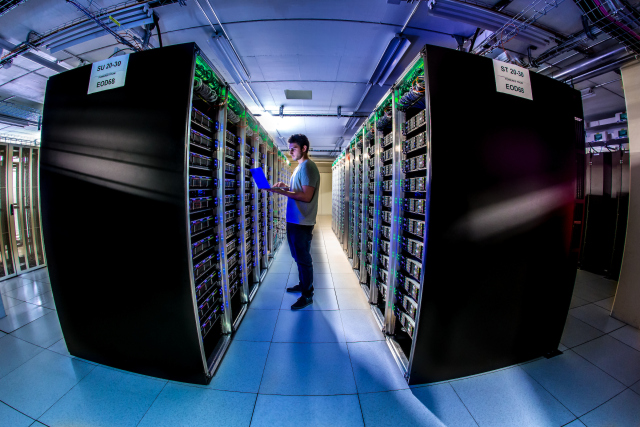
ImagesWEB@30 celebration at CERN on 12 March 2019 (morning) . List of speakers: – Sir Tim Berners-Lee, Web inventor, Director of the World Wide Web Consortium (W3C) and Founding Director of the World Wide Web Foundation – Doreen Bogdan-Martin, Director of the ITU Telecommunication Development Bureau – Robert Cailliau, Web pioneer – Frédéric Donck, Chief Regional Bureau Director for Europe for the Internet Society – Bruno Giussani, Global Curator of the TED conferences and Chair of the Geneva International Film Festival on Human Rights – Jean-François Groff, Web pioneer and entrepreneur – Jovan Kurbalija, Executive Director, Secretariat of the High-level Panel on Digital Cooperation (ex officio) at the United Nations, Founding Director of DiploFoundation and Head of the Geneva Internet Platform – Lou Montulli, Web pioneer and entrepreneur – Monique Morrow, Chief Technology Strategist, President and Co-Founder of the Humanized Internet – Zeynep Tufekci, techno-sociologist and assistant professor at the University of North Carolina – Fabiola Gianotti, CERN Director-General – Charlotte Lindberg Warakaulle, CERN Director for International Relations – Anna Cook, Master of ceremonies (Names are in the metadata or under the picture). Source: CERN (CDS) Robert Cailliau, web pioneer. Source: CERN (CDS) Tim Berners-Lee. Source: CERN (CDS) Tim Berners-Lee and Fabiola Gianotti. Source: CERN (CDS) Portrait of Sir Tim Berners-Lee in a rack of the CERN Computer Centre. Source: CERN (CDS) Source: CERN (CDS) Tim Berners-Lee’s proposal for the World Wide Web. Source: CERN (CDS) Demo of the NeXT computer on which Tim Berners-Lee developed the Web and which was also the first Web server. Source: CERN (CDS) Demo of the NeXT computer on which Tim Berners-Lee developed the Web and which was also the first Web server. Source: CERN (CDS) Robert Cailliau, a systems engineer at CERN who was Tim Berners-Lee’s first partner on the World Wide Web project. Source: CERN (CDS) Picture 07first raw: Robert Cailliau, Ben Segal, Tim Berners-Lee (inventor of the WWW), and Jean-Francois Groffsecond raw: Dan Brickley, Chris Bizer, Tom Scott and Stephane Boyera. Source: CERN (CDS) Source: CERN (CDS) Source: CERN (CDS) CDSINTERNAL|MediaArchive|Migrated from: \cern.chdfsServicesMediaArchivePhotoMasters2004�401054�401054.jpg. Source: CERN (CDS) Welcome by Professor Rolf Heuer, Director General of CERN The history of the Web with Ben Segal, Jean-Francois Groff and Robert CailliauQuestions for the panel : Jean-Francois Groff, Ben Segal, Tim Berners-Lee and Robert CailliauThe future of the Web with Chris Bizer, Stephane Boyera, Dan Brickley and Tom Scott. Source: CERN (CDS) During the 2003 World Summit on the Information Society (WSIS) at Geneva Palexpo, Tim Berners-Lee, W3C’s director (World Wide Web consortium) was introduced to Kofi Annan, Secretary General of the United Nations. Tim Berners-Lee developed the first network and server system that lead to the World Wide Web. Source: CERN (CDS) CDSINTERNAL|MediaArchive|Migrated from: \cern.chdfsServicesMediaArchivePhotoMasters2001�108006�108006.jpg. Source: CERN (CDS) Source: CERN (CDS) Former physicist, Tim Berners-Lee invented the World Wide Web as an essential tool for high energy physics at CERN from 1989 to 1994. Together with a small team he conceived HTML, http, URLs, and put up the first server and the first ‘what you see is what you get’ browser and html editor. Tim is now Director of the Web Consortium W3C, the International Web standards body based at INRIA, MIT and Keio University. Source: CERN (CDS) Une réplique de la machine NeXT sur laquelle Tim Berners-Lee developpa le premier serveur WWW, le navigateur multimédia et l’éditeur web en 1990. Source: CERN (CDS) Videosfootage NeXt fist server World Wide Web for the 30zh Anniversary of the web . Source: CERN (CDS) This video summarizes in 3 minutes how the Web was invented at CERN by British physicist and IT expert Tim Berners Lee in 1989 and how it grew to become what it is today thanks to CERN’s decision in 1993 to keep it as an open standard for everyone to use. Source: CERN (CDS) resume of 30th Anniversary of the World Wide Web – Fabiola Gianotti Director General – Tim Bernees-Lee web inventor all speakers are on https://web30.web.cern.ch/speakers . Source: CERN (CDS) Files
ImagesVideosFiles
Here you will find images, videos and files about CERN.
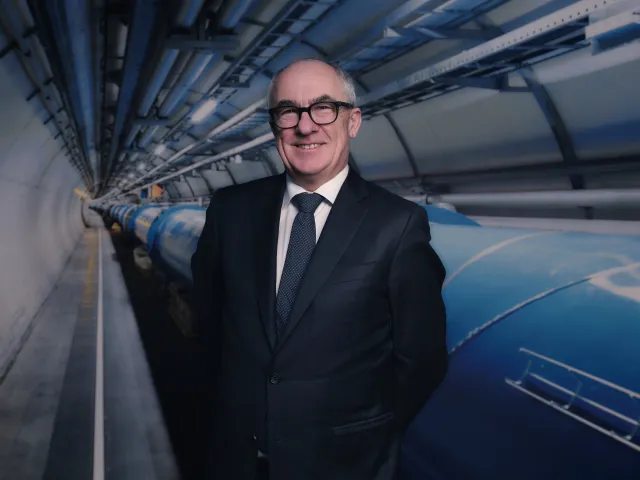
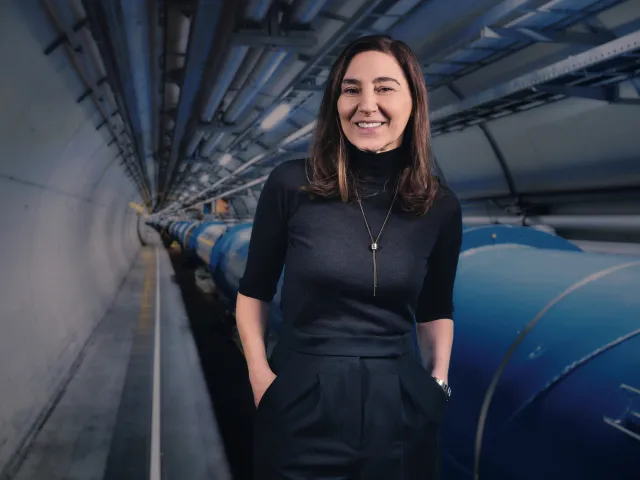
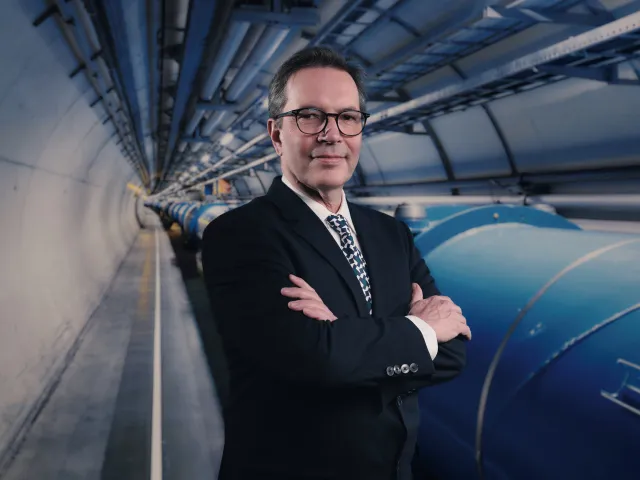
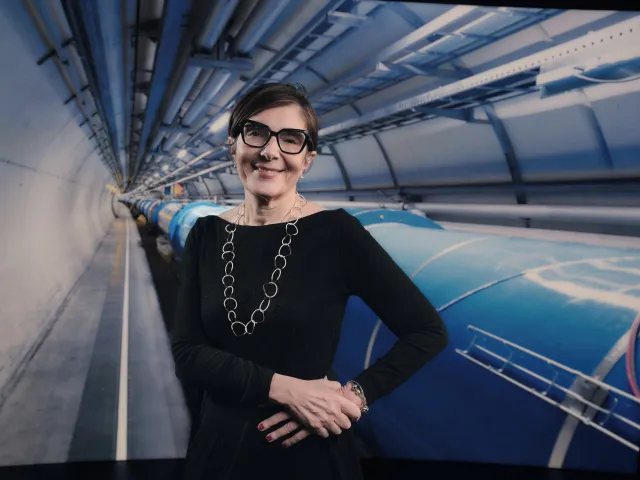
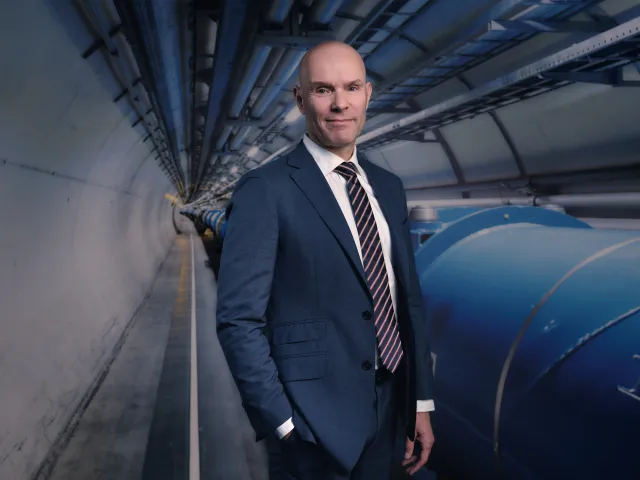
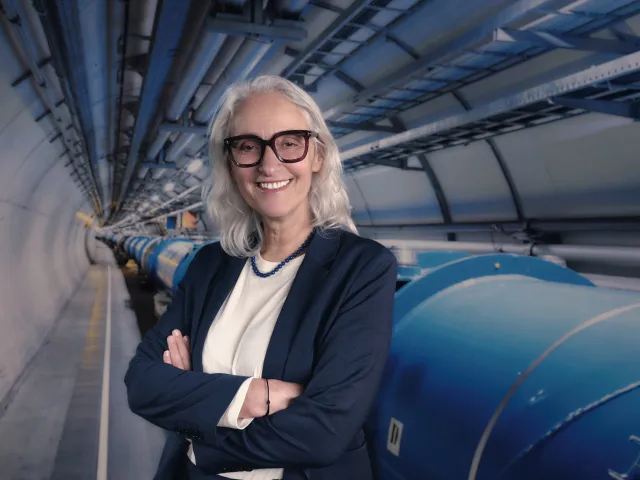
ImagesMar Capeáns – Director for Site Operations (Image: CERN)Gautier Hamel – Director for Research and Computing (Image: CERN)Enrica Porcari – Chief Information Officer (Image: CERN)Jan-Paul Brouwer – Director for Finance and Human Resources (Image: CERN)Ursula Bassler – Director of Stakeholder Relations (Image: CERN)Oliver Brüning – Director for Accelerators and Technology (Image: CERN)Mark Thomson – Director-General (Image: CERN)
ImagesCredit: Renzo Piano Building Workshop. Source: CERN (CDS) Launch press conference of the Science Gateway project in the presence of Renzo Piano and Fabiola Gianotti. Source: CERN (CDS) Launch press conference of the Science Gateway project in the presence of Renzo Piano and Fabiola Gianotti. Source: CERN (CDS) Credit: Renzo Piano Building Workshop. Source: CERN (CDS) Launch press conference of the Science Gateway project in the presence of Renzo Piano and Fabiola Gianotti. Source: CERN (CDS) Launch press conference of the Science Gateway project in the presence of Renzo Piano and Fabiola Gianotti. Source: CERN (CDS) Credit: Renzo Piano Building Workshop in partnership with Brodbeck Roulet architectes associés. Source: CERN (CDS) Credit: Renzo Piano Building Workshop in partnership with Brodbeck Roulet architectes associés. Source: CERN (CDS) Credit: Renzo Piano Building Workshop in partnership with Brodbeck Roulet architectes associés. Source: CERN (CDS) Credit: Renzo Piano Building Workshop in partnership with Brodbeck Roulet architectes associés. Source: CERN (CDS) VideosFiles
ImagesVideosWhat is CERN ? . Source: CERN (CDS) Qu’est-ce que le CERN ? . Source: CERN (CDS) CERN has published new footage available for press and producers in 4K. In order to get the 4k footage you have to download the original file from the download section. Source: CERN (CDS) Files
ImagesVideosAll movie productions for the CERN60 anniversary event. Source: CERN (CDS) Files