
Tag: CMS
The Compact Muon Solenoid (CMS) is a general-purpose detector at the Large Hadron Collider (LHC). It is designed to investigate a wide range of physics, including the search for the Higgs boson, extra dimensions, and particles that could make up dark matter. Although it has the same scientific goals as the ATLAS experiment, it uses different technical solutions and a different magnet-system design.
-

LIVE: From the CMS experiment
Join scientists live from the underground cavern of the CMS experiment today on social media
-
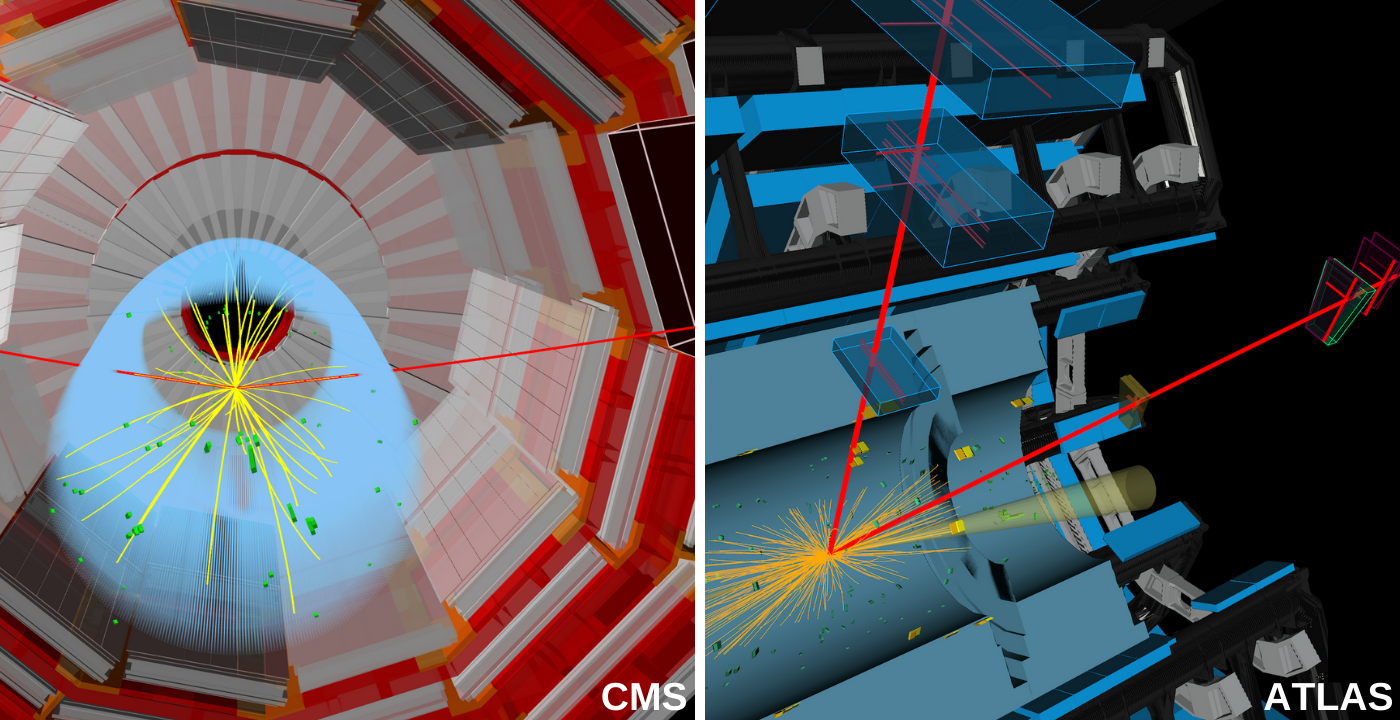
CERN experiments announce first indications of a rare Higgs boson process
The ATLAS and CMS experiments at CERN have announced new results which show that the Higgs boson decays into two muons
-
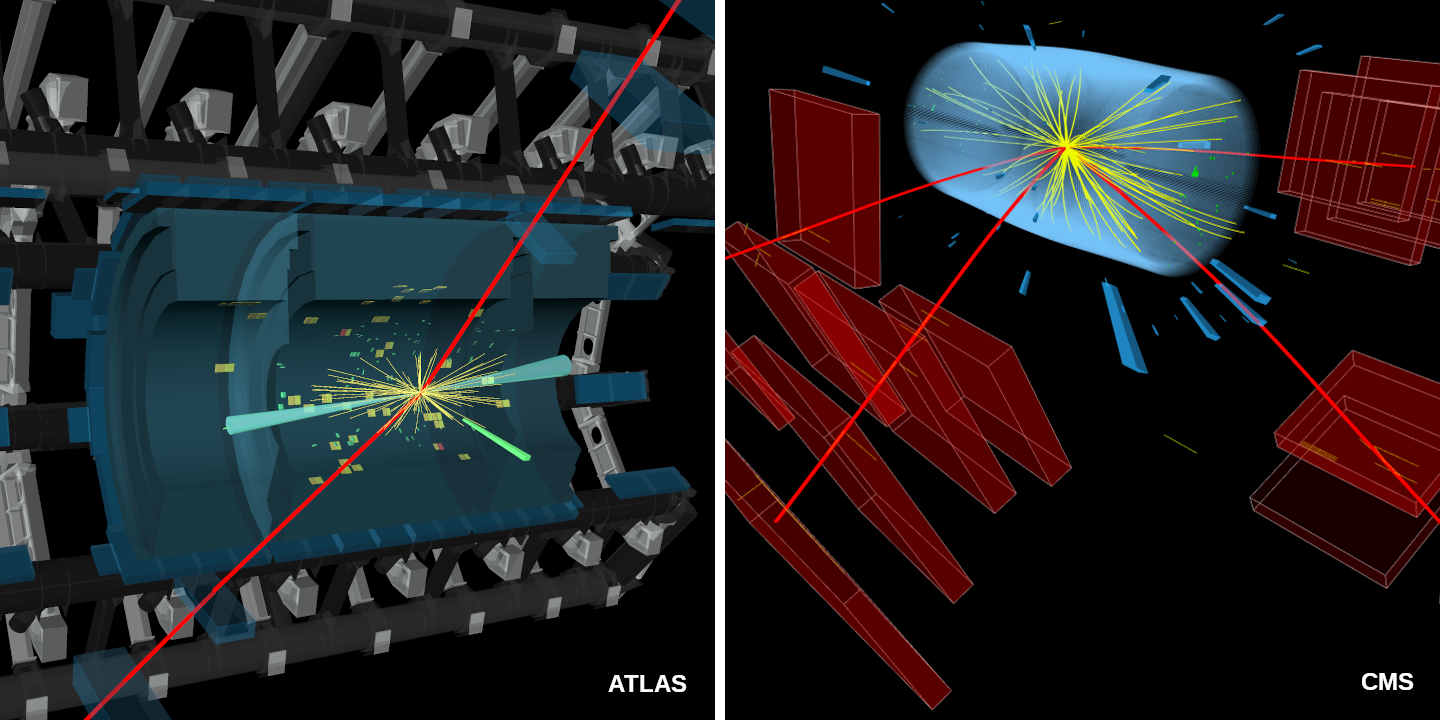
Exploring new ways to see the Higgs boson
The ATLAS and CMS collaborations presented their latest results on new signatures for detecting the Higgs boson at CERN’s Large Hadron Collider
-

New Higgs results presented at 2019 EPS-HEP conference
ATLAS and CMS have studied the Higgs boson with the largest sample of proton–proton collision data recorded so far
-

Highlights from the 2019 Moriond conference (electroweak physics)
The latest experimental data provide more stringent tests of the Standard Model and of rare phenomena of the microworld
-

What’s in store for the CMS detector over the next two years?
With the LHC switched off for a two-year technical stop, CMS is undergoing significant maintenance and upgrades
-

Hunting for dark quarks
A search for dark quarks conducted by the CMS collaboration inches closer to the parent particles from which they may originate
-

Long-sought decay of Higgs boson observed
Six years after its discovery, the Higgs boson has at last been observed decaying to fundamental particles known as bottom quarks.
-

CMS releases more than one petabyte of open data
This release includes datasets that were used to discover the Higgs boson
-

Kick-off for the 2017 LHC physics season
Data-taking has started again at the LHC: the experiments are continuing their exploration of physics at the unprecedented energy of 13 TeV.