
Tag: LHC
-
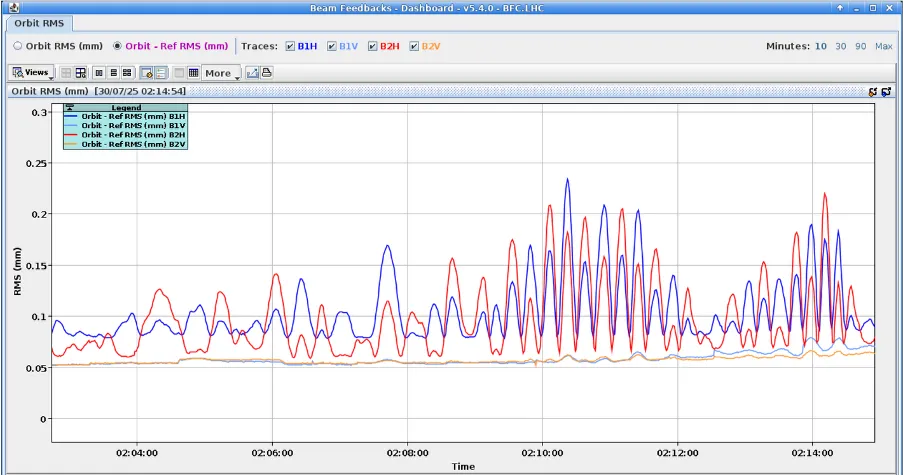
Accelerator Report: A summer of hot spells for the LHC
So far the summer run has seen solid progress in luminosity production, but also some unexpected beam and machine behaviour. Careful monitoring revealed a hardware issue, now being closely watched as the LHC continues to perform at full capacity.
-
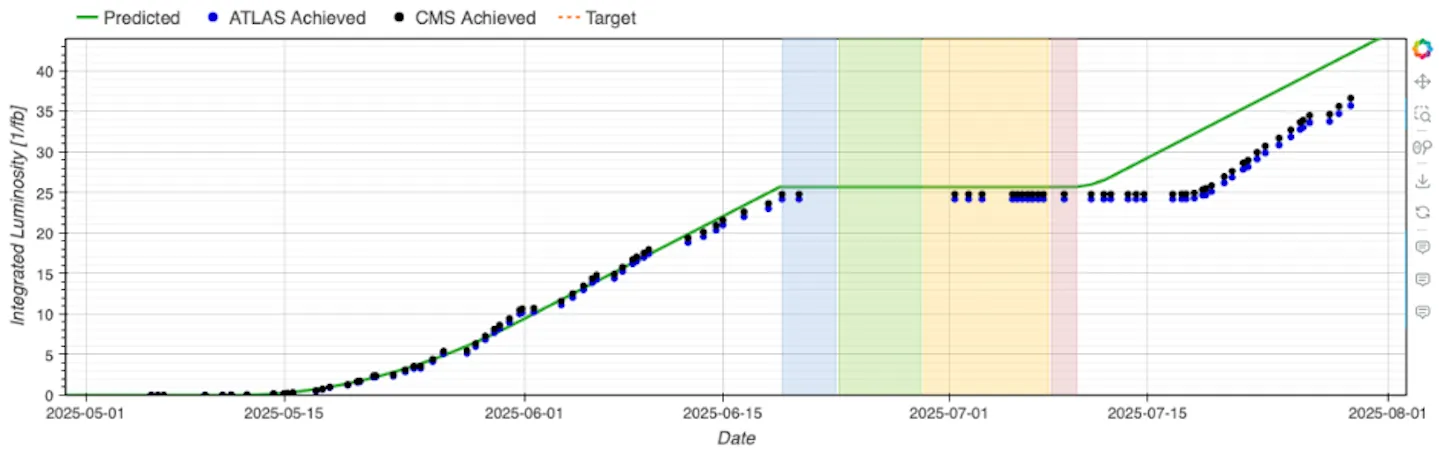
Accelerator Report: Focus on luminosity production
Following the successful oxygen and neon ion runs, protons are back in the LHC, delivering luminosity at a high rate and slowly catching up with the forecast production rate. In addition, a slight increase of the bunch intensity is being considered
-
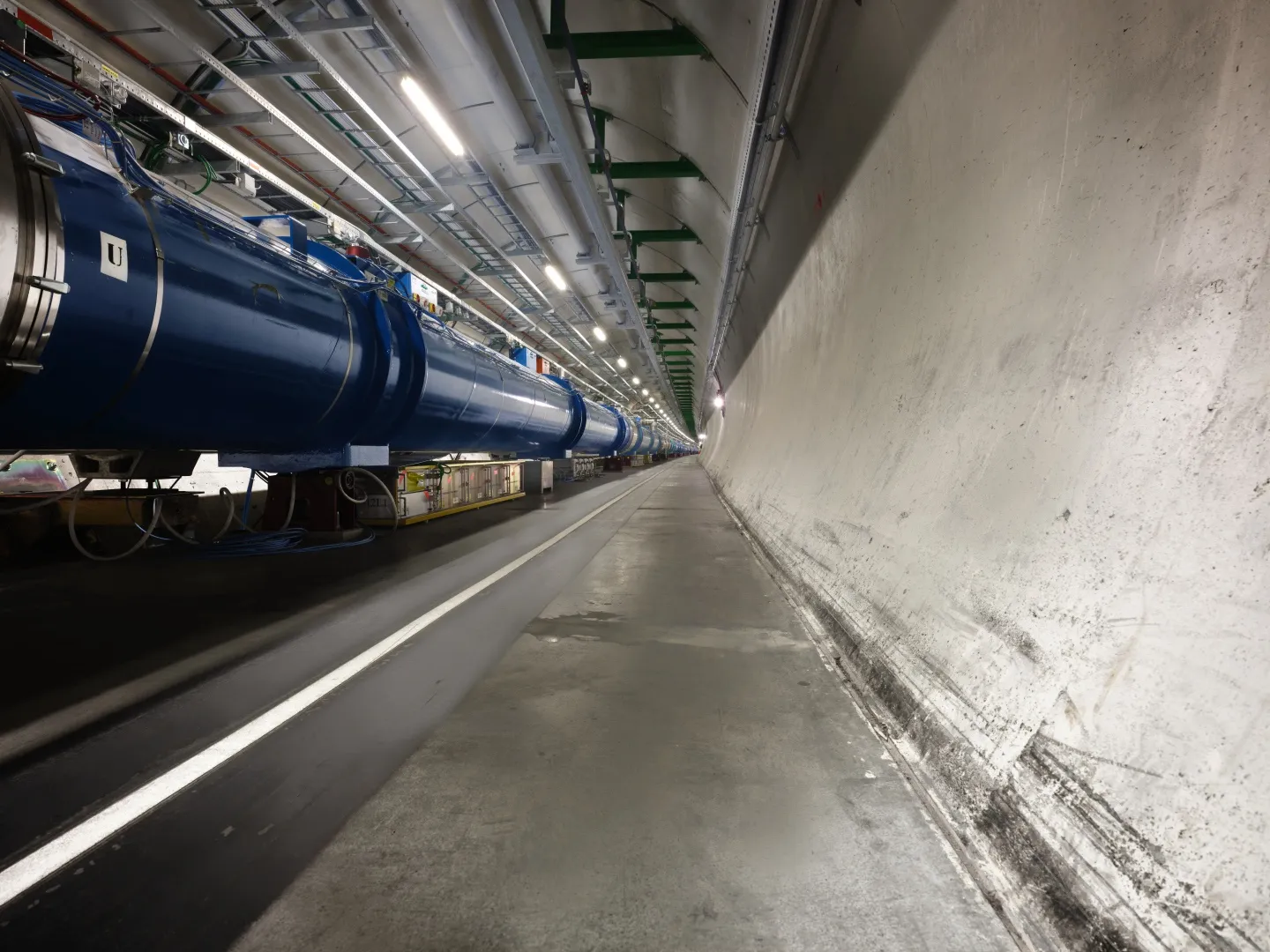
First-ever collisions of oxygen at the LHC
The Large Hadron Collider gets a breath of fresh air as it collides beams of protons and oxygen ions for the very first time. Oxygen–oxygen and neon–neon collisions are also on the menu of the next few days
-
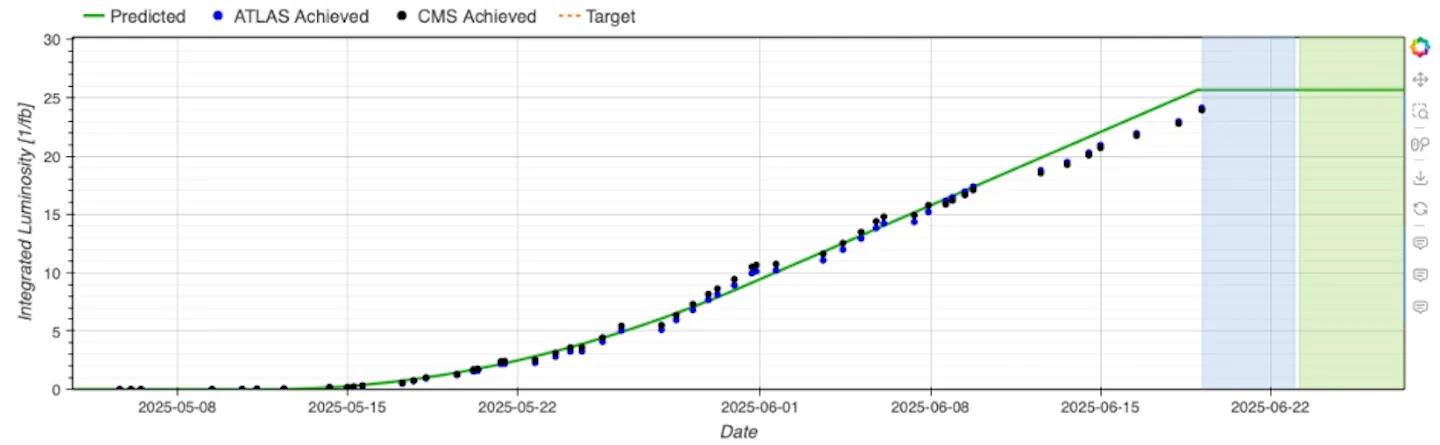
Accelerator Report: The LHC wraps up its first 2025 physics block
The proton physics run has now been paused for the first block of machine development studies, a technical stop and short oxygen- and neon-ion physics runs. Protons will be back in the machines on 12 July
-
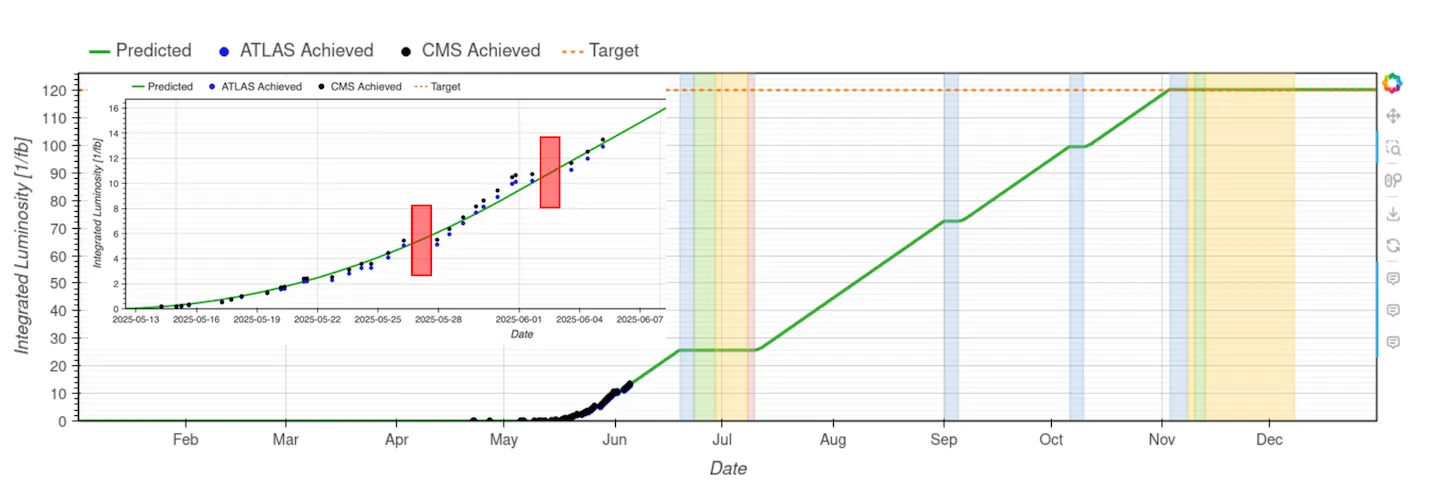
Accelerator Report: LHC on track despite disruptions throughout the accelerator complex
Following the achievement of 2460-bunch stable beams on 24 May, the accelerator complex experienced an SPS magnet failure, a central timing glitch and a complex-wide power disruption. Yet the LHC remains on track to achieve its 2025 luminosity goal
-
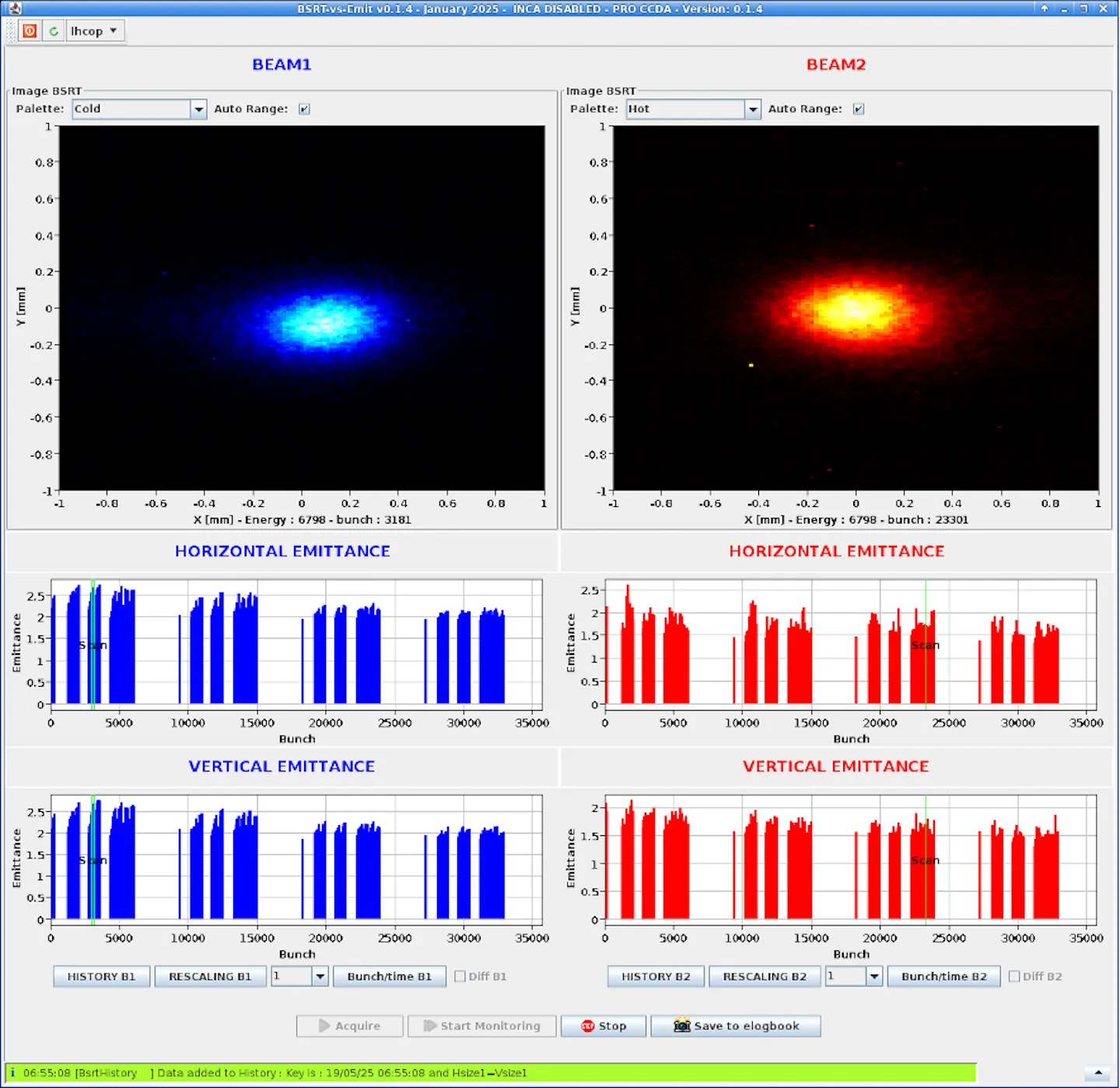
Accelerator Report: The LHC reached 1200 bunches per beam – full intensity is in sight!
On 19 May, the LHC reached 1200 bunches per beam, a level that is considered meaningful for physics. The full intensity of 2460 bunches per beam could be achieved before the end of the week
-
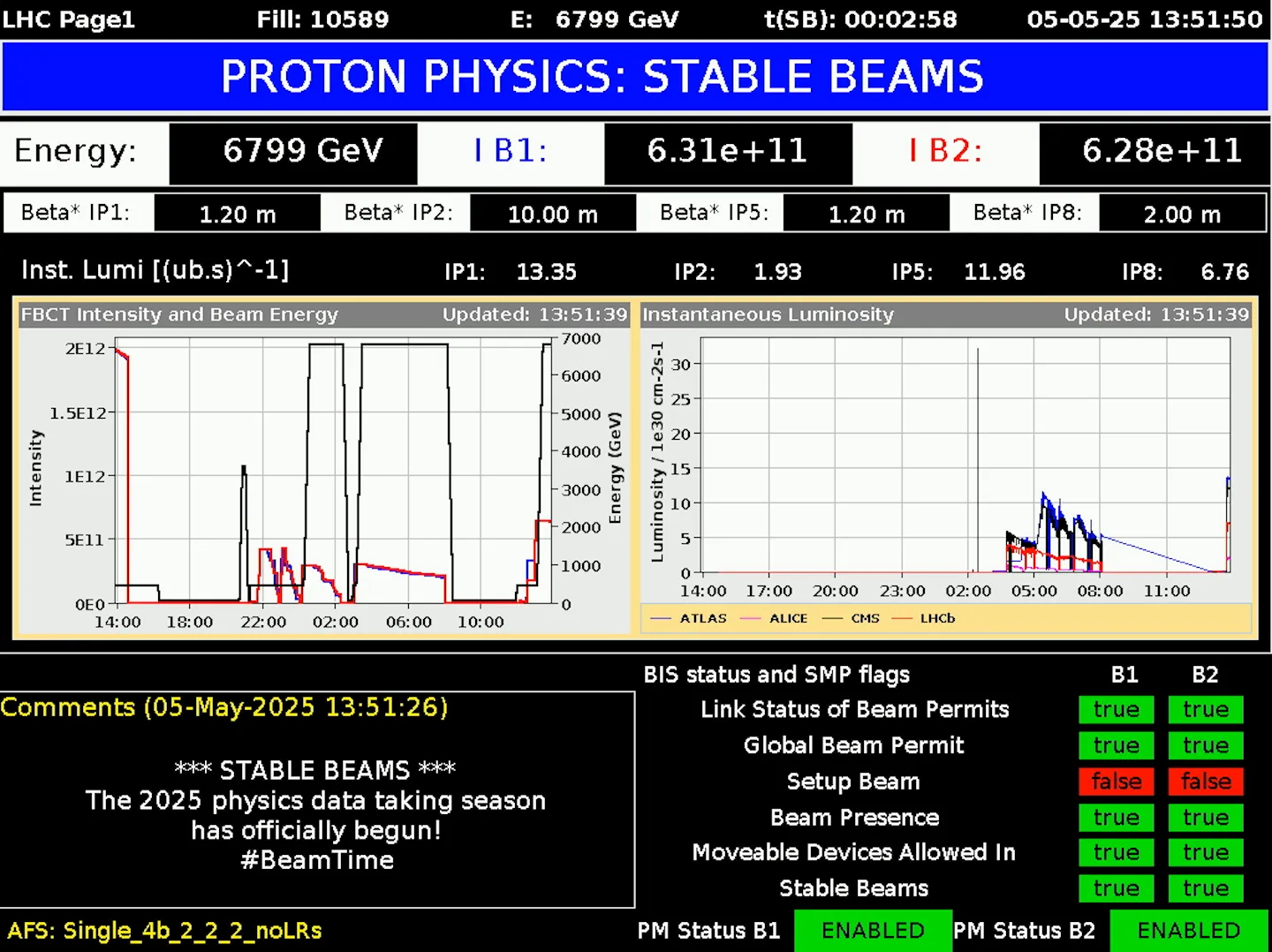
Accelerator Report: The first stable beams of 2025, a milestone and a beginning
The LHC operations team and many other experts have been working hard to set up and validate the accelerator for safe beam operation, leading to the first stable beams for physics of 2025 on 5 May
-
And they’re off! The 2025 LHC physics season gets underway
“Stable” particle beams are back in the LHC machine, marking the start of the 2025 physics data-taking campaign
-
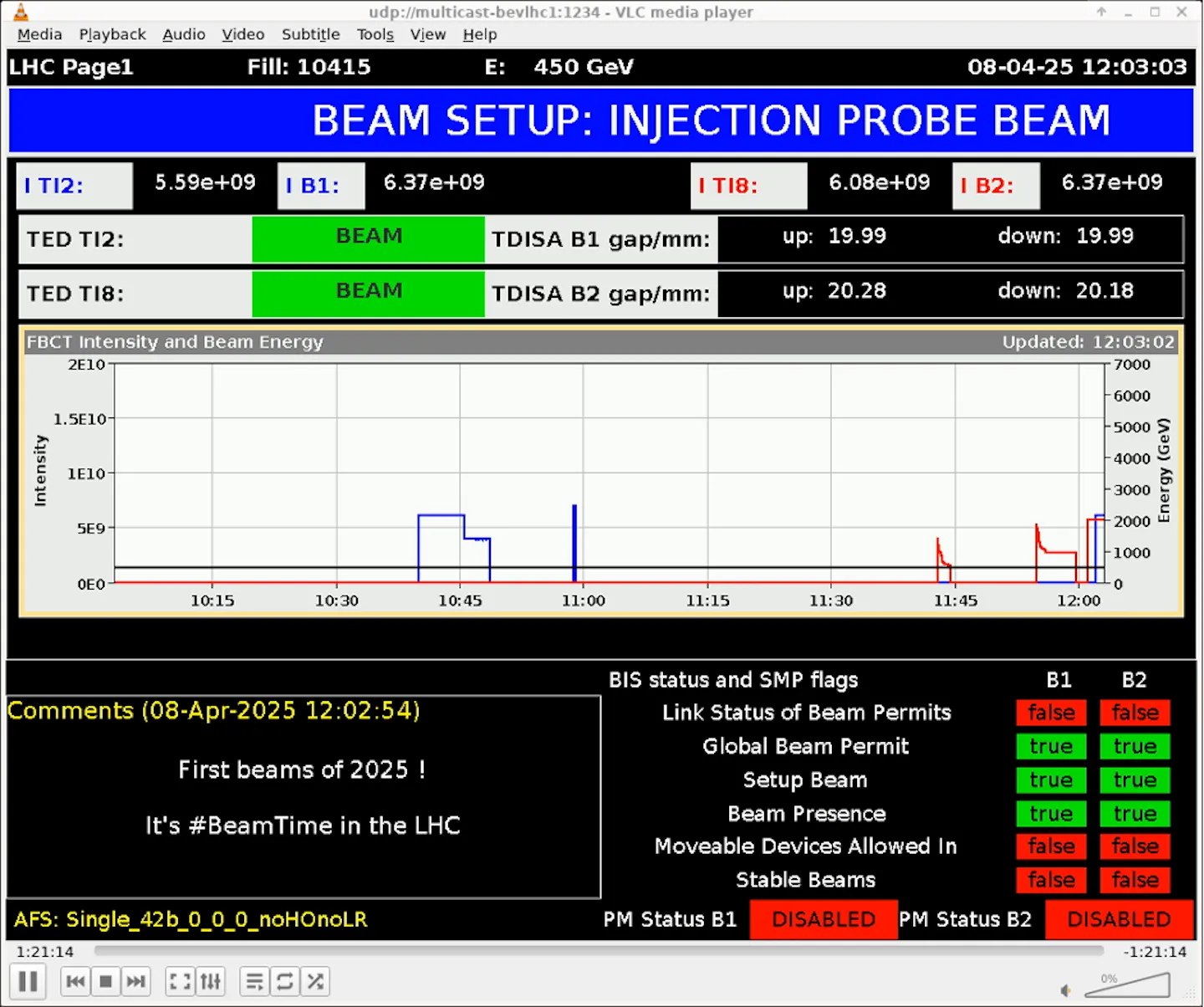
Accelerator Report: LHC protons outpacing the Easter tradition
The LHC has restarted and both beams have been circulating in the machine since 8 April, meaning that the start of the LHC beam commissioning during Easter is apparently not a constant of nature
-
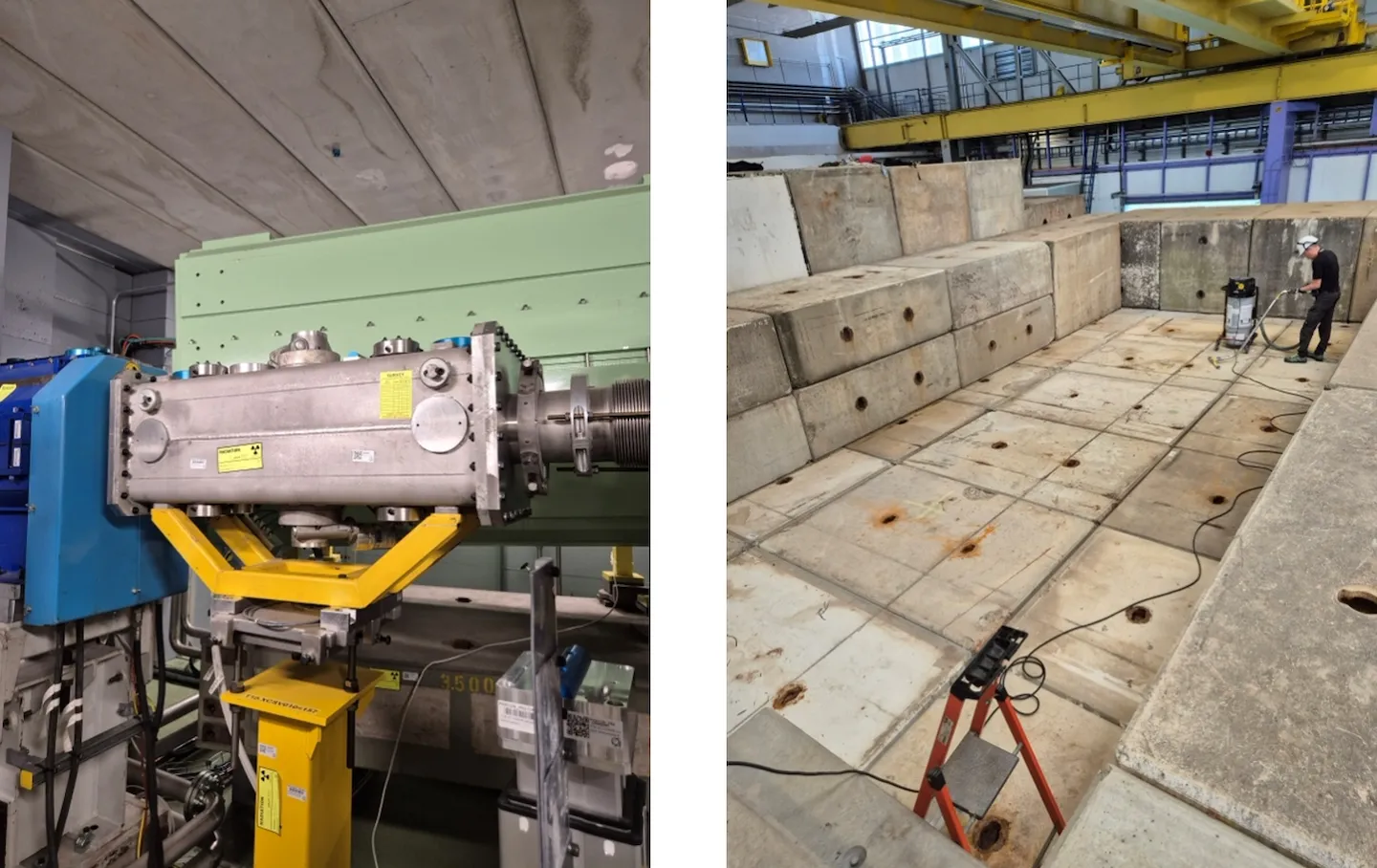
Accelerator Report: The LHC commissioning is well on track, but challenges lie ahead
The first beam-based physics of 2025 has started and more will follow soon. However, some unexpected challenges will cause a small delay in the restart of the LHC