
Tag: LHC
Seven experiments at the Large Hadron Collider (LHC) use detectors to analyse the myriad of particles produced by collisions in the accelerator. These experiments are run by collaborations of scientists from institutes all over the world. Each experiment is distinct and characterised by its detectors.
-

In the wake of partons
Today, almost all the quarks in our Universe are neatly organised into larger particles, glued together by aptly named gluons. For the first few millionths of a second after the Big Bang, however, quarks and gluons were not confined, forming instead a state of matter known as a quark–gluon plasma (QGP). By studying the QGP
-
Journey back to the surface
-
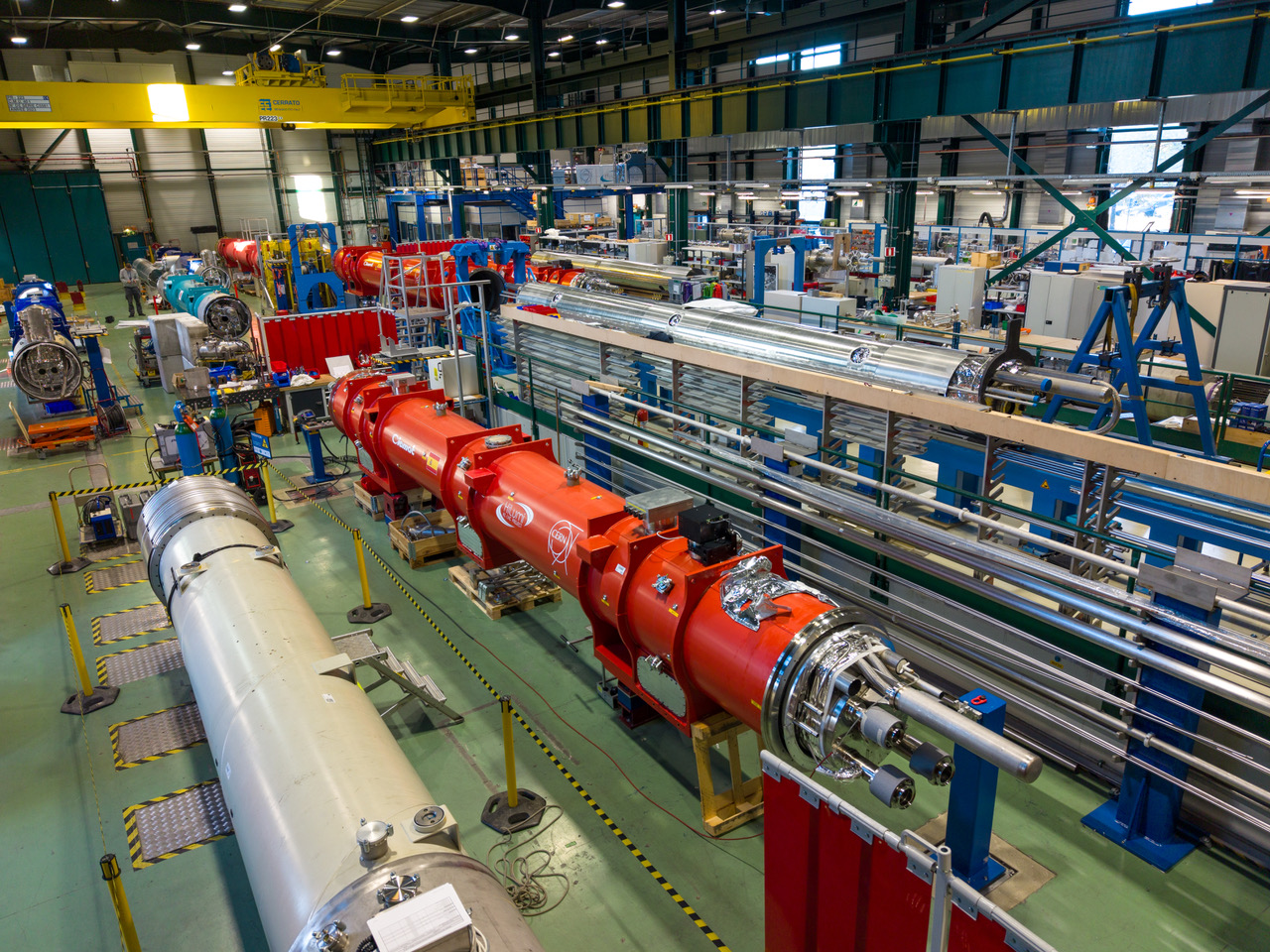
CERN-made HiLumi LHC quadrupoles ready for installation
After years of design, manufacturing and testing, the High-Luminosity (HiLumi) LHC magnet programme has reached a landmark point: all eight new CERN-made quadrupole magnets needed for installation are ready for the tunnel (with two spares produced and entering their final stages). Known as the new inner triplets, these magnets are now complete and have been fully
-
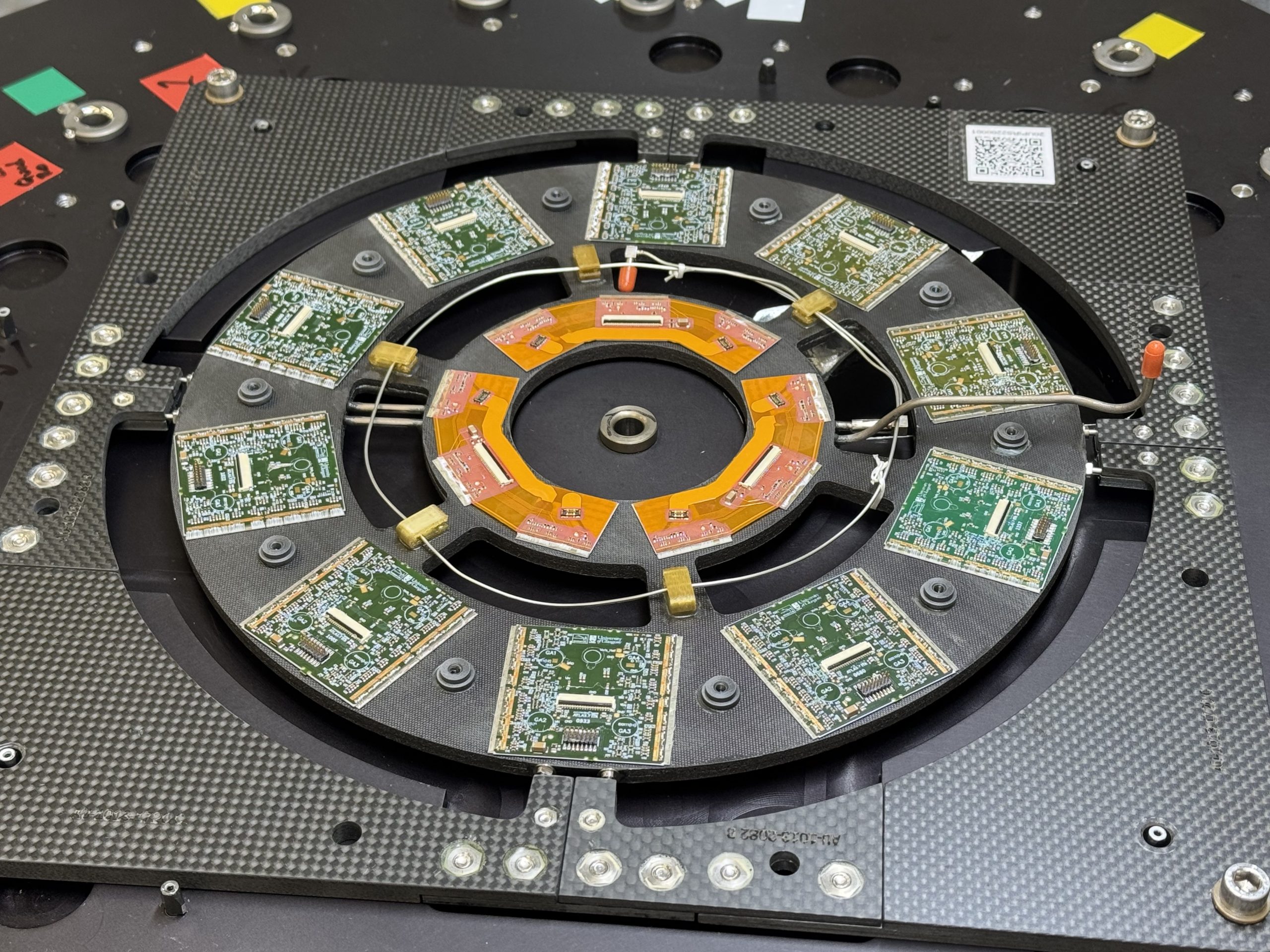
A ringing success for the ATLAS Inner Tracker Pixel System
-
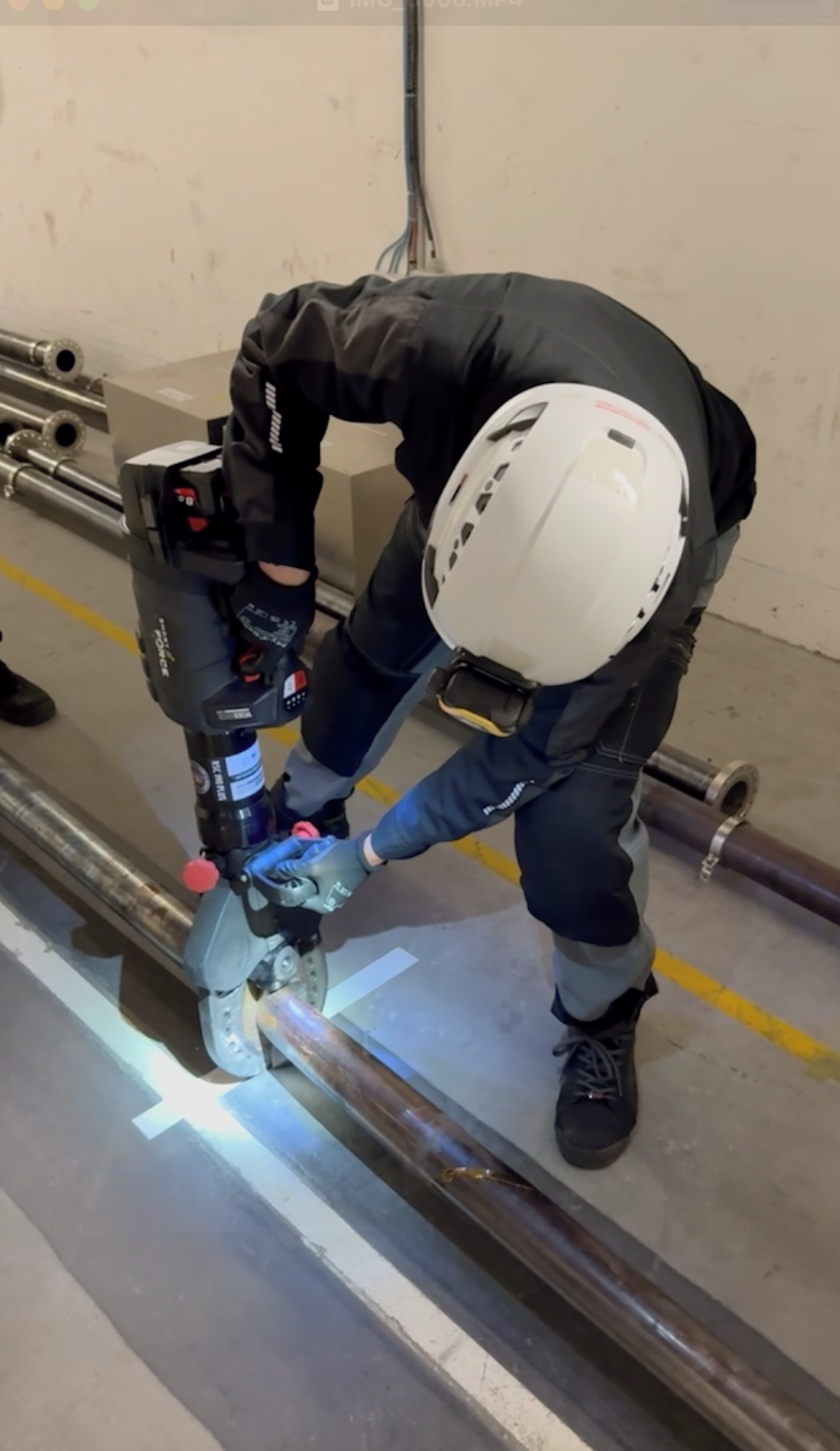
890 metres of beam vacuum piping dismantled for HiLumi LHC
-
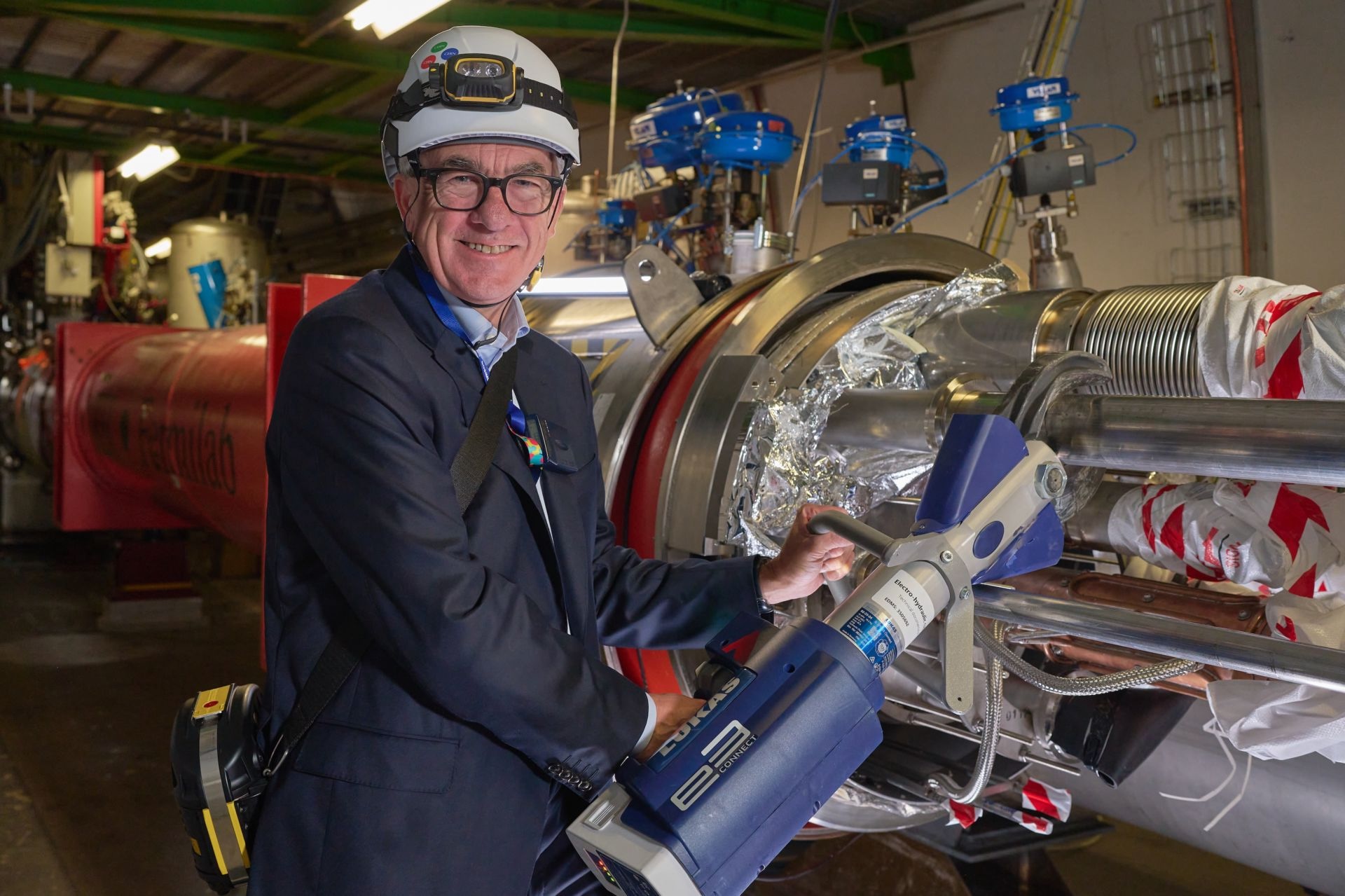
The disconnection of the LHC has begun
The 27 km circumference of the Large Hadron Collider (LHC) contains thousands of magnets of different types – dipoles, quadrupoles, sextupoles, octupoles, decapoles, etc. – which each play a very specific role. Among them are the inner triplets: sets of three quadrupoles (hence the name) located on either side of the four main LHC experiments
-

Exceptional transport operations to make way for HiLumi LHC
We often hear about the remarkable components of the accelerators, but transporting this equipment sometimes requires measures that are just as impressive. Over the course of the third long shutdown (LS3), which started this summer, entire sections of the Large Hadron Collider and its detectors will be dismantled in order to make room for the
-
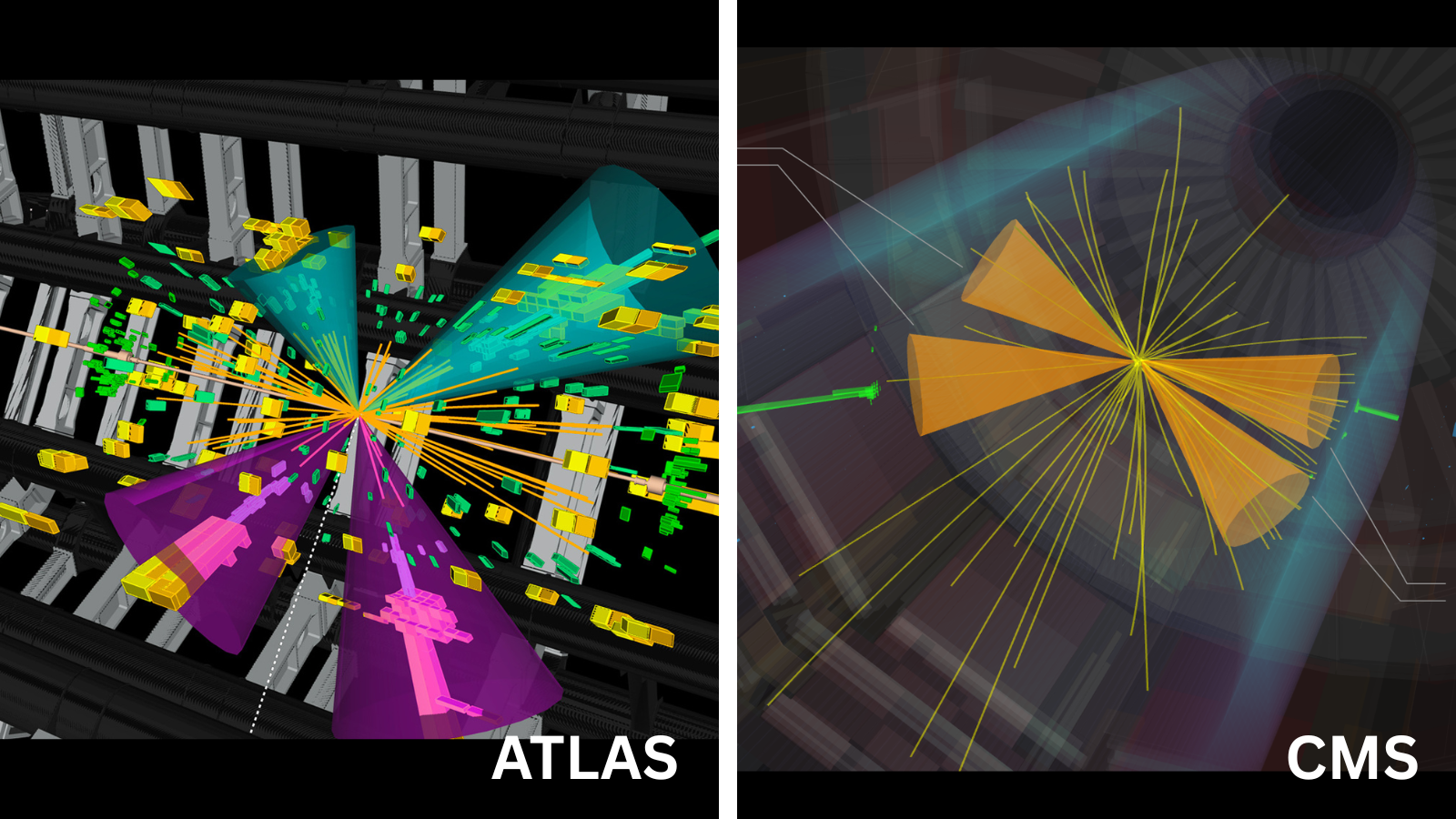
ATLAS and CMS narrow in on double-Higgs production
Finding one Higgs boson was hard enough, but physicists at the Large Hadron Collider (LHC) are hunting for something even more elusive: pairs of Higgs bosons. At the recent International Conference on High Energy Physics 2026, the ATLAS and CMS Collaborations presented new constraints on the double-Higgs production rate, providing insight into how the Higgs
-
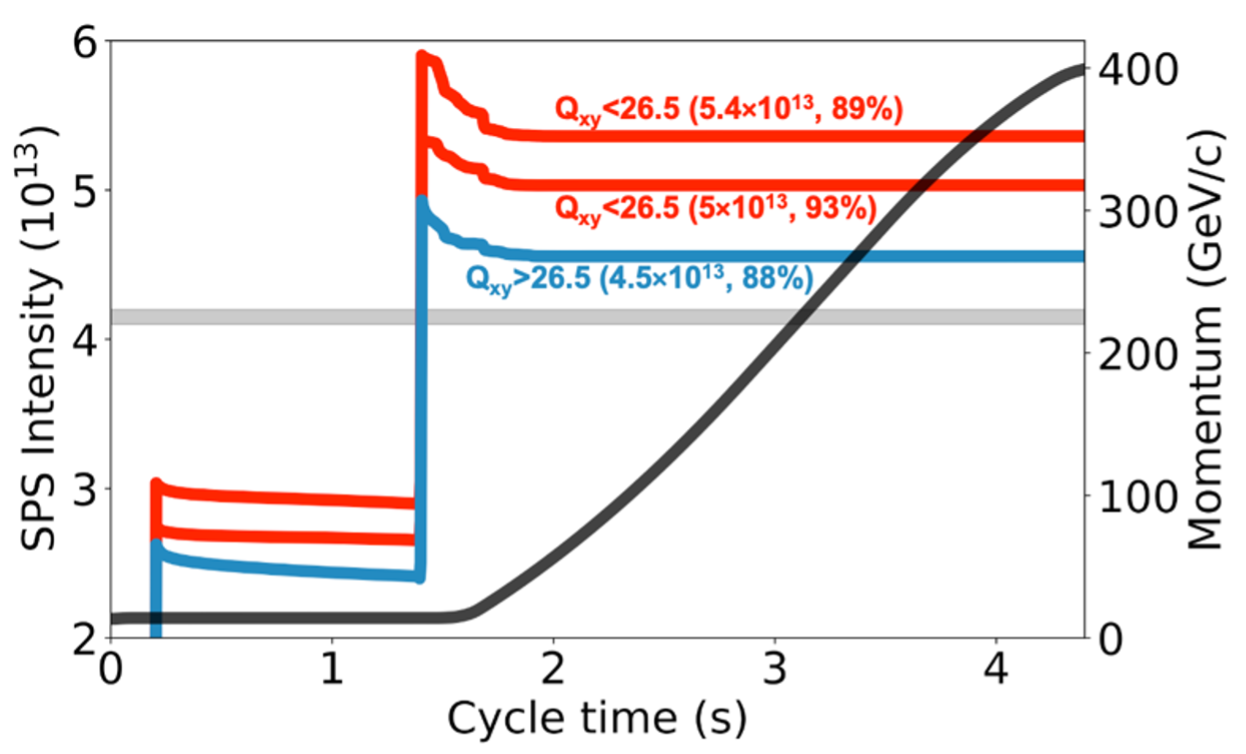
Accelerator Report: Beyond the LHC – CERN’s Beams Keep Science Moving
The Large Hadron Collider (LHC) may have entered Long Shutdown 3 (LS3), but across the rest of CERN’s accelerator complex operations remain as busy as ever. The LHC injector chain continues to provide proton beams for a broad range of users, including the ELENA antiproton community, the East and North Area experiments and the n_TOF
-

Oxygen collisions at the LHC show new indications of extreme state of matter
One year on from the first-ever collisions of oxygen at the Large Hadron Collider (LHC), the main LHC Collaborations – ALICE, ATLAS, CMS and LHCb – have each reported signs of the state of matter known as quark–gluon plasma (QGP) originating from these collisions. QGP is a state of matter that forms under intense pressure