
Tag: Media
-
CERN announces winners of its 2015 beamline for schools competition
Geneva, 15 June 2015. CERN1 today announced the winners of its 2015 beamline for schools competition. Two teams of high-school students have been selected to travel to CERN in September to carry out their own experiments using a CERN accelerator beam. The winners, the “Leo4G” team from Liceo Scientifico Leonardo da Vinci School in Florence,
-
LHC experiments are back in business at a new record energy
Geneva, 3 June 2015. Today, CERN1‘s Large Hadron Collider (LHC) started delivering physics data for the first time in 27 months. After an almost two year shutdown and several months re-commissioning, the LHC is now providing collisions to all of its experiments at the unprecedented energy of 13 TeV, almost double the collision energy of
-
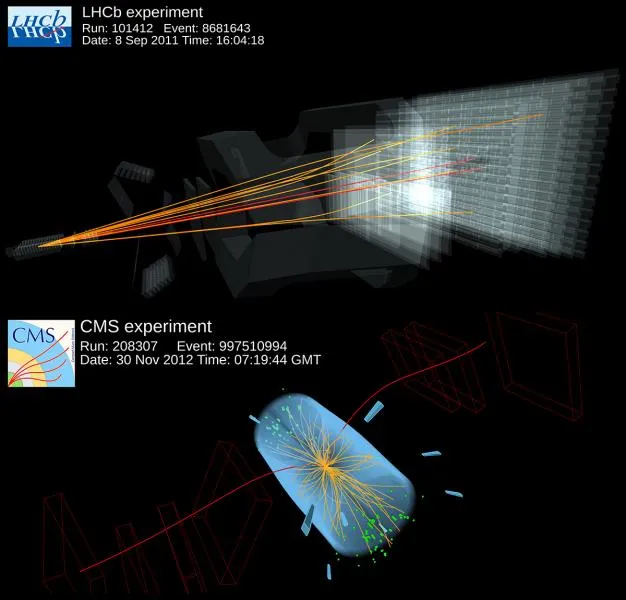
CMS and LHCb experiments reveal new rare particle decay
Geneva, 13 May 2015. In an article published today in Nature, the CMS and LHCb collaborations describe the first observation of the very rare decay of the B0s particle into two muon particles. The Standard Model, the theory that best describes the world of particles, predicts that this rare subatomic process happens about four times
-
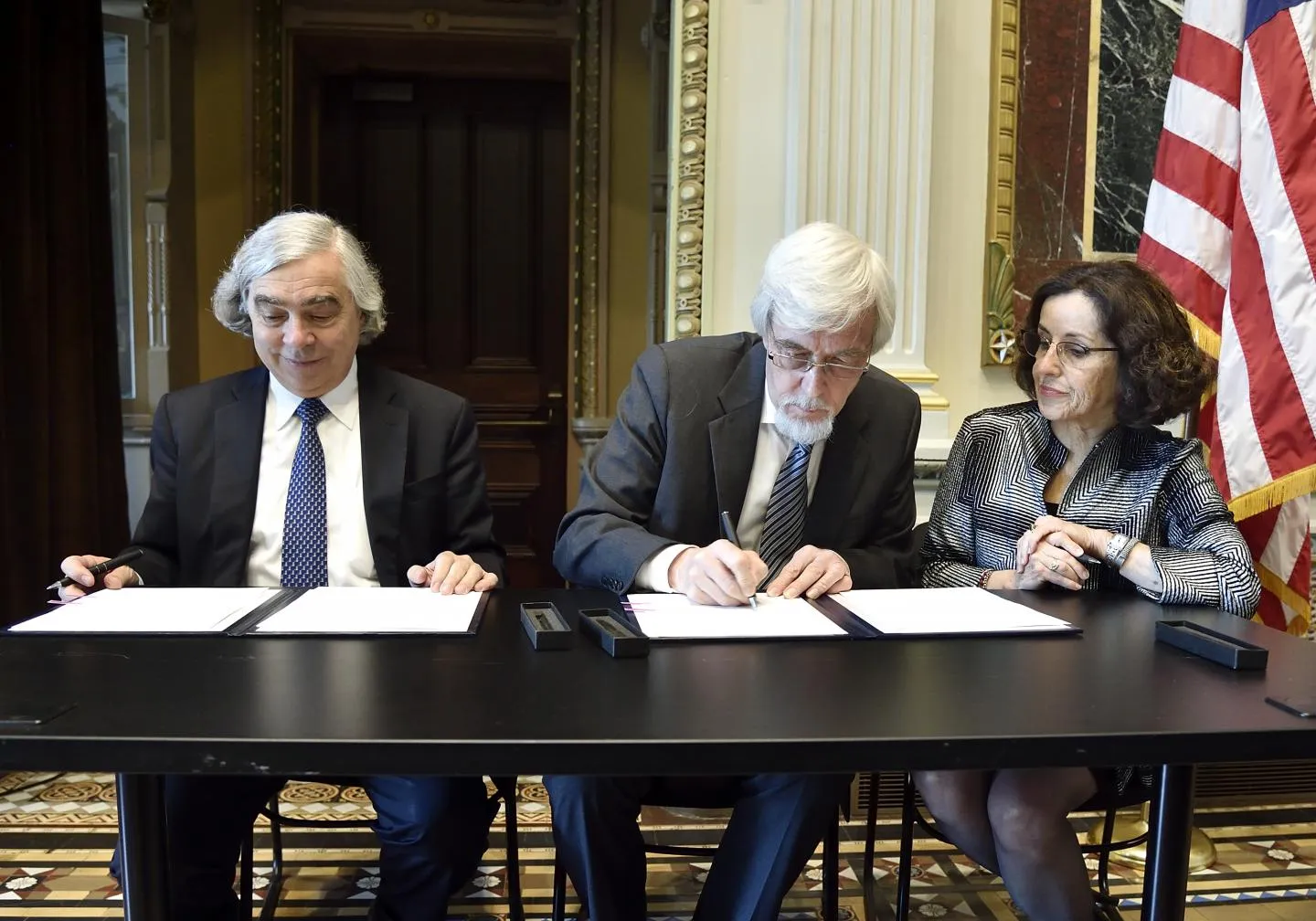
US-CERN Agreement Paves Way for New Era of Scientific Discovery
Washington, 7 May 2015. A new agreement between the United States and the European Organization for Nuclear Research (CERN1) signed today will pave the way for renewed collaboration in particle physics, promising to yield new insights into fundamental particles and the nature of matter and our universe. The agreement, signed in a White House ceremony
-
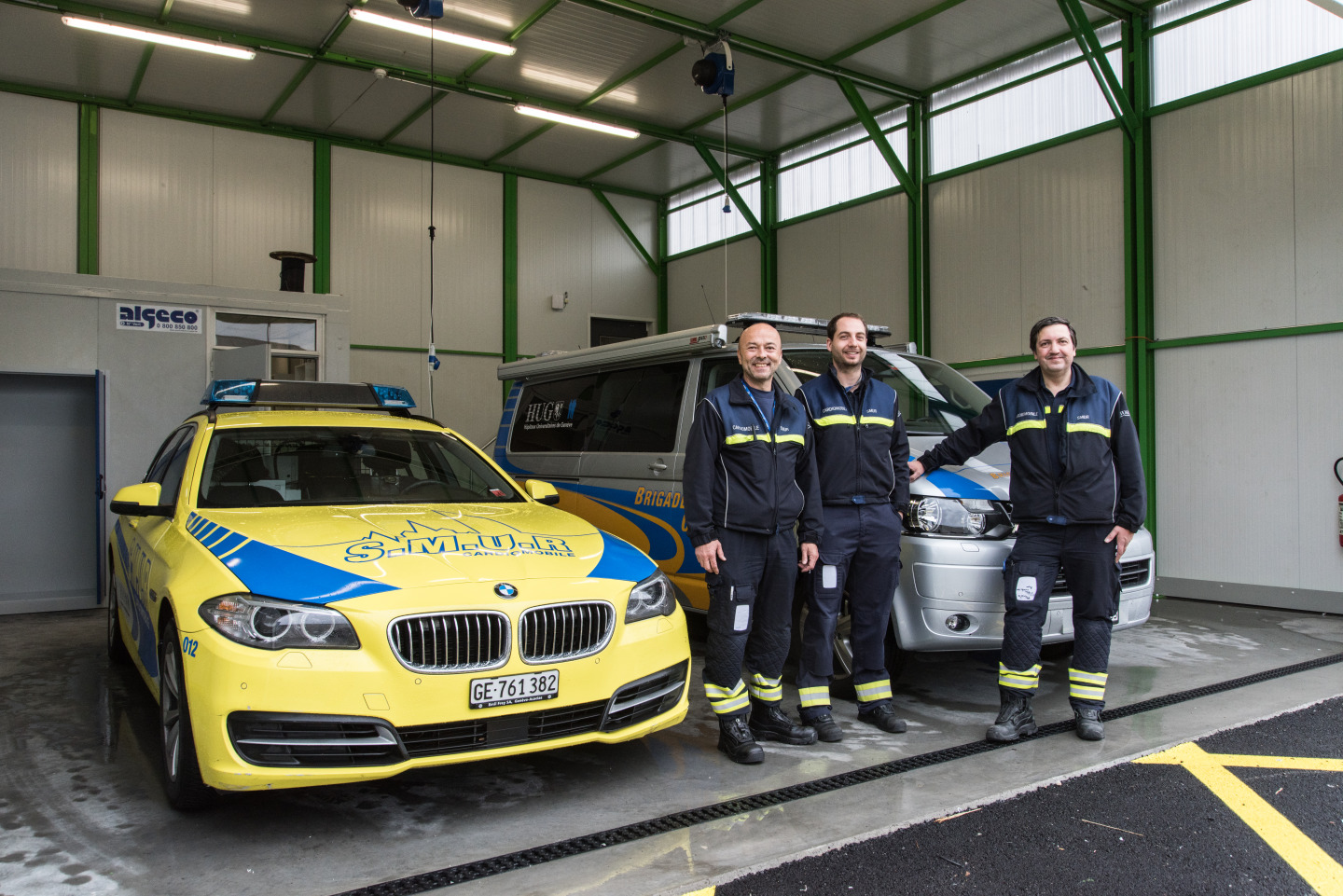
HUG and CERN open an emergency response centre
Geneva, 5 May 2015. On Monday, the Hôpitaux Universitaires de Genève (HUG – University Hospitals of Geneva) and CERN1 opened an emergency response centre on the Swiss part of the CERN site. The centre is the result of a collaboration established under the auspices of the Swiss federal and Geneva cantonal authorities and aims to
-
Arts@CERN announces three winning artists and launches an open call
Geneva, 30 April 2015. Arts @ CERN, CERN1‘s official engagement with the arts, is today announcing three winning art projects from the different strands, Accelerate @ CERN and Collide @ CERN, as well as launching the international open call for Collide @ CERN in digital arts. Now in its fifth year, Arts @ CERN has
-
ICARUS neutrino experiment to move to Fermilab
Geneva, 22 April 2015. A group of scientists led by Nobel laureate Carlo Rubbia will transport the world’s largest liquid-argon neutrino detector across the Atlantic Ocean from CERN1 to its new home at the U.S. Department of Energy’2s Fermi National Accelerator Laboratory3. The 760-ton, 20-metre-long detector took data for the ICARUS experiment at the Italian
-
Physics community to discuss latest results of the AMS experiment
Geneva, 15 April 2015. The Alpha Magnetic Spectrometer (AMS1) collaboration will present today the latest results in its quest to understand the origin of cosmic rays and dark matter. These intriguing results will be shared and discussed during the “AMS days” starting today at CERN2, with many of the world’s leading theoretical physicists and principal
-
Proton beams are back in the LHC
Geneva, 5 April 2015. After two years of intense maintenance and consolidation, and several months of preparation for restart, the Large Hadron Collider, the most powerful particle accelerator in the world, is back in operation. Today at 10.41am, a proton beam was back in the 27-kilometer ring, followed at 12.27pm by a second beam rotating
-
LHC experiments join forces to zoom in on the Higgs boson
Geneva, 17 March 2015. Today during the 50th session of “Rencontres de Moriond” in La Thuile Italy, ATLAS and CMS presented for the first time a combination of their results on the mass of the Higgs boson. The combined mass of the Higgs boson is mH = 125.09 ± 0.24 (0.21 stat. ± 0.11 syst.)