
Tag: Press release
-
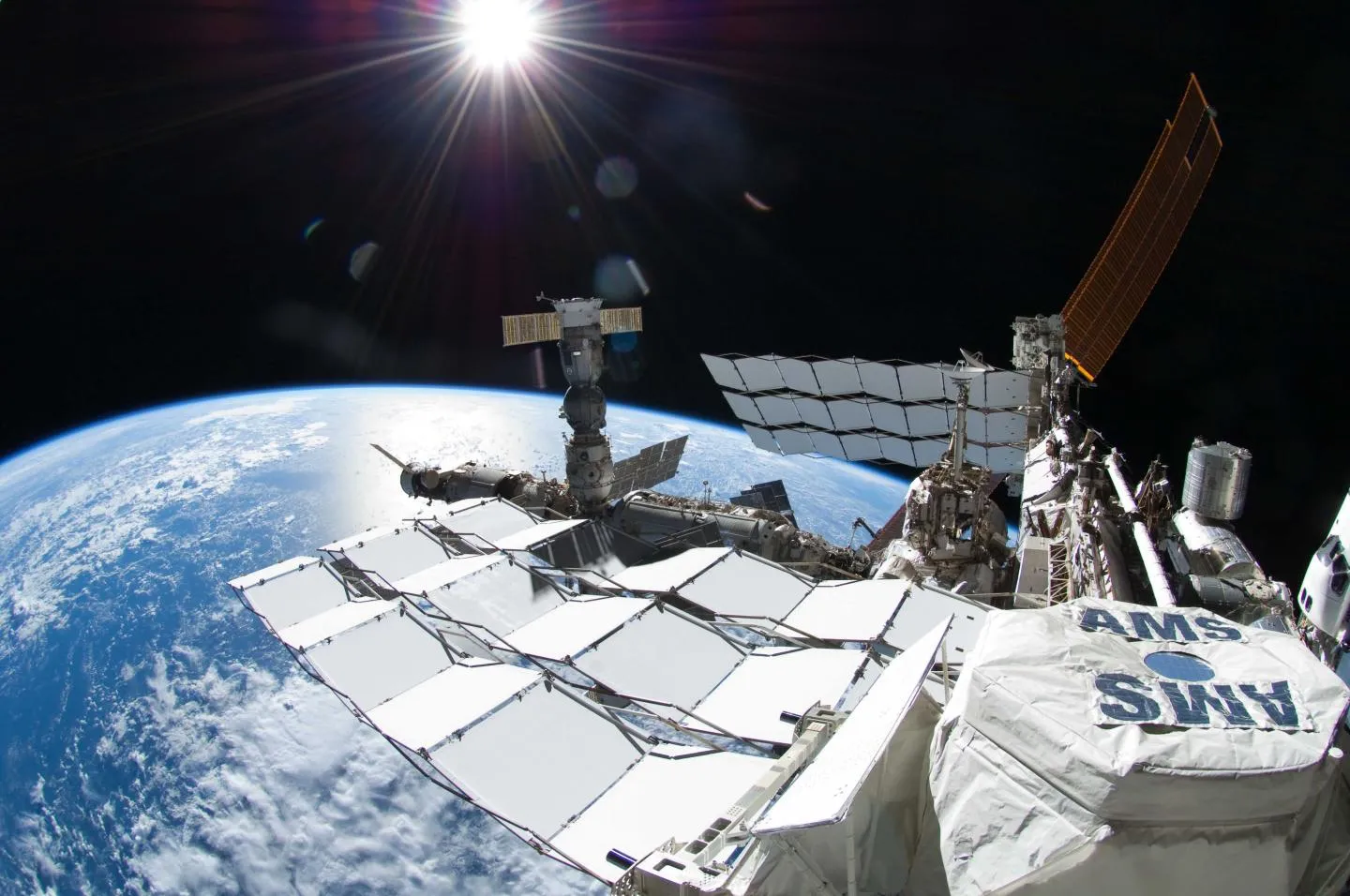
Latest measurements from the AMS experiment unveil new territories in the flux of cosmic rays
Geneva 18 September 2014. The Alpha Magnetic Spectrometer (AMS1) collaboration has today presented its latest results. These are based on the analysis of 41 billion particles detected with the space-based AMS detector aboard the International Space Station. The results, presented during a seminar at CERN2, provide new insights into the nature of the mysterious excess
-
A September packed with events to celebrate CERN’s 60th anniversary
Geneva, 1 September 2014. On 29 September 1954, the CERN1 Convention entered into force, officially establishing the European Organization for Nuclear Research with 12 European member states. Now the world’s biggest particle physics laboratory, CERN is celebrating “60 years of science for peace” with an official ceremony and several public events taking place throughout September.
-
CERN looks to the future for the second edition of TEDxCERN
Geneva, 28 July 2014. Following the success of the first TEDxCERN event last year, CERN1 will be hosting a second TEDx conference on 24 September 2014 on the theme “Forward: Charting the future with science”. Some 15 speakers will present their innovative and ambitious projects, which apply science to respond to problems facing the world
-
Results from CERN presented at ICHEP
Geneva, 7 July 2014. Speaking at press conference held during the 37th International Conference on High Energy Physics, ICHEP, in Valencia, Spain this morning CERN1 Director General Rolf Heuer gave a resume of results from CERN that are being presented. The conference, which began last Thursday with three days of parallel sessions, now moves on
-
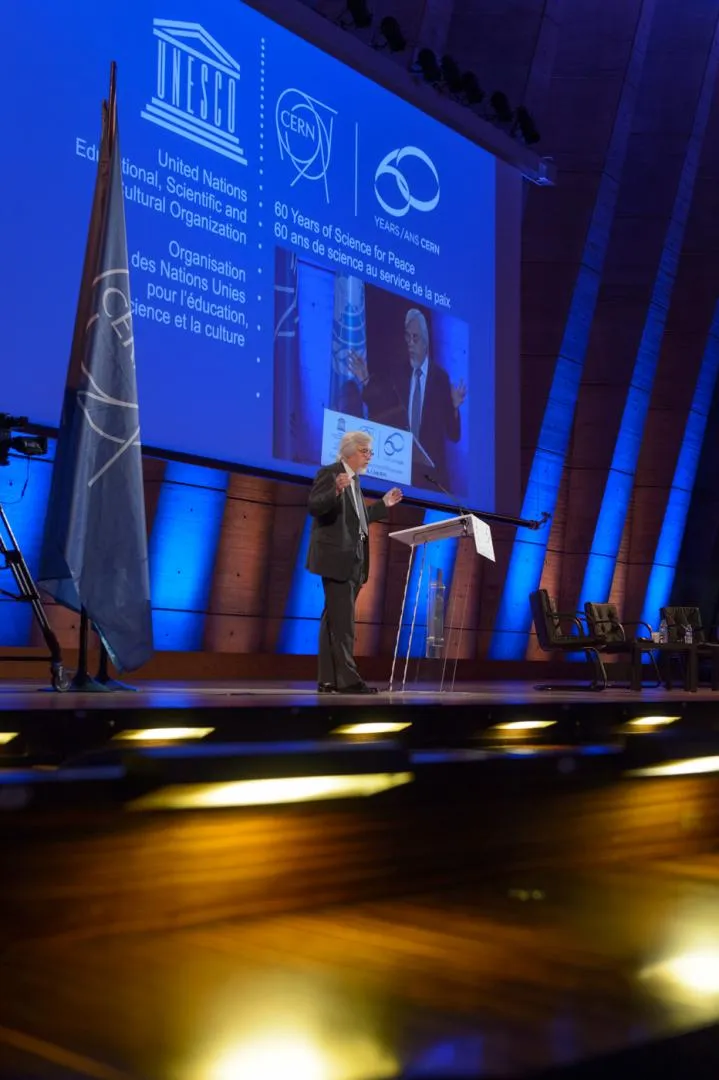
CERN and UNESCO celebrate the anniversary of the signature of the CERN Convention
Paris, 1 July 2014. Today, CERN1 and UNESCO2 are commemorating the signature of the CERN Convention at UNESCO’s Headquarters in Paris and thereby celebrating 60 years of science for peace. The Convention that led to the establishment of the European Organization for Nuclear Research in 1954 was signed on 1 July 1953 in Paris, under
-
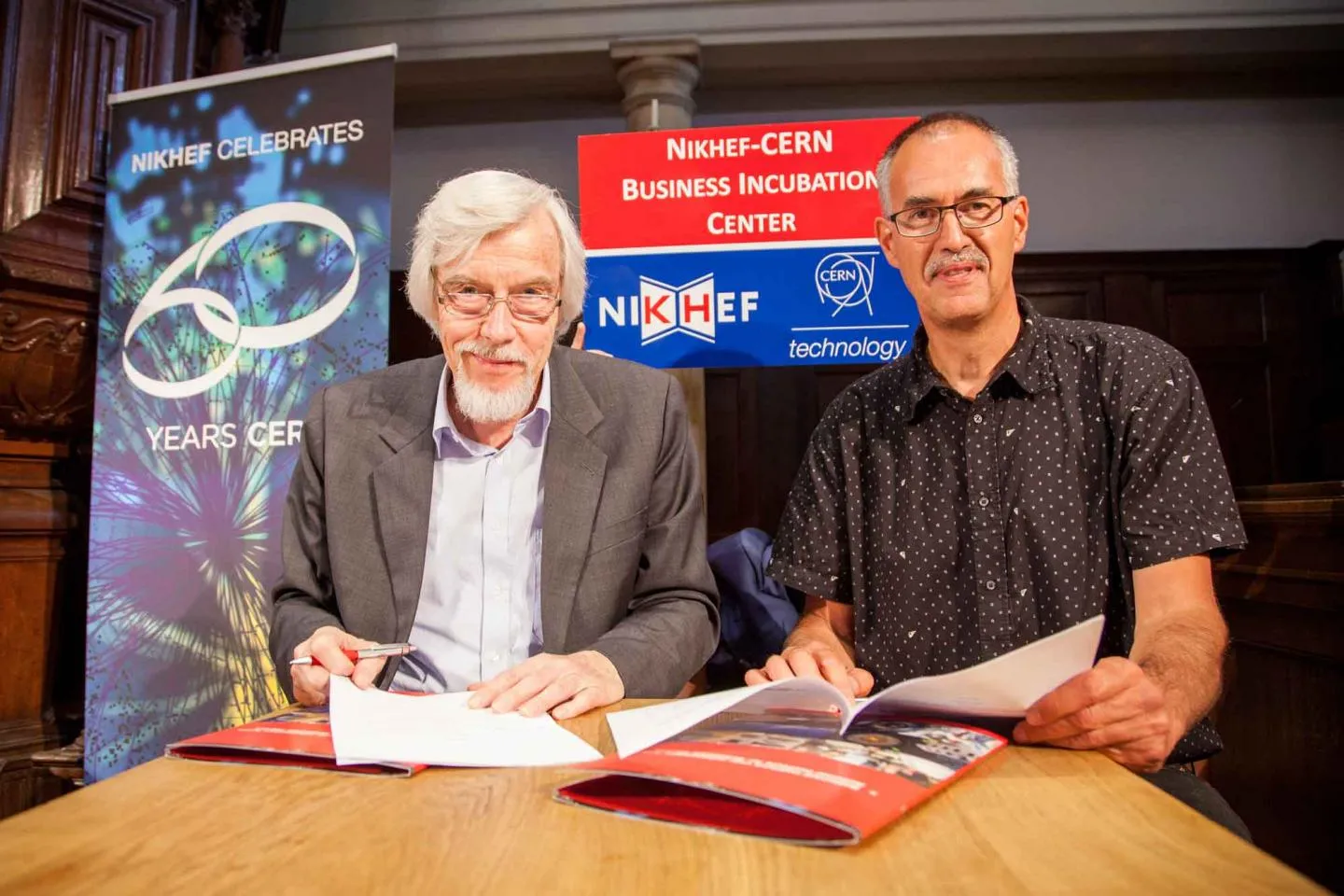
CERN supports new business incubation centre in The Netherlands
Geneva 26 June 2014. CERN1 along with Nikhef2, the Dutch National Institute for Subatomic Physics, today announces the opening of a new Business Incubation Centre (BIC) hosted at the Amsterdam Science Park, where Nikhef is located. The centre will provide new technology transfer opportunities to bridge the gap between basic science and industry, supporting businesses
-
CERN experiments report new Higgs boson measurements
Geneva, 23 June 2014. In a paper published in the journal Nature Physics today, the CMS experiment at CERN1 reports new results on an important property of the Higgs particle, whose discovery was announced by the ATLAS and CMS experiments on 4 July 2012. The CMS result follows preliminary results from both experiments, which both
-
CERN announces LHC restart schedule
Geneva, 23 June 2014. The Large Hadron Collider (LHC), the largest and most powerful particle accelerator in the world, has started to get ready for its second three-year run. Cool down of the vast machine has already begun in preparation for research to resume early in 2015 following a long technical stop to prepare the
-
CERN announces first winners of the Accelerate@CERN arts programme
Geneva, 18 June 2014. CERN1 today announces the first winners of the Laboratory’s new Accelerate @ CERN programme – a one-month research award for artists2. The winners, from the fields of Visual Arts and Interactive Web Art, are drawn from the first two participating countries, Greece and Switzerland respectively. The winner of the Greek award,
-
CERN announces winners of its first beam line for schools competition
Geneva, 6 June 2014. CERN1 today announced the winners of its first beam line for schools competition. Following almost 300 submissions from school groups around the world, two teams have been selected to come to CERN to carry out their own experiments at a CERN beam line. The winners are the “Odysseus’ Comrades” team from