
Tag: Press release
-
CERN and the Wigner Research Centre for Physics inaugurate CERN data centre’s extension in Budapest, Hungary
Geneva 13 June 2013. CERN1 and the Wigner Research Centre for Physics2 today inaugurated the Hungarian data centre in Budapest, marking the completion of the facility hosting the extension for CERN computing resources. About 500 servers, 20,000 computing cores, and 5.5 Petabytes of storage are already operational at the site. The dedicated and redundant 100
-
Next-generation particle accelerator is ready for construction – International Linear Collider publishes its Technical Design Report
Tokyo, Geneva, Chicago, 12 June 2013. A five-volume report containing the blueprint for a future particle physics project, the International Linear Collider (ILC), was published today. In three consecutive ceremonies in Asia, Europe and the Americas, the authors of the Technical Design Report for the International Linear Collider, a next-generation particle collider to complement and
-
CERN and Ars Electronica launch open call for the third Prix Ars Electronica Collide@CERN
Geneva/Linz, 3 June 2013. CERN1 and Ars Electronica2 today launch an open call for artists working in the digital domain to apply for the third Prix Ars Electronica Collide @ CERN3. The winner will receive a fully funded residency at CERN and Ars Electronica to create new dimensions in their artistic practice by encounters with
-
CERN Council updates European strategy for particle physics
Brussels/Geneva, 30 May 2013. At a special meeting hosted by the European Commission in Brussels today, the CERN Council1 formally adopted an update to the European strategy for particle physics. Since the original European strategy was put in place in 2006, particle physics has made considerable progress in elucidating the laws of nature at the
-
European Commission and CERN support major research facility in the Middle East
Brussels/Geneva, 28 May 2013. The European Commission and CERN have today agreed to support the construction of SESAME (Synchrotron-light for Experimental Science and Applications in the Middle East), one of the most ambitious research facilities in the Middle East. SESAME is a so-called synchrotron light source, functioning in effect like a giant microscope. It will
-
Physicists at CERN measure a fundamental property of the rarest element on Earth
Geneva, 14 May 2013. An international team of physicists at the radioactive-beam facility ISOLDE at CERN1 have for the first time measured the ionization potential of the rare radioactive element astatine2. The value for astatine, published today in the journal Nature Communications, could help chemists to develop applications for the element in radiotherapy, and will
-
CERN inaugurates a scientific tourist trail, the Passport to the Big Bang
Geneva, 13 May 2013. On 2 June 2013 CERN1, in collaboration with its local partners, will be inaugurating a scientific tourist trail through the Pays de Gex and the Canton of Geneva known as the Passport to the Big Bang. A major programme of activities has been organised for the general public at various CERN
-
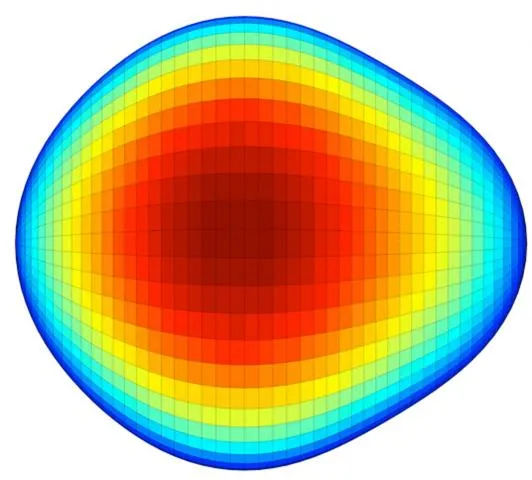
First observations of short-lived pear-shaped atomic nuclei
Geneva, 8 May 2013. An international team at the ISOLDE radioactive-beam facility at CERN1 has shown that some atomic nuclei can assume asymmetric, “pear” shapes. The observations contradict some existing nuclear theories and will require others to be amended. The results are published in the journal Nature on 8 May 2013. Most nuclei have the
-
ALPHA experimenters present novel investigation of the effect of gravity on antimatter
Geneva, 30 April 2013. The ALPHA collaboration at CERN1 has published a paper in Nature Communications describing the first direct analysis of how antimatter is affected by gravity. ALPHA was the first experiment to trap atoms of antihydrogen — neutral antimatter atoms held in place with a strong magnetic field for up to 1000 seconds.
-
CERN celebrates 20 years of a free, open web
Geneva, 30 April 2013. Twenty years ago CERN1 published a statement that made the World Wide Web (“W3”, or simply “the web”) technology available on a royalty-free basis. By making the software required to run a web server freely available, along with a basic browser and a library of code, the web was allowed to