
Tag: Standard Model
The Standard Model of particle physics is a theory concerning the electromagnetic, weak, and strong nuclear interactions, which mediate the dynamics of the known subatomic particles. It was developed throughout the latter half of the 20th century, as a collaborative effort of scientists around the world.
-
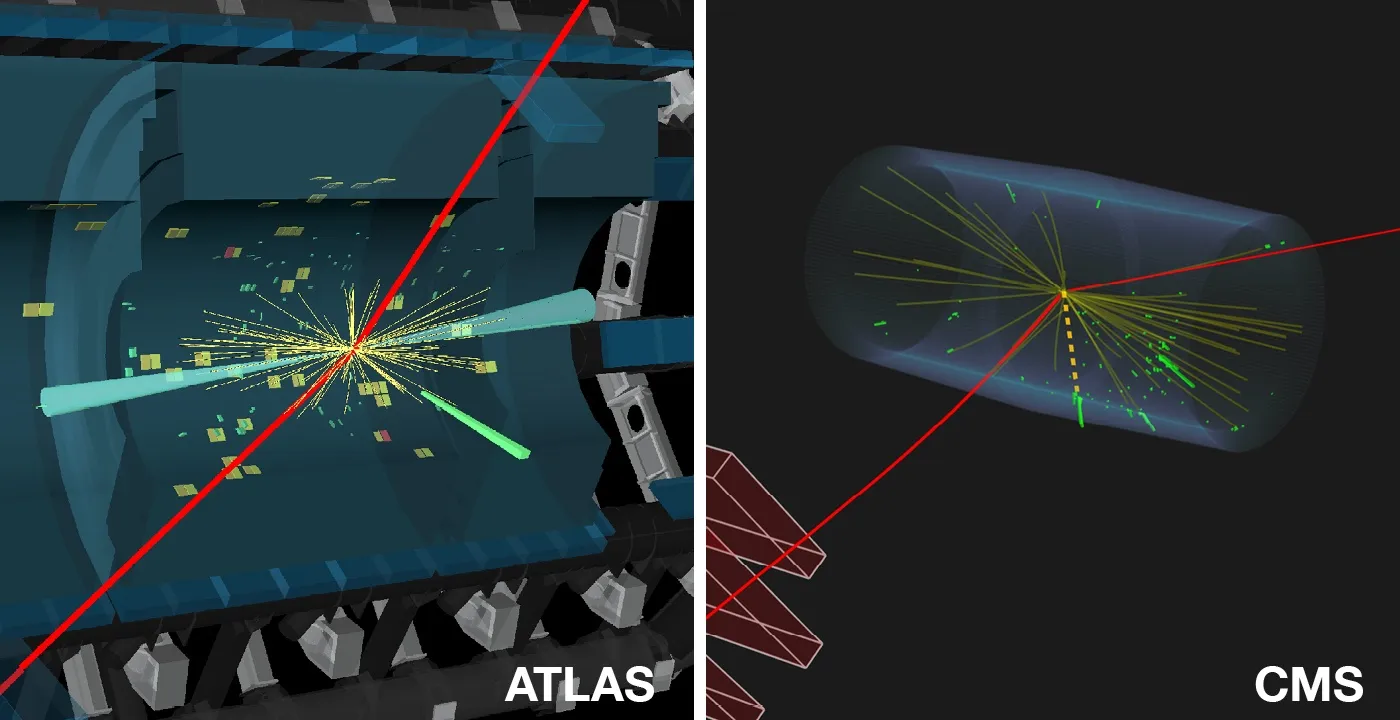
LHC experiments see first evidence of a rare Higgs boson decay
The ATLAS and CMS collaborations have joined forces to establish the first evidence of the rare decay of the Higgs boson into a Z boson and a photon
-

LHCb brings leptons into line
Simultaneous measurements of rare B-meson decays using the full LHC Run 1 and 2 data samples agree with the predictions of the Standard Model, superseding previous results that had indicated intriguing departures from the 50-year old theory
-

ATLAS measures Higgs boson’s decay width
The decay width is linked to the particle’s lifetime and if found to deviate from its predicted value could indicate the presence of new physics
-

Large Hadron Collider restarts
Beams of protons are again circulating around the collider’s 27-kilometre ring, marking the end of a multiple-year hiatus for upgrade work
-

Intriguing new result from the LHCb experiment at CERN
The LHCb results strengthen hints of a violation of lepton flavour universality
-
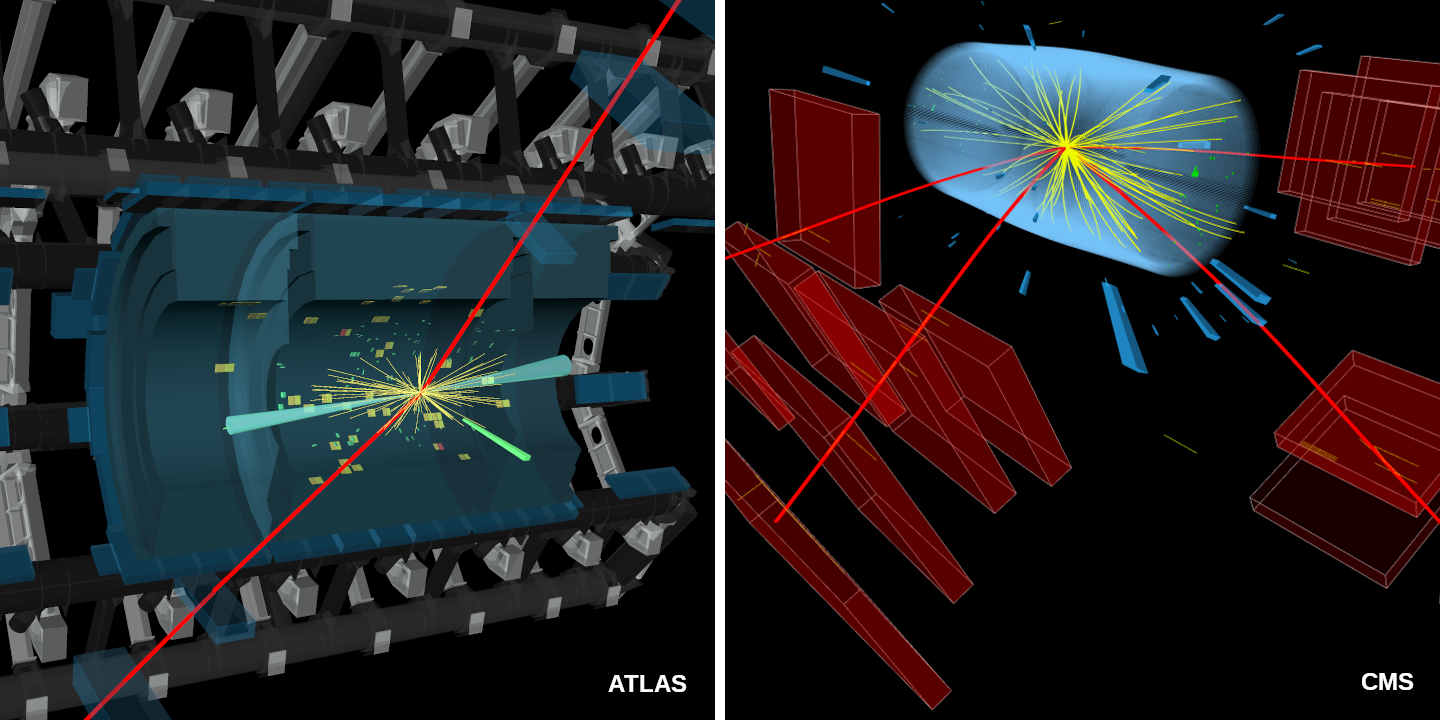
Exploring new ways to see the Higgs boson
The ATLAS and CMS collaborations presented their latest results on new signatures for detecting the Higgs boson at CERN’s Large Hadron Collider
-
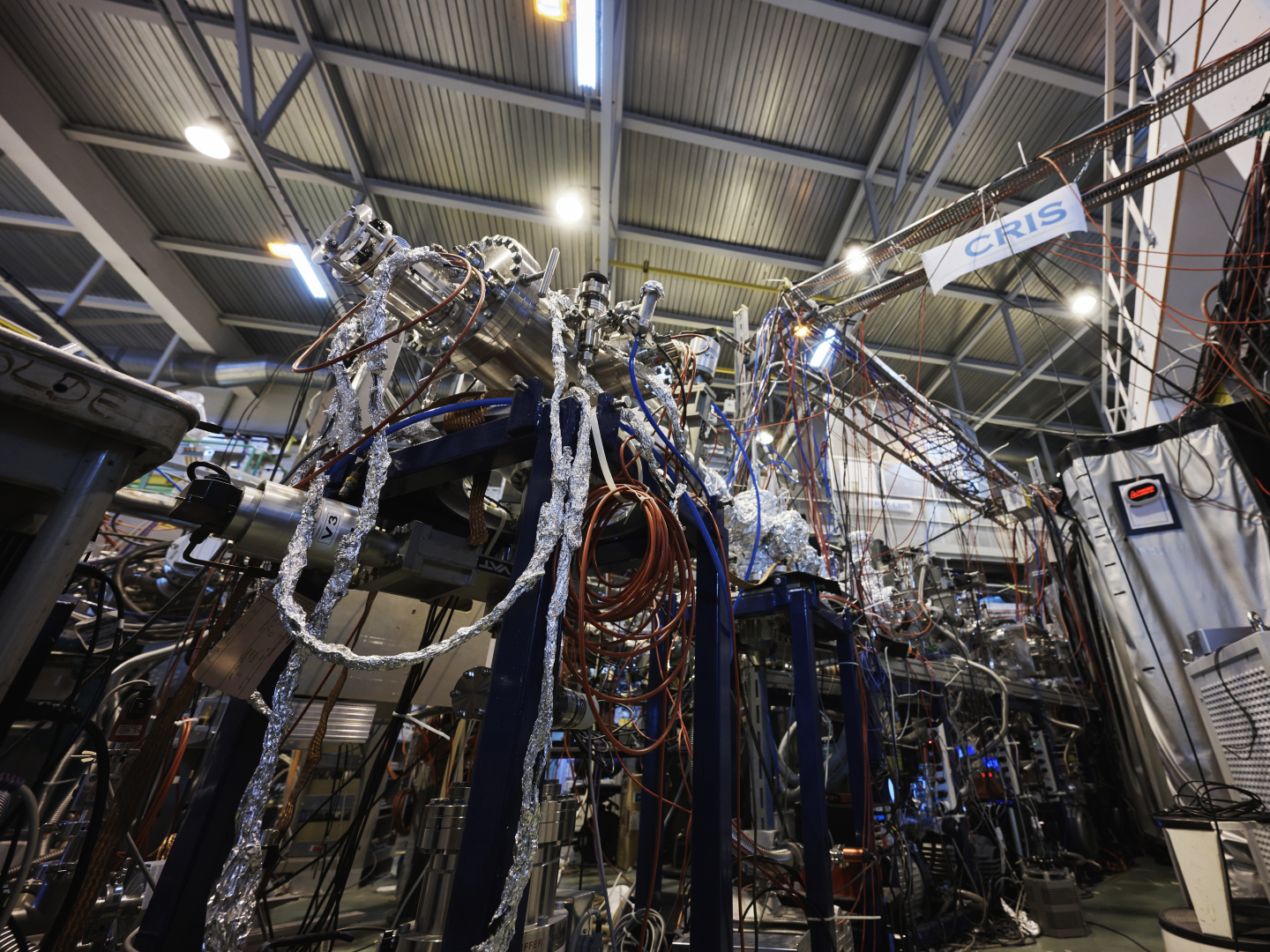
ISOLDE scores a first with laser spectroscopy of short-lived radioactive molecules
The result represents an essential step towards using these molecules for fundamental physics research and beyond
-

ASACUSA researchers create and study new exotic atom at PSI
Further studies could be used to test the Standard Model of particle physics