
Waste management during LS3: we all have a role to play
Written by:
Manloi Jim, SCE Department
—
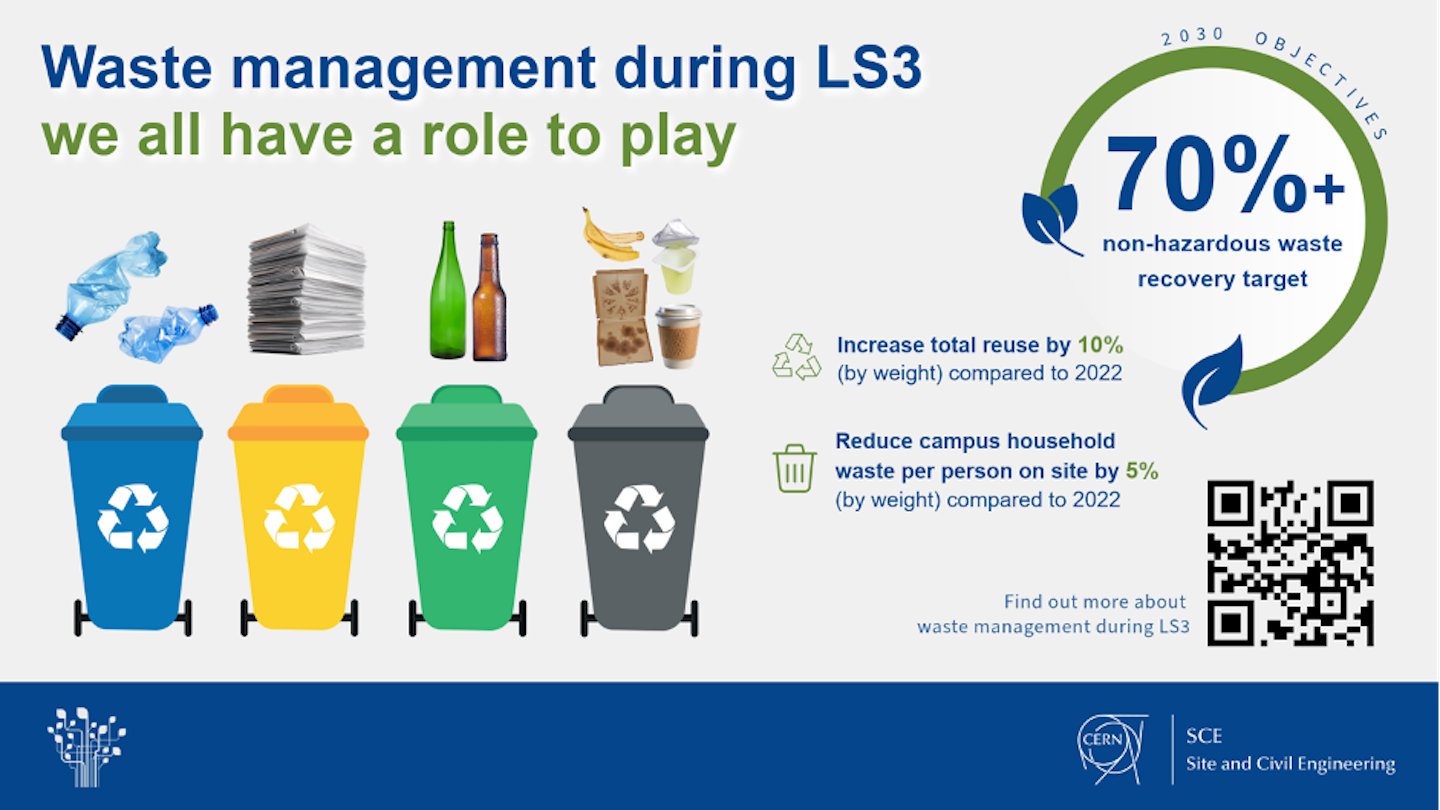
Long Shutdown periods generate large volumes of waste across CERN sites. During Long Shutdown 3 (LS3), maintaining good waste management practices is particularly important to ensure safety and minimise environmental impacts and costs.
As part of its environmental and sustainable development strategy, CERN has set environmental objectives for 2030, including specific targets related to waste management:
- Maintain a non-hazardous waste recovery rate above 70%.
- Increase total reuse by 10% (by weight) compared to 2022.
- Reduce campus household waste per person on site by 5% (by weight) compared to 2022.
To maintain a recovery rate of more than 70% for non-hazardous waste, additional worksite checks will be carried out, and activity supervisors are encouraged to use Waste Management Plans (WMPs) more widely. These plans help ensure that project waste is managed responsibly and in line with regulations.
Meeting these objectives requires the involvement of everyone working on CERN sites. Correct waste sorting remains essential, particularly during periods of intense activity such as LS3, when the risk of non-compliance increases.
Not sure where an item should be disposed of? Consult the What goes where? webpage to find the appropriate waste disposal channel.
Additional information is available on the LS3 waste management webpage. Learn more about CERN’s environmental objectives and actions on the Environmentally responsible research webpage.
By planning ahead, reducing waste, reusing materials and sorting waste correctly, we can all contribute to achieving CERN’s environmental objectives for 2030.