Training the world’s future quantum experts
CERN hosts the Quantum Materials Hackathon at CERN’s IdeaSquare, bringing together 34 students to solve real-world problems using quantum materials science
Written by:
Marzena Lapka
—
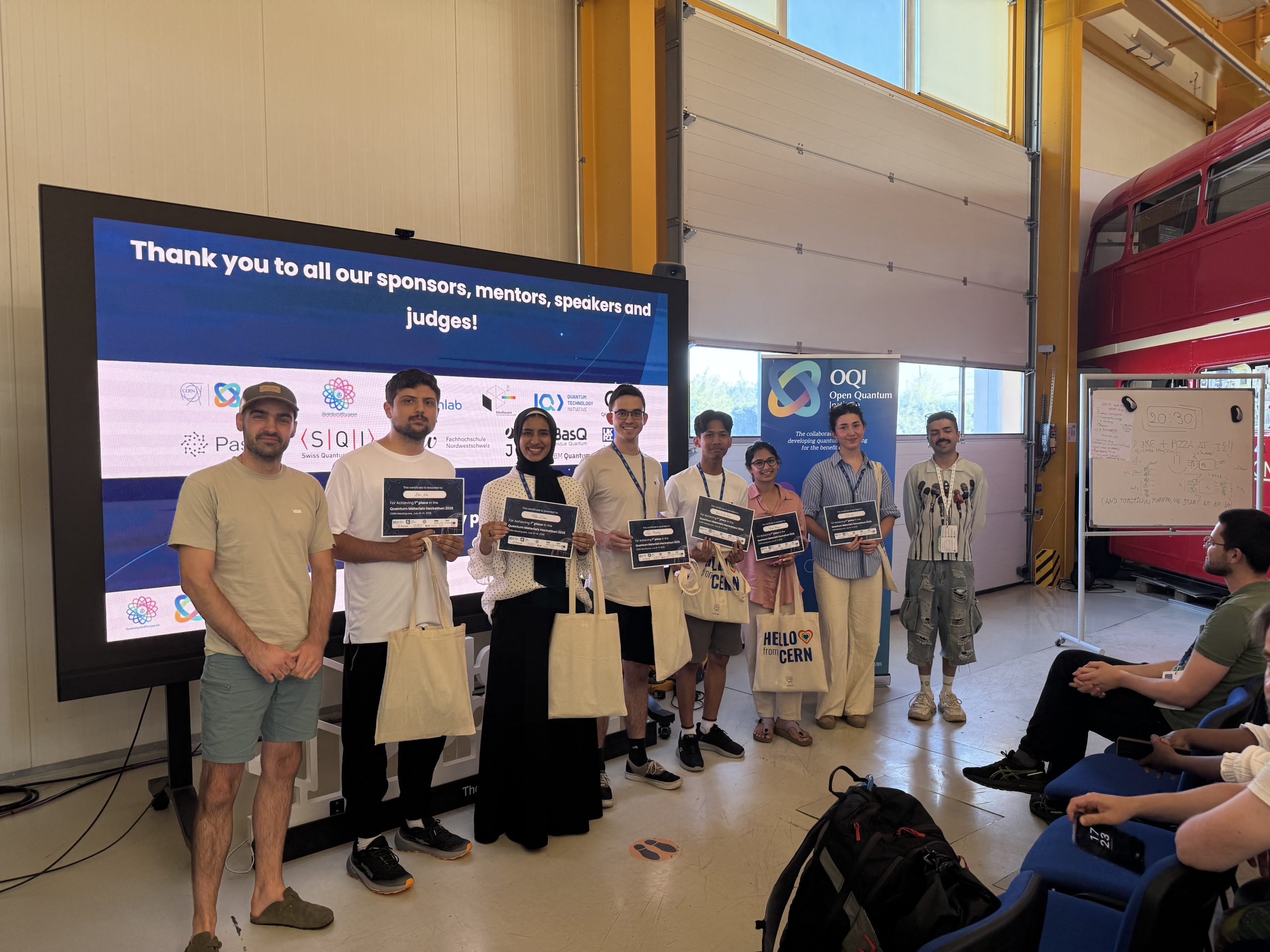
From 10 to 12 July 2026, CERN hosted the second edition of the Quantum Materials Hackathon at CERN’s IdeaSquare, which brought together 34 students of over 30 nationalities. The students used quantum computing hardware and simulators to tackle real-world problems, guided by mentors from industry and the research community.
Quantum materials are particularly important at CERN, as many of the technologies used in particle accelerators and detectors, such as superconducting magnets and sensors, rely on their unique properties. Advancing the understanding of these materials could lead to significant improvements to CERN’s scientific instruments. Quantum technologies also play a significant role beyond the Laboratory, for example in the fields of clean energy, health, food security and the responsible use of natural resources like lithium and cobalt.
“Quantum hackathons allow the next generation of leaders to apply quantum computing to solve real-world problems,” said Julia Thiele, an Open Quantum Initiative (OQI) Advisory Committee member. “Access to quantum hardware already exists though commercial services, so what is needed now is a generation trained to use it. Hackathons deliver that.”
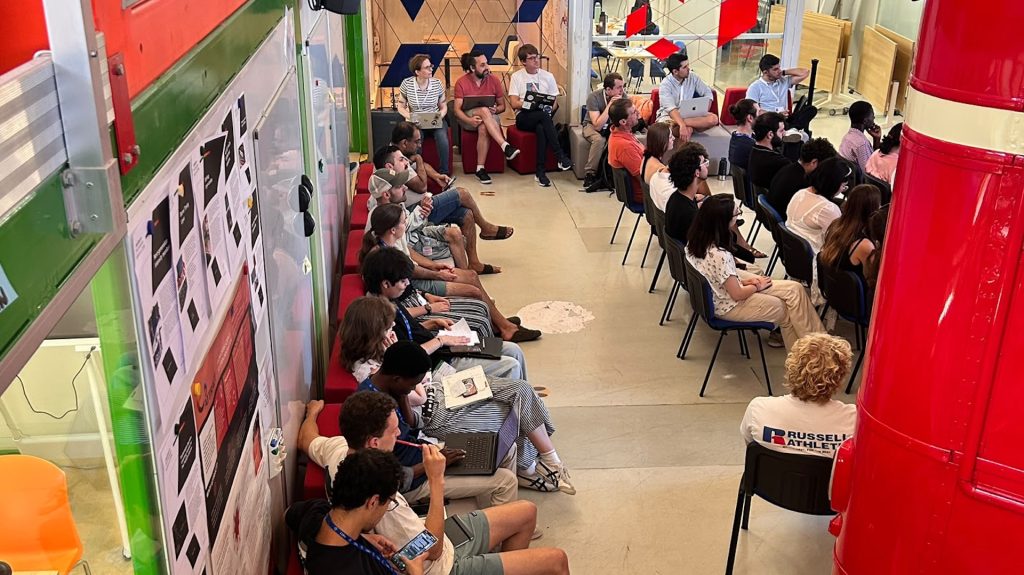
Each team took on a challenge proposed by industry or research partners, who supported the team from start to finish. Students explored, for example, how quantum computing could help in the search for materials that carry electricity with minimal losses; how solar technologies could move away from scarce or toxic components; how new computational methods could shorten the early stages of pharmaceutical development; and how quantum simulation could help researchers to study materials whose behaviour is too puzzling for classical methods of characterisation.
The hackathon was organised by the CERN Stakeholder Engagement Group, CERN Quantum Technology Initiative and CERN openlab teams, the Open Quantum Institute (OQI), Quantum4Purpose and Sparkboard, with BasQ and Pasqal providing additional support. For many participants, it was their first time running code on a real quantum computer.
“The hackathon was an incredible experience,” said Elliot Amponsah, a student from the Kwame Nkrumah University of Science and Technology (KNUST) in Ghana. “We were trying to predict how well certain drugs dissolve using a very small dataset. Running our models on real quantum machines allowed us to see how the algorithms handle real-world noise.”
CERN’s summer student programme brings university students like Elliot to the Laboratory every year. The hackathon was designed to bring this pool of global talent together with peers from Swiss universities and allow the students to benefit from the local region’s dense network of materials science expertise. Intensive weekends like this also provide participants with skills and relationships that they can use throughout their future careers.