
Tag: News
-

In the wake of partons
Today, almost all the quarks in our Universe are neatly organised into larger particles, glued together by aptly named gluons. For the first few millionths of a second after the Big Bang, however, quarks and gluons were not confined, forming instead a state of matter known as a quark–gluon plasma (QGP). By studying the QGP
-

Computer Security: Uninvited nastiness
Nobody likes an uninvited guest. The mouse crossing the kitchen floor. The spider scuttling across the blanket. The wild boar uprooting the garden. The snake swimming in the pool. The moth flying through the closet. The unpleasant uncle spoiling a really splendidly amusing party… Or those uninvited idiots crashing a Zoom meeting. An actual instance
-
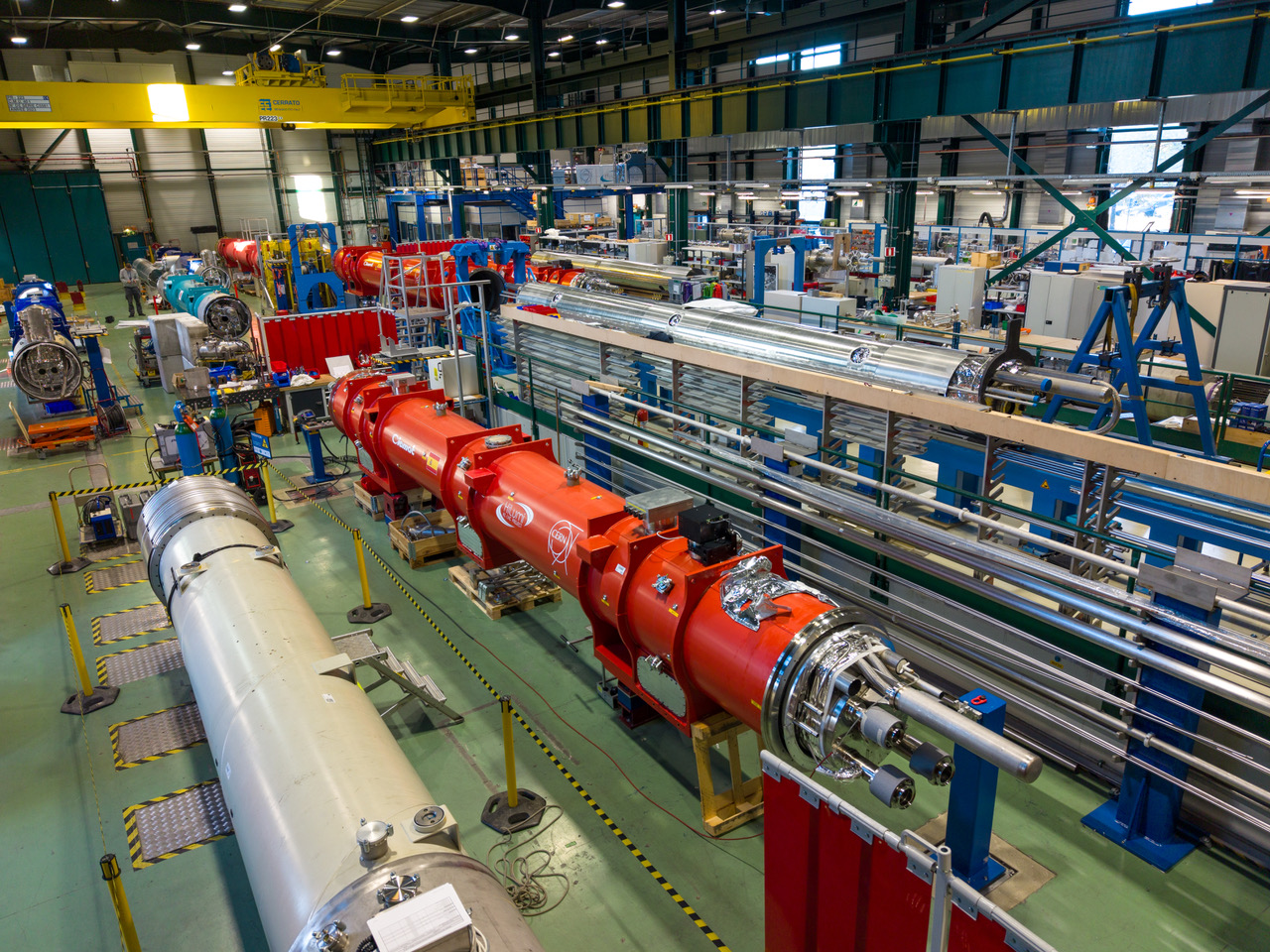
CERN-made HiLumi LHC quadrupoles ready for installation
After years of design, manufacturing and testing, the High-Luminosity (HiLumi) LHC magnet programme has reached a landmark point: all eight new CERN-made quadrupole magnets needed for installation are ready for the tunnel (with two spares produced and entering their final stages). Known as the new inner triplets, these magnets are now complete and have been fully
-
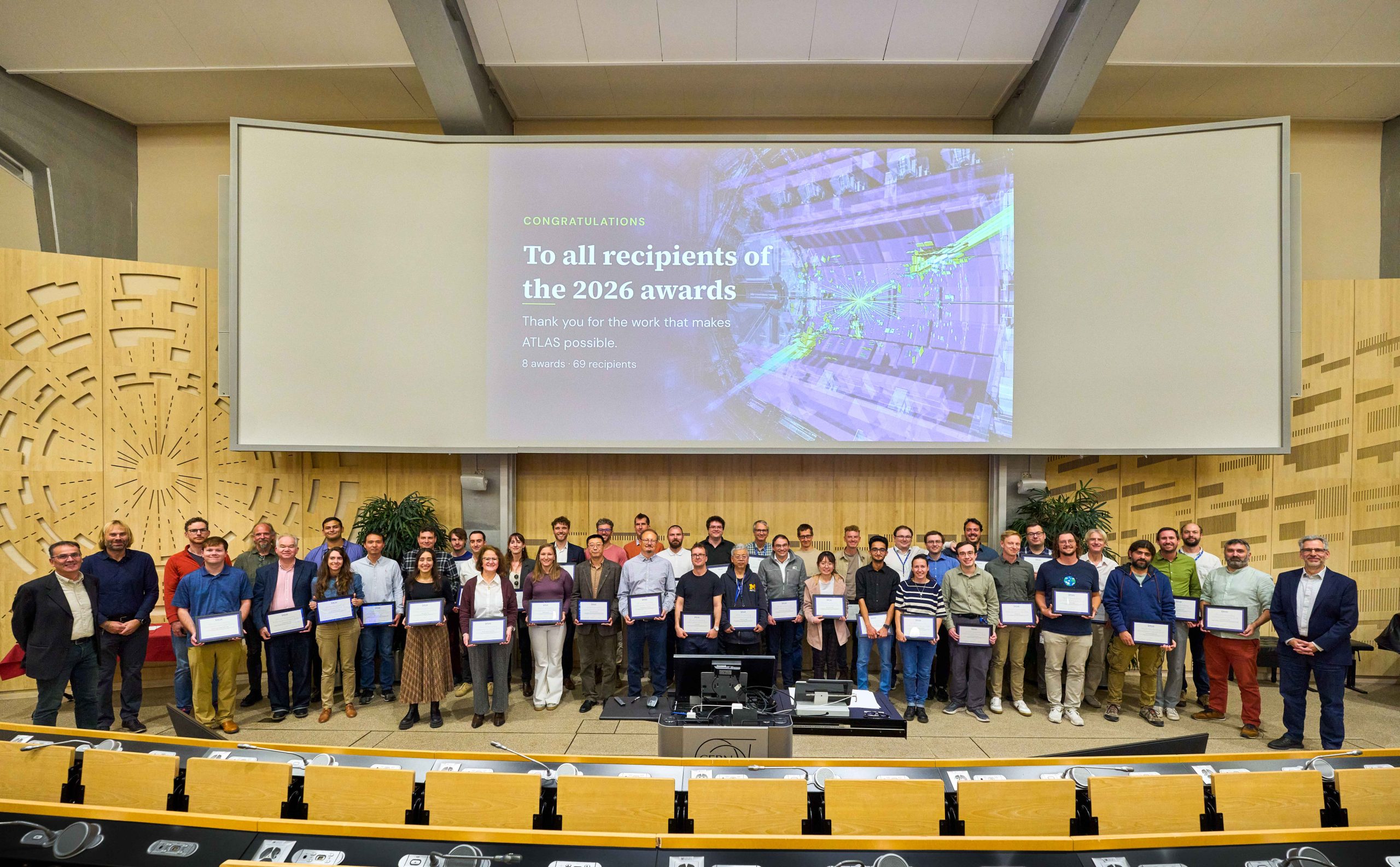
Outstanding achievements of ATLAS Collaboration members celebrated at CERN
Great physics relies on great teamwork. The ATLAS Collaboration brings together over 6000 scientists, engineers and other professionals from around the world, drawing on their wealth of experience to keep the experiment running and drive new discoveries. Since 2014, the ATLAS Outstanding Achievement Awards have celebrated contributions made outside the context of a physics analysis,
-

CERN and Mistral join forces to accelerate AI for science
CERN, the European Laboratory for Particle Physics, and Mistral, a European developer of large-scale AI models, have signed a statement of intent to establish a long-term strategic partnership focused on developing foundation models for scientific discovery. The partnership brings together CERN’s expertise in fundamental physics, scientific data and large-scale computing with Mistral’s leadership in large-scale
-
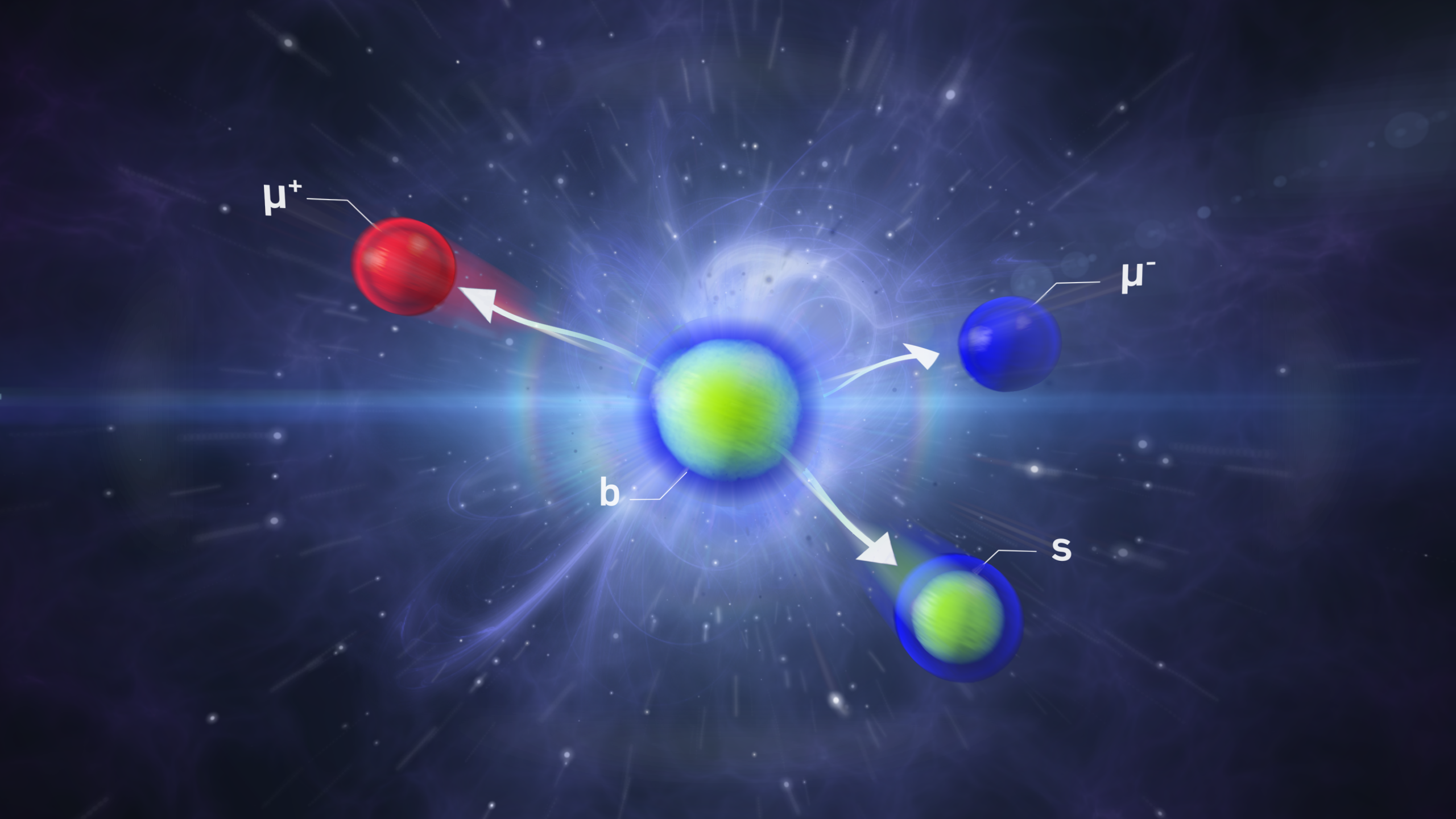
Studying beautiful flavour transitions
Studying rare processes is part and parcel of particle physics, providing stringent tests of the Standard Model. At the recent International Conference on High Energy Physics (ICHEP), the CMS and LHCb Collaborations presented their latest research into one such process: the transformation of a beauty quark into a strange quark, a muon and the oppositely charged antimuon (b→sμ+μ–). Flavour transitions – when
-
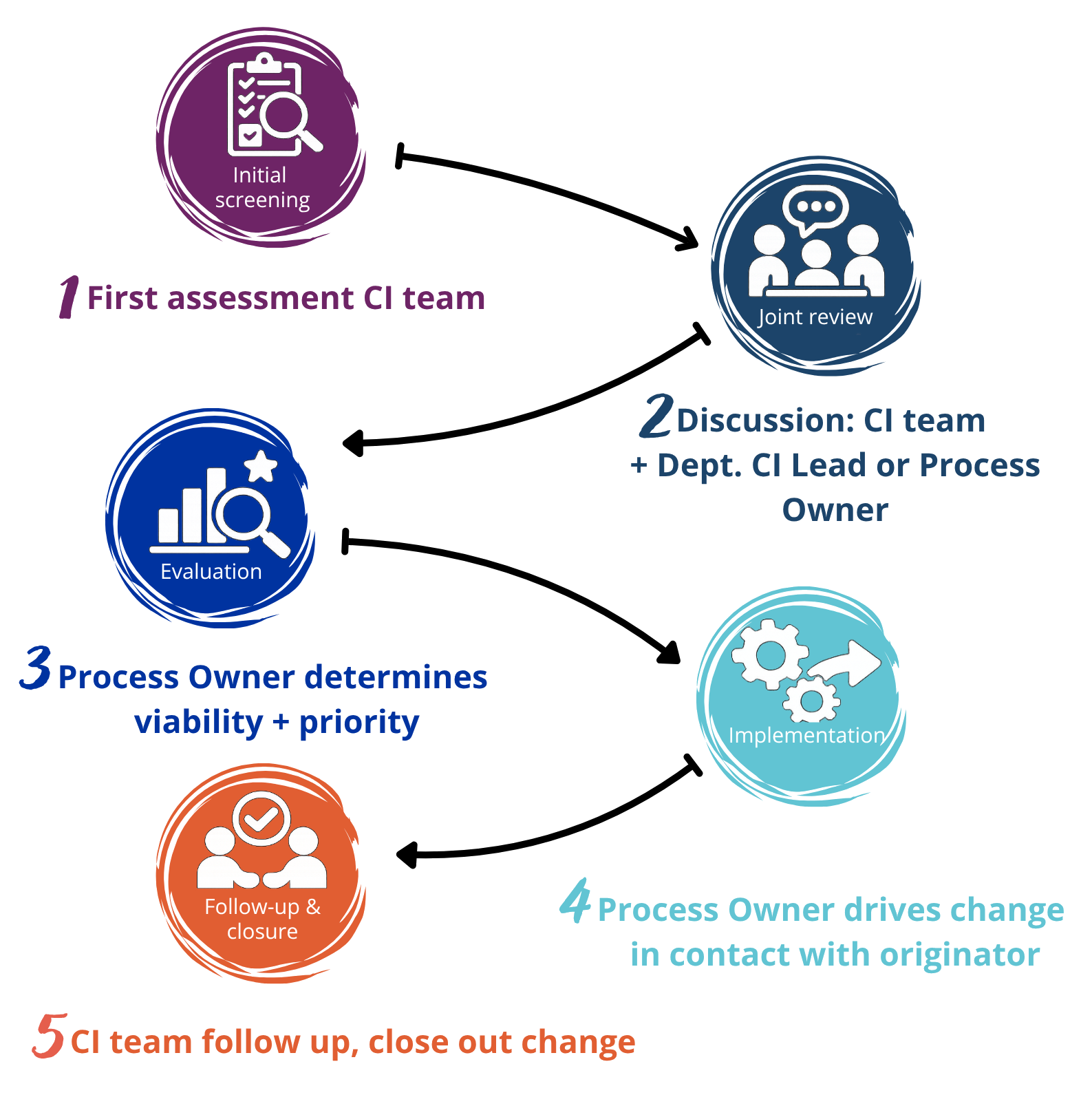
Continuous Improvement gains momentum at CERN
In January, the Continuous Improvement (CI) Team launched the CERNidée portal as one way for the CERN community to share ideas for simplifying processes, improving services and removing obstacles in their daily work. Suggestions arrived at an average rate of more than one per CERN working day during the first half of 2026. Continuous improvement is about transforming these ideas
-

The public consultation for the Future Circular Collider (FCC) project generates extensive dialogue with the local communities
The public consultation process for the Future Circular Collider (FCC) project, which began in the spring, has just ended in France (on 1 October) and in Switzerland (on 2 October), following four months of interaction and dialogue with the local communities. The process consisted of two exercises tailored to each of CERN’s two Host States:
-
Computer Security: 2FA to the TechNet
The two-factor authentication (2FA) roll-out is now complete for the CERN Single Sign-On, the Linux interactive service (LXPLUS) and the Windows Terminal Server (WTS) gateways (also known as CERNTS). With the addition of the new eduVPN service, all major remote accesses to CERN’s IT services and the CERN Campus network are now properly protected by
-
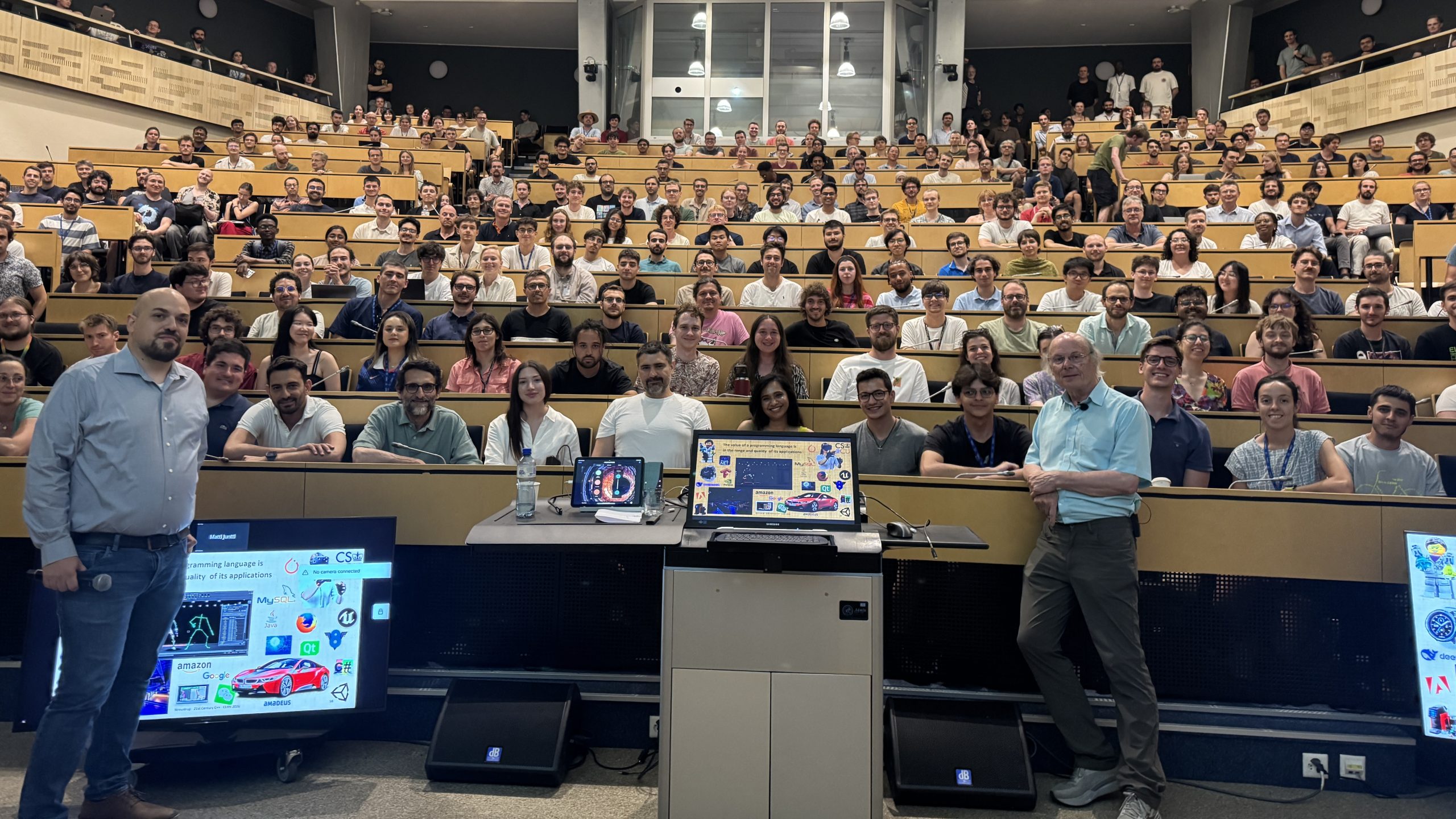
C++ creator talks about the future of programming
Behind the scenes of CERN’s accelerators and detectors, millions of lines of code help turn particle collisions into scientific knowledge. One of the programming languages behind that work is C++, used to control detectors, process data and simulate particle interactions. On 14 July, its creator, Bjarne Stroustrup, filled CERN’s Main Auditorium for his seminar 21st