
Integrating renewable solar energy to cover CERN’s energy needs: a subtle and complex balancing act
Written by:
HSE Department
—
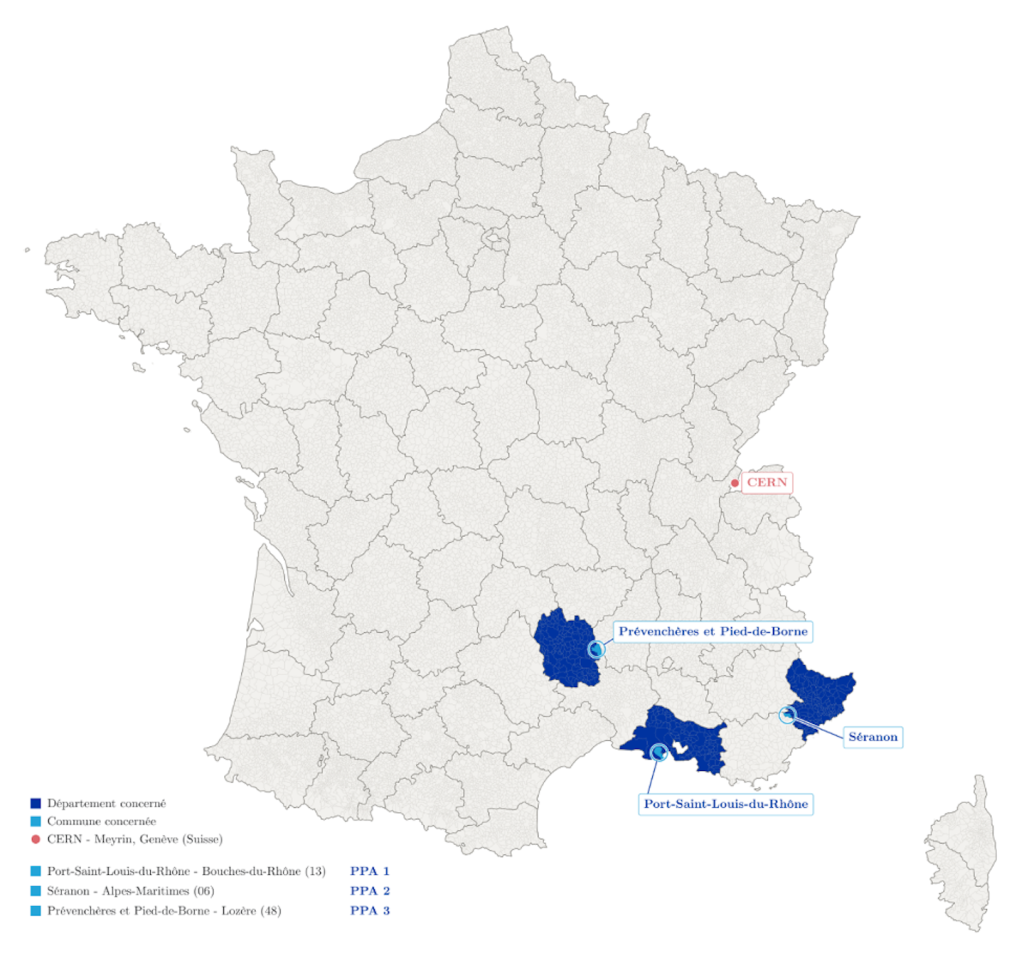
Less than two years after CERN signed three long-term solar power purchase agreements (PPAs), two of the three installations are now fully operational. Following successful commissioning and testing phases, the Terres Salées solar plant, in the Bouches-du-Rhône department in southern France, began supplying electricity in May 2026. The Séranon plant, in the Alpes-Maritimes department, followed in June 2026. Together, these two facilities account for around 27% of the total solar capacity foreseen under CERN’s PPA programme.
While solar electricity production may appear straightforward, integrating renewable power into CERN’s energy portfolio is a subtle balancing act involving both technical and financial challenges.
It is no longer sufficient to simply forecast CERN’s electricity needs: the production capability of the solar plants must also be factored in, as the difference between needs and production is what should be purchased on the market.
A monitoring platform provided by Voltalia, CERN’s partner for the two operational contracts, gives detailed visibility into production data in 10-minute intervals. As expected, the familiar “solar bell” shape is clearly visible: production increases throughout the morning, peaks around midday and decreases towards sunset. Seasonal effects amplify this phenomenon, with the highest output occurring during summer months.
This production profile does not always match CERN’s consumption profile. During periods of physics operation, the solar electricity generated is fully absorbed by CERN’s demand and covers around 10% of CERN’s annual electricity needs in a nominal year of physics operations. During Long Shutdowns, however, CERN’s energy consumption decreases significantly. As a result, part of the energy generated exceeds CERN’s needs and must be sold back to the market, as no large-scale storage solution is currently available.
Managing these energy flows requires a sophisticated financial structure involving four actors: CERN, the solar producer (e.g. Voltalia), CERN’s electricity supplier (currently EDF) and the aggregator that manages solar production variability and delivers a predictable profile to the supplier (currently Agregio). This arrangement allows renewable electricity production, consumption and market transactions to be managed efficiently within CERN’s overall electricity procurement framework in compliance with contractual terms and the French regulatory framework. The experience gained from the first operational PPAs has helped shape CERN’s procurement strategy for 2027–2028, which coincides with the current Long Shutdown.
The third and largest solar installation, Roujanel in the Lozère department in France, is expected to come into operation in July 2027. Once online, CERN will achieve its objective of sourcing approximately 10% of its annual electricity needs from renewable solar energy during accelerator operation years, supporting preparations for the HL-LHC era.
The solar PPA programme is another important step in CERN’s wider energy management strategy, following the renewal of its ISO 50001 certification in February 2026. Lessons learned over the coming years will inform the energy procurement strategy for the HL-LHC era and, should the project be approved, for the FCC-ee.
Questions and feedback are welcome via the Environment Mattermost channel.