
The ARIES project, a promoter of innovation and accessibility for accelerators, comes to a close
The EU-funded ARIES project has succeeded in opening up new avenues for the accelerator community
Written by:
Antoine Le Gall
—
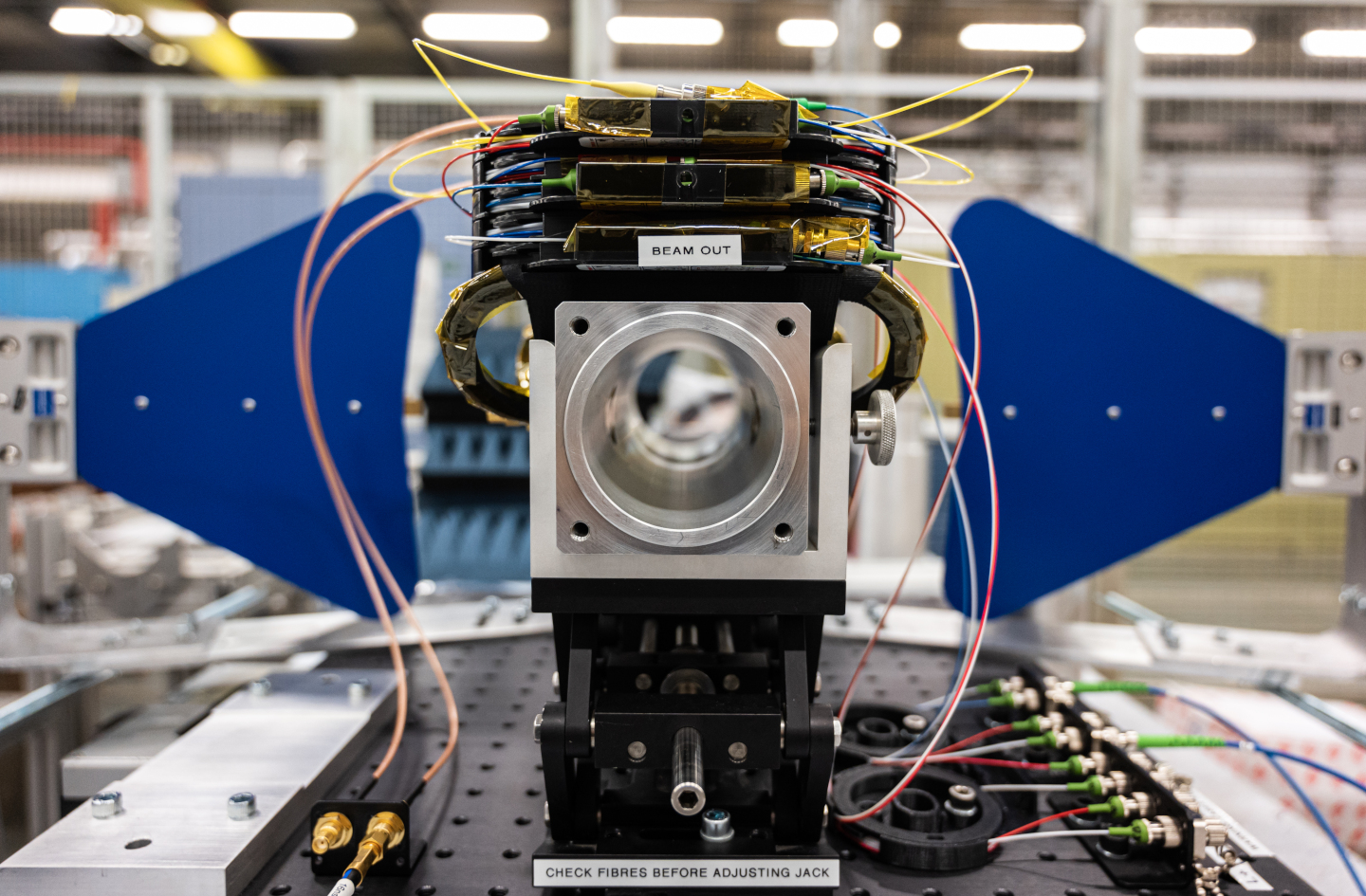
Over the past five years, the ARIES (Accelerator Research and Innovation for European Science and Society) project has brought together 41 partners from academia and industry from 18 different European countries with the aim of developing key accelerator technologies to make present and future machines more efficient, affordable, reliable and sustainable.
Coordinated by CERN, this Horizon-2020-funded project has broken new ground for the accelerator community, and leaves an impressive legacy: the European ecosystem of accelerator centres is now stronger than ever, with easily accessible facilities, well-highlighted synergies and new plans to improve current technologies and infrastructures.
One of the project’s main endeavours was to facilitate transnational access. With the aim of providing a wide range of European researchers and industry with access to top-class accelerator research and test infrastructures, ARIES set up a network of 14 accelerator test facilities across Europe. Users can carry out tests within five separate domains: magnet, material, electron and proton beam, radiofrequency, and plasma beam. With over 23 000 hours of testing for 307 users, the scheme generated interesting new science and expanded the project’s user community.
ARIES played a critical role in investigating and promoting new prospects for accelerator research and development. It was a breeding ground for research in plasma and laser-based acceleration, a field now driven in Europe by EuPRAXIA, another promising EU-funded project. Furthermore, ARIES support was key in ensuring the continuation of initiatives such as studies on high-temperature superconductivity and the revival of the studies on muon colliders. In 2022, a prototype electron gun for electron lenses was assembled and tested by four ARIES collaborators, and breakthrough results were achieved in the fields of thin superconducting films and materials for extreme thermal management.
One of ARIES’s key objectives was strong interaction with industry. The project benefited from enhanced industrial participation, with the involvement of seven industries and one association, and ran three new co-innovation programmes with industry. It also identified and supported a wealth of technologies with societal and environmental applications, such as a particle accelerator system to remove harmful emissions from ship exhausts.
With its mission fulfilled, ARIES is now coming to a close. However, its succession is ensured thanks to two new projects. I.FAST, started in April 2021, will continue and build on ARIES’s legacy of joint R&D activities with industry to develop ideas and technologies for the next generation of particle accelerators. In parallel, EURO-LABS will further the transnational access tradition of ARIES, forging even closer ties between research centres by creating a new, synergetic network of research facilities for accelerator, detector and nuclear technologies.