
Category: At CERN
-
Gilles Jobin to deliver final lecture of his artistic residency at CERN
Geneva, 30 October 2012. On 6 November at 18:00, Gilles Jobin1, first winner of the Collide @ CERN Geneva prize2, will be talking about his Collide @ CERN residency and performing extracts of movements generated during his time at the laboratory. The Collide @ CERN Geneva prize celebrates the unique relationship between CERN3 and the
-
CERN brings particle physics to the Frankfurt Book Fair
Geneva and Frankfurt, 10 October 2012. CERN1 is today showcasing its science at the Frankfurt Book Fair2. As well as a range of books looking at the science of CERN and the LHC, the Laboratory will unveil a new interactive LHC time tunnel display and announce a collaboration with games developer Rovio to develop new
-
The Republic of Cyprus becomes a CERN Associate Member State
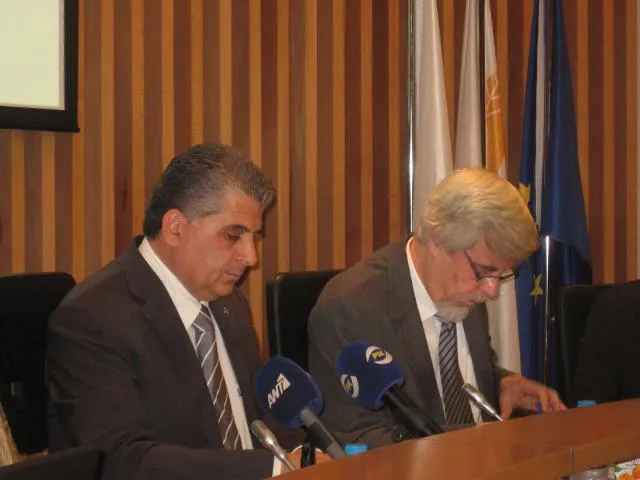
Geneva, 5 October 2012. The CERN1 Director-General, Rolf Heuer, and the Minister of Education and Culture of the Republic of Cyprus, George Demosthenous, today signed an agreement under which the Republic of Cyprus will become an Associate Member State in the pre-stage to Membership. The agreement will have to be ratified by the Parliament of
-
SCOAP3 Open Access Initiative launched at CERN
Geneva, 1 October 2012. Representatives from the science funding agencies and library communities of 29 countries are meeting at CERN1 today to launch the SCOAP32 Open Access initiative. Open Access revolutionizes the traditional scientific publishing model with scientific papers being made freely available to all, and publishers paid directly for their indispensable peer-review services to
-
Professor Agnieszka Zalewska elected President of CERN Council
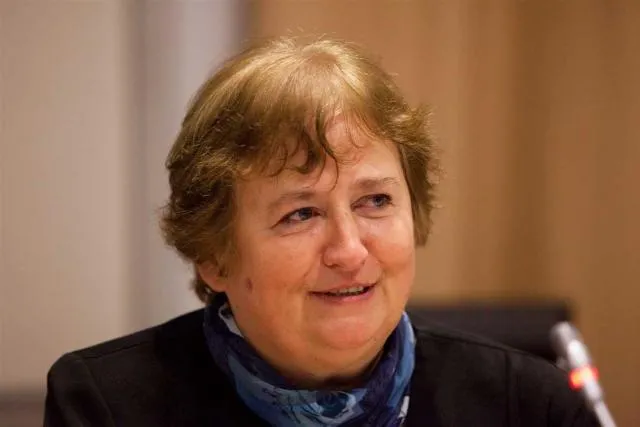
Geneva, 20 September 2012. CERN1 Council today elected Professor Agnieszka Zalewska as its 21st President for a period of one year renewable twice, with a mandate starting on 1 January 2013. Professor Zalewska takes over from Michel Spiro who comes to the conclusion of his three-year term at the end of December. Geneva, 20 September
-
CERN’s first artistic residency reaches a conclusion
Geneva, 19 September 2012. Winner of the Prix Ars Electronica Collide@CERN1 award and CERN2’s first artist in residence, Julius von Bismarck3, will present his work ‘Versuch unter Kreisen’, at the closing lecture of his residency at CERN on 25 September. This follows von Bismarck’s two-month stay at CERN earlier in the year, where he paired
-
European particle physics refreshes long-term strategy
Krakow, 12 September 2012. Some 500 particle physicists meeting in Krakow this week have been debating the long-term future of their field at the CERN Council Open Symposium on the European Strategy for Particle Physics. This symposium comes at a turning point for the field, following hot on the heels of the announcement in July