
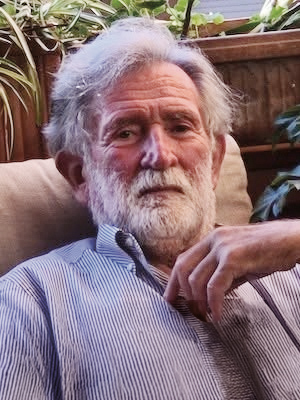
Paolo Emilio Strolin
(1939 – 2026)
—
Paolo Strolin, Emeritus Professor of Physics at the University of Naples Federico II and significant contributor to many CERN experiments, passed away on 28 June 2026 at the age of 87.
Beginning his academic life at the University of Bologna, Paolo graduated with master’s degrees in both electronic engineering and physics. From 1964 to 1975 he worked at CERN, first in the Accelerator Division and then the Particle Physics Division as a Research Physicist. In the second half of the 1970s he moved to the University of Zurich to become an Associate Professor. He was then appointed Full Professor of Experimental Physics in Naples in 1980, where he spent the rest of his career and eventually became Emeritus Professor.
In Naples, Paolo founded a neutrino physics group which contributed significantly to CHARM II (1983–1994), a CERN experiment that made precision measurements of neutrinos to validate the Standard Model. In 1989, theoretical physicist Haim Harari proposed that the neutrino could help explain dark matter and urged the experimental community to test this idea. This was the origin of the CHORUS experiment that Paolo and his group helped to design, build and operate, with Paolo serving as CHORUS Spokesperson from 1996 to 1999. When, in around 1997, it became clear that the neutrino was much lighter than expected, the CHORUS Collaboration focused on measuring neutrino-induced processes with charmed hadrons.
Around this time, Paolo, Antonio Ereditato and Kimio Niwa proposed the OPERA experiment, with Paolo becoming its first Spokesperson. CERN directed a muon neutrino beam towards the INFN Gran Sasso National Laboratory, where the OPERA Collaboration built and operated a 4000-tonne detector containing 110 000 m2 of nuclear emulsion films. The experiment led to the first observation of oscillations of muon neutrinos into tau neutrinos in “appearance mode”. After five years of data collection and several years of painstaking data analysis, the experiment published the first observation of tau neutrino appearance, with a significance of 5 sigma, in 2015.
At CERN, Paolo was a member of the Committees for Scientific Policy (SPC), the Intersecting Storage Rings (ISRC), the Large Electron–Positron Collider (LEPC) and the Super Proton Synchrotron (SPSC). In Italy, Paolo was Director of the Physics Department in Naples, Director of the Naples Section of the National Institute for Nuclear Physics and Chair of the National Scientific Committee 2 of the INFN. He also served as Vice-President of the Réseau Méditerranéen des Écoles d’Ingénieurs (RMEI).
During his retirement, Paolo focused on potential wider applications of physics research, such as the application of muon radiography to the study of volcanoes and archaeology. He pursued these activities with great passion, encouraging young colleagues to take responsibility and lead these new endeavours. He also worked hard to promote science in secondary schools and founded the Science and School Association, engaging with dozens of schools and teachers and carrying out various projects, some international in scope.
Paolo advocated for science without barriers, whether geographical or disciplinary. He possessed a sometimes disarming simplicity in his human relationships and a personal and scientific charisma that left its mark. He had many friends both inside and outside work. Paolo leaves behind an impressive scientific legacy and a profound human and professional impact on our community.
His colleagues and friends