
Science & Art @ School: Where curiosity meets creativity
Almost 180 local children took part in the second year of CERN’s Science & Art @ School programme
—
This June, a second successful year of CERN’s Science & Art @ School programme concluded with exhibitions, performances and celebrations across the local region. Almost 180 local children between the ages of 7 and 11 took part in the programme, which aims to spark children’s interest in fundamental science through creative activities and encounters with CERN scientists.
“We want to inspire children to discover the wonder of exploring the Universe while strengthening the connection between CERN and its local communities,” says Michael Hoch, the CMS physicist who launched the programme.
Following a promising pilot programme in the 2024–2025 school year, this year’s event saw six classes from three schools in Pays de Gex and Haute-Savoie taking part. The Science & Art @ School programme is a collaboration between Art@CMS and the ORIGIN Network, which includes the other CERN experiments. Rather than simply inviting schools to visit CERN, it encourages participants to play an active role in shaping their experience.
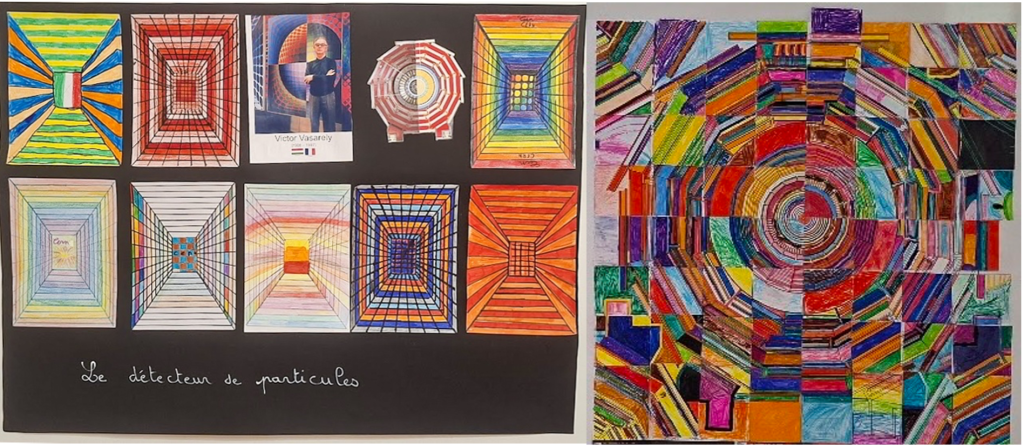
The 2026 programme began with a training afternoon at CERN, where teachers were provided with scientific resources, practical guidance and ideas. Teachers then introduced some of these ideas into their classrooms, connecting them with other parts of the curriculum including art history, with students creating pieces inspired by artists such as Kandinsky, Seurat and Viallat.
The second phase brought CERN scientists directly into schools. Each participating class took part in a 90-minute workshop, where scientists transformed abstract concepts into something pupils could question and explore.
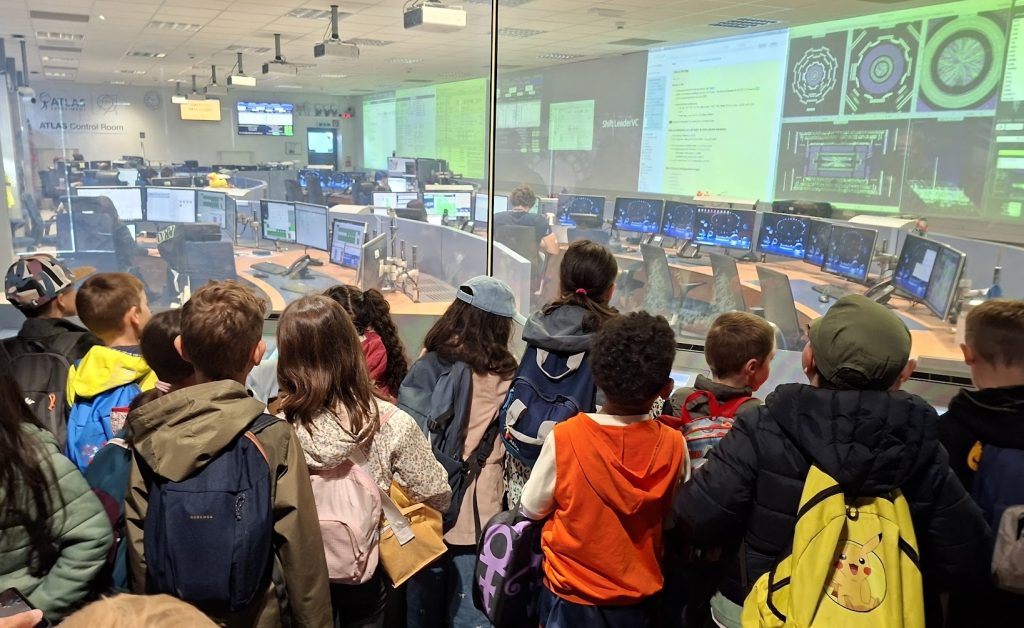
In the third phase, the children visited CERN for a full day, discovering the Laboratory through visits, activities and a treasure hunt at the CERN Science Gateway. Creative workshops then invited them to collide paint-covered marbles, paint with robots, create negative drawings by erasing ink, build collaborative collages and construct geometric string-art installations.
“Through these activities, children discover that both science and art can begin with curiosity, experimentation and collaboration,” explains Hoch, “and most importantly, they have fun!”
The children were then able to share their experience with their local community through the final phase of the programme. Pupils presented their artwork at CERN as well as school exhibitions and local festivals. Some groups also developed a dance performance, while others wrote and performed their own poetry.
One highlight was the final exhibition at CERN IdeaSquare, where selected artworks and performance videos were presented. Children returned to CERN with their parents and teachers to see their work on display and explore the Science Gateway together.
Following the success of the first two years, Science & Art @ School is now preparing to expand to more schools in the CERN region and help even more children form an enjoyable, creative and impactful connection to fundamental science. CERN colleagues interested in contributing their expertise or creative energy are invited to contact education.locale@cern.ch with the subject line Science & Art @ School. More information, including for teachers interested in taking part, can be found on this webpage.