
Powering the future of data science at CERN
CERN data centres are being transformed in preparation for HiLumi LHC
—
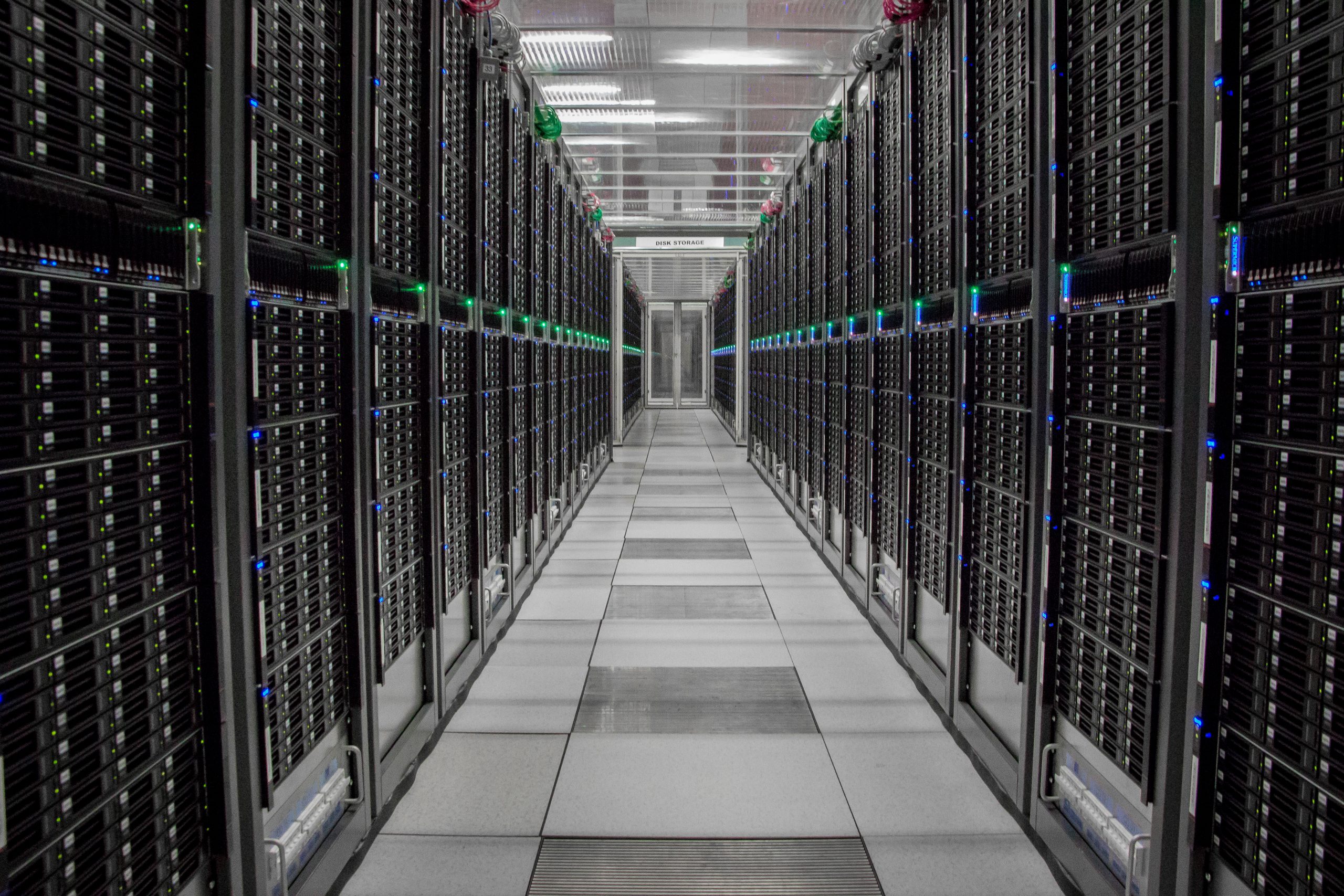
Computing power is the often invisible engine that enables research. As the Large Hadron Collider (LHC) is upgraded to deliver a dramatic increase in the number of particle collisions, the data centres that will power the HiLumi LHC era are undergoing a quiet but crucial transformation.
At the Meyrin Data Centre (MDC), CERN’s primary hub for storage and critical applications, work is already under way to strengthen something most people never think about: the floor. Modern computing hardware is becoming denser, more powerful and significantly heavier. The existing raised floor, originally designed for lighter, earlier generations of equipment, needs reinforcement to safely bear the weight of modern computing equipment. Targeted upgrades to the key zones that will host critical hardware for HiLumi LHC operation began in May 2026.
Equally important is the computing network that supports all data transfers from every experimental site on the CERN campus. Starting this month, a major fibre upgrade will modernise the connectivity of the MDC and ready the network to handle the surge in data volumes expected to be transferred from the experiments during HiLumi LHC. Advanced cabling technology that bundles multiple fibres into single, compact cables will increase available space in the cable trays located both above and below the floor. The upgrade is being delivered as a single, coordinated effort in order to minimise disruption.
In July, another critical operation will begin: the installation of new electrical distribution equipment as part of a wider power system overhaul. This will be challenging and delicate work, as the installation work will take place right next to production systems that currently support mission-critical operations.
Beyond 2026, the MDC is set for a broader evolution. Plans include simplifying electrical systems, introducing dual power feeds for greater reliability, upgrading racks to accommodate larger modern hardware, transitioning to more flexible back-up power architecture and exploring more efficient cooling solutions.
Meanwhile, the Prévessin Data Centre (PDC) is growing in its role as a computing hub and back-up site after two successful years of operation, and will now start to expand. Looking ahead, future phases are expected to dramatically increase computing capacity, from the current 4 MW (megawatts) of capacity to the future 12 MW. Upcoming improvements include the activation of a heat recovery system that will eventually feed the district heating system of Prévessin, and the enhancement of cooling performance to reduce water usage.
As the HL-LHC era approaches, the CERN data centres are being reshaped to meet the intense demands of next-generation science while remaining safe and reliable for decades to come.