
Category: At CERN
-
UN and CERN celebrate science for peace and development and CERN’s 60th anniversary
New York, 20 October 2014. The United Nations Economic and Social Council (ECOSOC) and the European Organization for Nuclear Research (CERN)1 celebrated science for peace and development highlighting the values of science and its ability to build bridges between nations. The event was the last in a series of celebrations organized by CERN to mark
-
MEDIA ADVISORY: UN and CERN to celebrate science for peace and development
Geneva, 17 October 2014. The United Nations Economic and Social Council (ECOSOC) and the European Organization for Nuclear Research (CERN1) will gather eminent politicians and scientists to celebrate science for peace and development highlighting the values of science and its ability to build bridges between nations. Using CERN as an example, the event will highlight
-
CERN turns 60 and celebrates peaceful collaboration for science
Geneva, 29 September 2014. Today, CERN1, the European Organization for Nuclear Research, is blowing out 60 candles at an event attended by official delegations from 35 countries. Founded in 1954, CERN is today the largest particle physics laboratory in the world and a prime example of international collaboration, bringing together scientists of almost 100 nationalities.
-

Hervé Genoud (1982-2014)
We deeply regret to announce the death of Hervé Genoud on 22 September 2014
-
CERN and APS announce partnership for Open Access
Geneva, 18 September 2014. The American Physical Society (APS) and The European Organization for Nuclear Research (CERN1) jointly announce a partnership to make all CERN-authored articles published in the APS journal collection to be Open Access. Articles in APS’ Physical Review Letters, Physical Review D, and Physical Review C in 2015 and 2016 will be
-
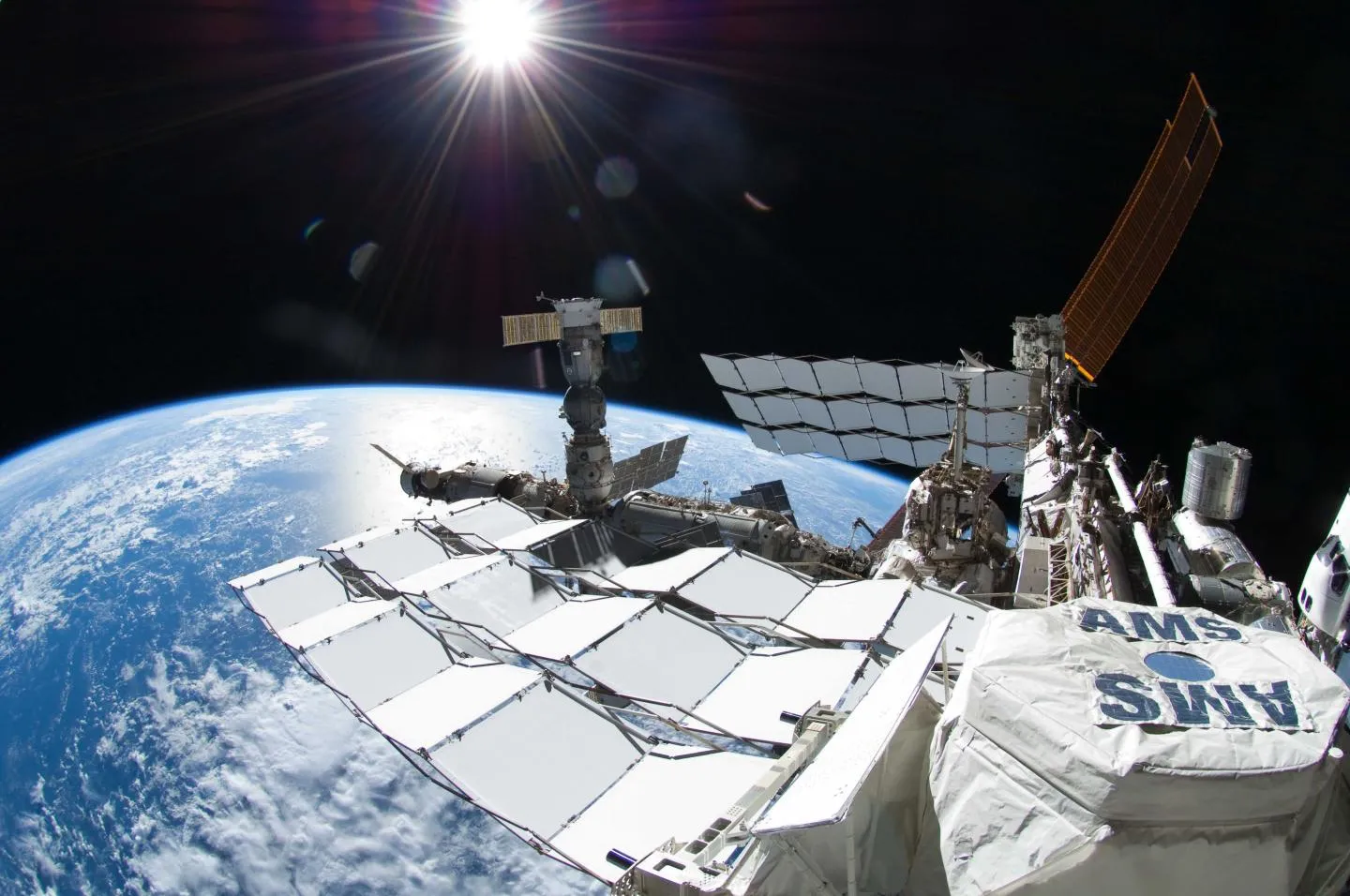
Latest measurements from the AMS experiment unveil new territories in the flux of cosmic rays
Geneva 18 September 2014. The Alpha Magnetic Spectrometer (AMS1) collaboration has today presented its latest results. These are based on the analysis of 41 billion particles detected with the space-based AMS detector aboard the International Space Station. The results, presented during a seminar at CERN2, provide new insights into the nature of the mysterious excess