CERN begins beryllium beam-pipe production
Supported by CERN and the LHC experiment collaborations, the workshop will construct essential components for HiLumi LHC and future particle physics experiments
Written by:
Emma Hattersley
—
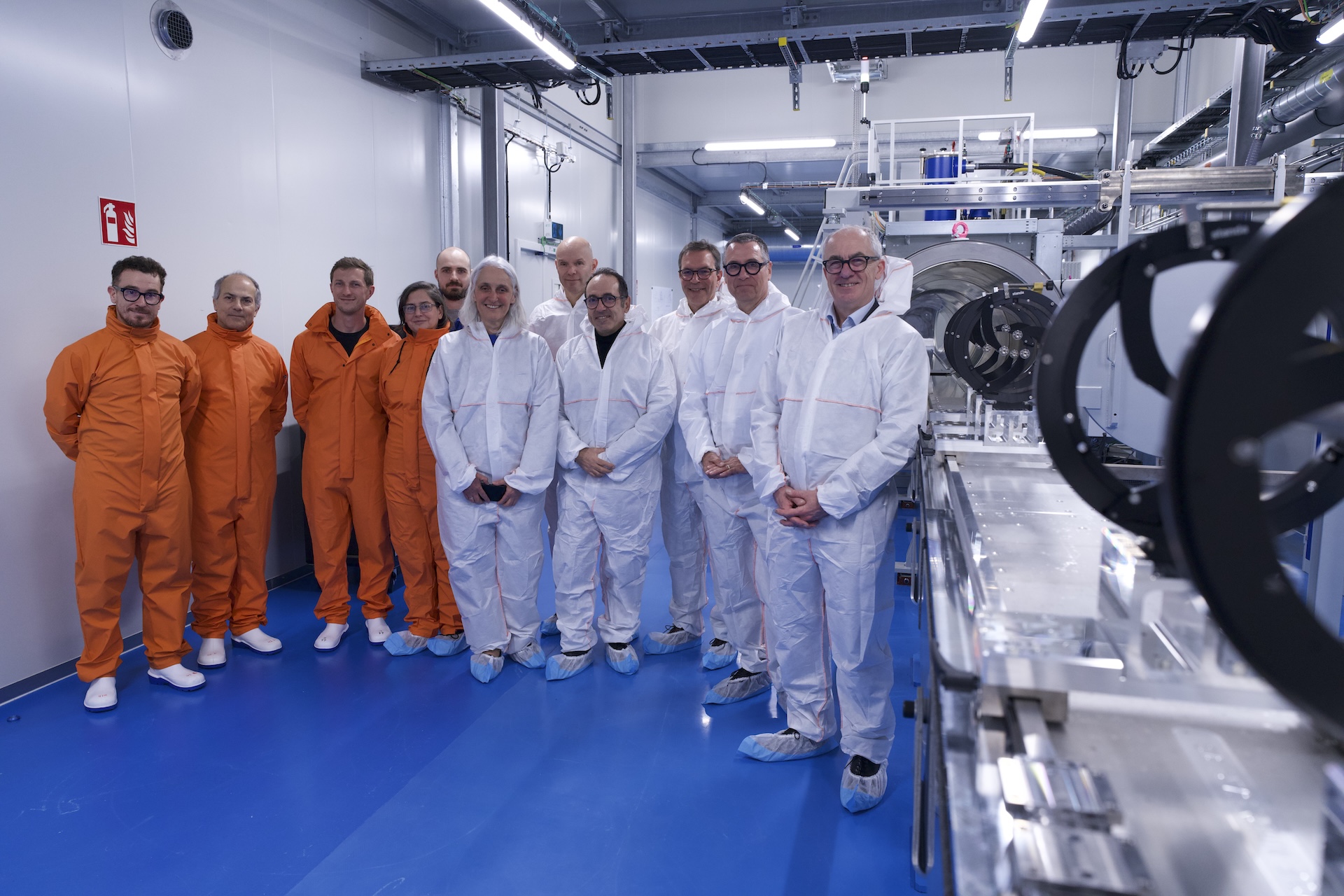
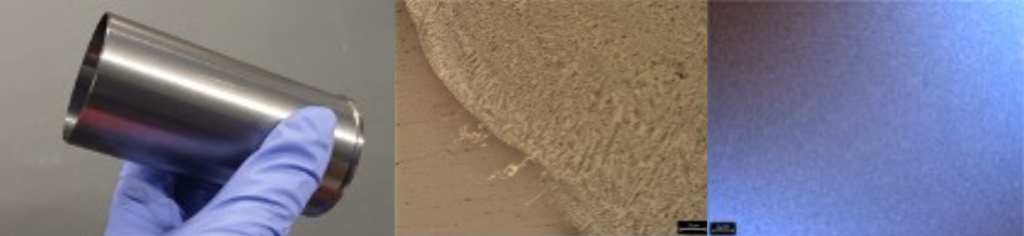
Production of beryllium beampipes at CERN has begun, following the successful welding of two beryllium tubes. This marks a major milestone in CERN’s efforts to secure critical components for the High-Luminosity LHC (HiLumi LHC) and future accelerator projects.
The construction of CERN’s Beryllium Facility, which is funded jointly by CERN and the LHC experiments, was motivated by the need for new vacuum chambers for the upcoming ATLAS and ALICE upgrades and a spare chamber for CMS. Beryllium is the only suitable material for these chambers due to its transparency to particles created in high-energy collisions, combined with its good mechanical properties. Until recently, these highly-specialised components were produced by external partners.
In 2023, however, the last supplier capable of machining and welding beryllium tubes for ultra-high-vacuum applications discontinued this activity. This prompted CERN to bring the entire production chain in house and establish a unique global capability, whilst continuing to collaborate with the specialised beryllium industry.
Project leader Isabel Bejar Alonso explained: “The construction of the facility establishes a strategic, long-term capability that secures the success of CERN’s experimental programme while providing a model for managing complex, high-risk industrial processes safely in house.”
An inter-departmental CERN team worked hard to deliver the project in just 13 months, from approval on 13 January 2025 to safety clearance on 16 February 2026. Collaboration with external experts and research institutions helped to accelerate the development and validation of key processes, reducing the timeframe to less than half that previously required by industry.
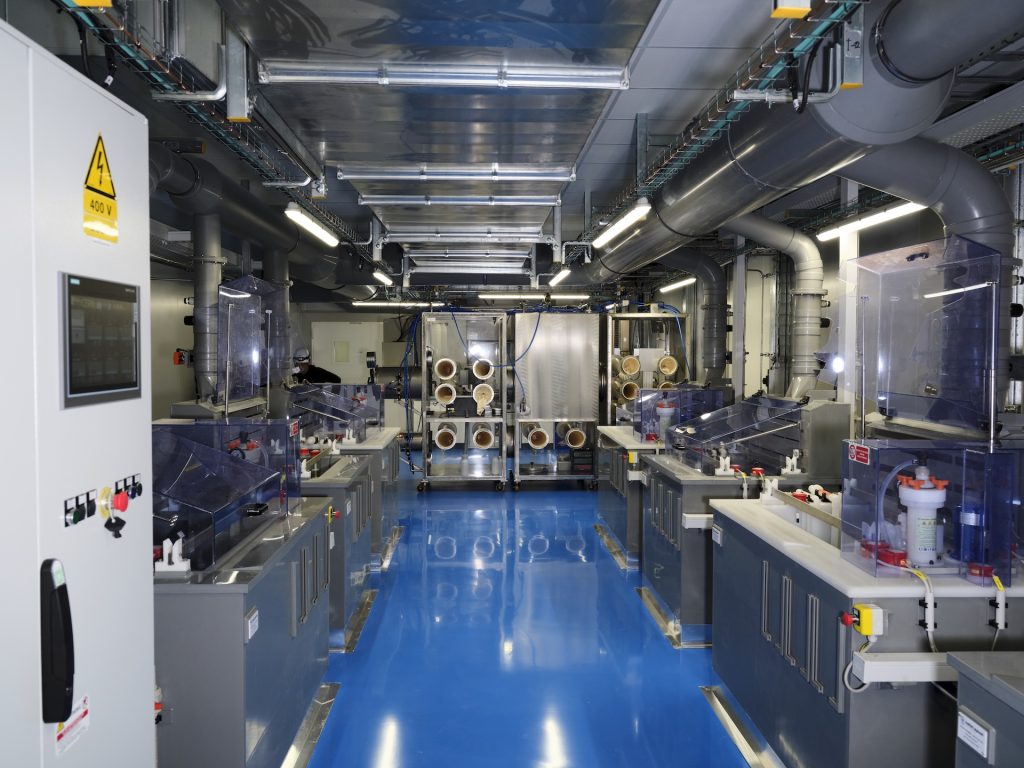
Inside the new workshop, specialised equipment machines beryllium bars into thin tubes with wall thicknesses between 0.5 and 1 mm. These tubes are then welded together into longer sections of up to 7 m. Early tests showed that the facility can produce welded beryllium junctions and other necessary components of a quality equal to or better than those previously provided by external manufacturers.
From the outset, the infrastructure was engineered to manage beryllium dust and chemical hazards and meet stringent cleanliness standards. Beryllium dust is dangerous if inhaled, so the facility is designed to ensure that the concentration stays below a level equivalent to the amount that would be produced if a pencil were sharpened in a football stadium.
Key safety features include controlled-atmosphere enclosures that maintain negative pressure to prevent the dispersion of particles, high-efficiency particulate air (HEPA) filtration systems and dedicated ventilation that provides multiple exchanges of air per hour. Air-monitoring systems and a regular analysis of surfaces facilitate the monitoring of lab conditions to confirm that all protection mechanisms are working well.
The first three beam pipes to be produced at CERN will be installed during the long shutdown. The flexible design of the facility means that it can also be used far into the future for the production of other key components, including those made of materials other than beryllium, thereby helping to secure the success of CERN’s long-term experimental programme.