
Tag: CMS
The Compact Muon Solenoid (CMS) is a general-purpose detector at the Large Hadron Collider (LHC). It is designed to investigate a wide range of physics, including the search for the Higgs boson, extra dimensions, and particles that could make up dark matter. Although it has the same scientific goals as the ATLAS experiment, it uses different technical solutions and a different magnet-system design.
-
Efficiency meets environmental responsibility: commissioning CERN’s primary CO₂ cooling circuit
The ATLAS and CMS detectors require ultra-low, stable temperatures to protect their sensitive electronics. Traditional cooling systems rely on synthetic refrigerants like hydrofluorocarbons (HFCs), which, while effective, have a global warming potential thousands of times greater than CO₂. Seeking a sustainable alternative, CERN has turned to CO₂ itself – a natural refrigerant with a far
-
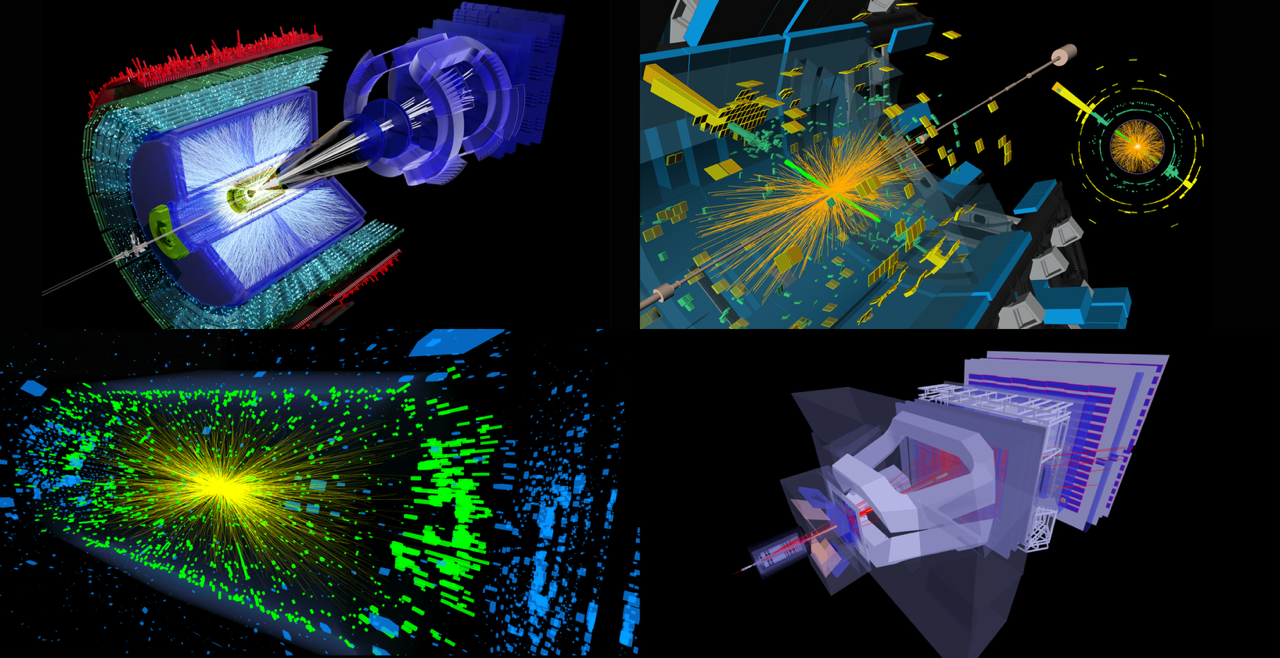
Final collisions, new horizons
In the early hours of Sunday, 14 June, the experiments at the Large Hadron Collider (LHC) had their last hurrah. In the control rooms of ALICE, ATLAS, CMS and LHCb – the four major experiments at the accelerator – scientists watched the final collisions burst across their screens like colourful fireworks. The collisions for physics
-
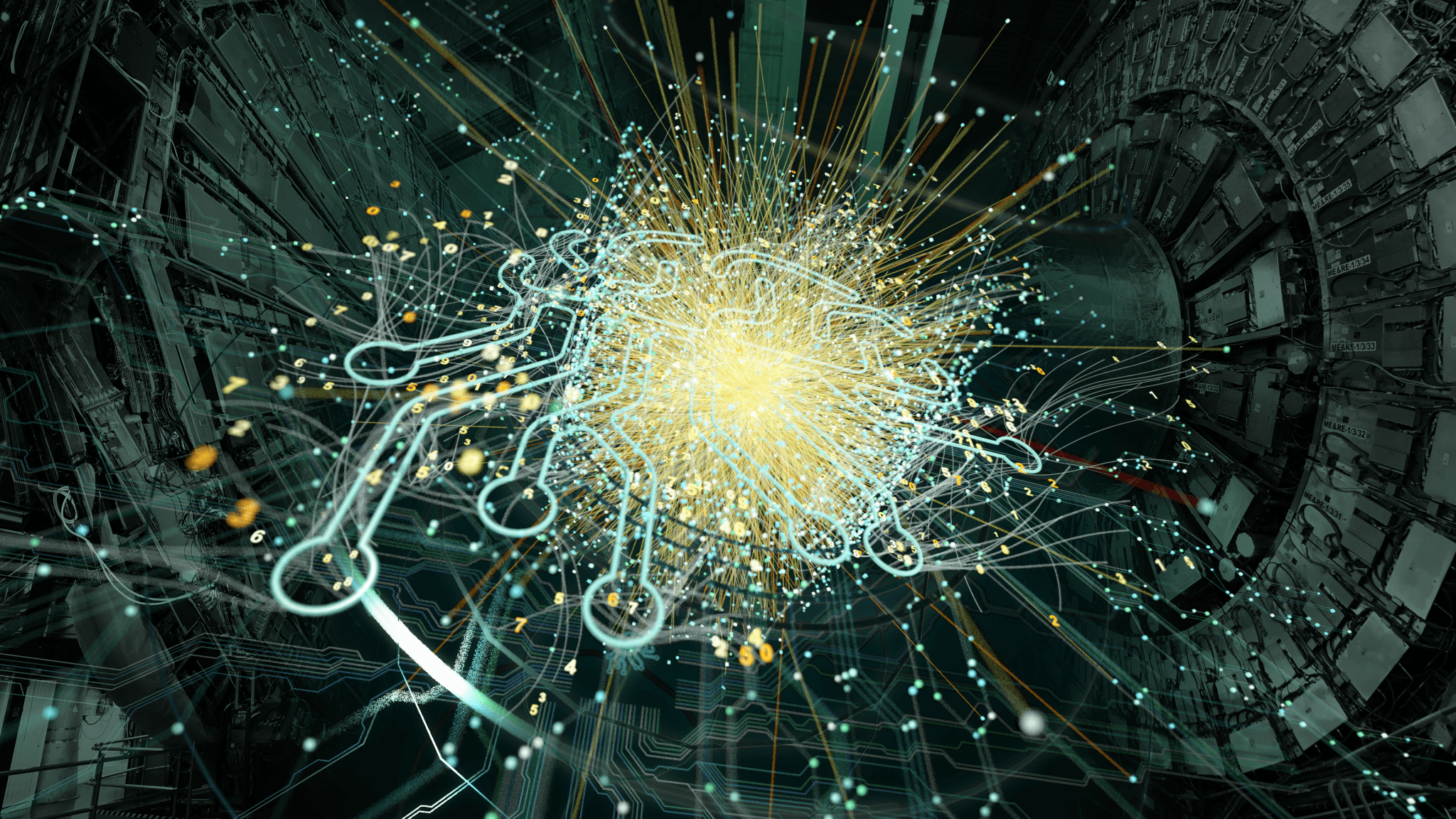
Smarter decisions at the speed of physics
Smart and fast decision making is key when dealing with the onslaught of collisions at the LHC. At the High-Luminosity LHC (HiLumi LHC), the ATLAS and CMS experiments are expected to process detector data at rates corresponding to roughly a quarter of the 2025 global internet traffic. All in real time, as part of the
-
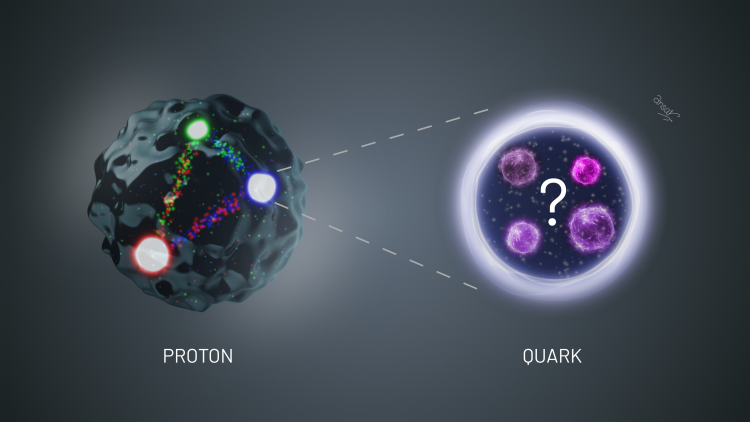
CMS looks deep inside quarks
The CMS Collaboration has probed deep inside quarks to search for potential building blocks within them
-
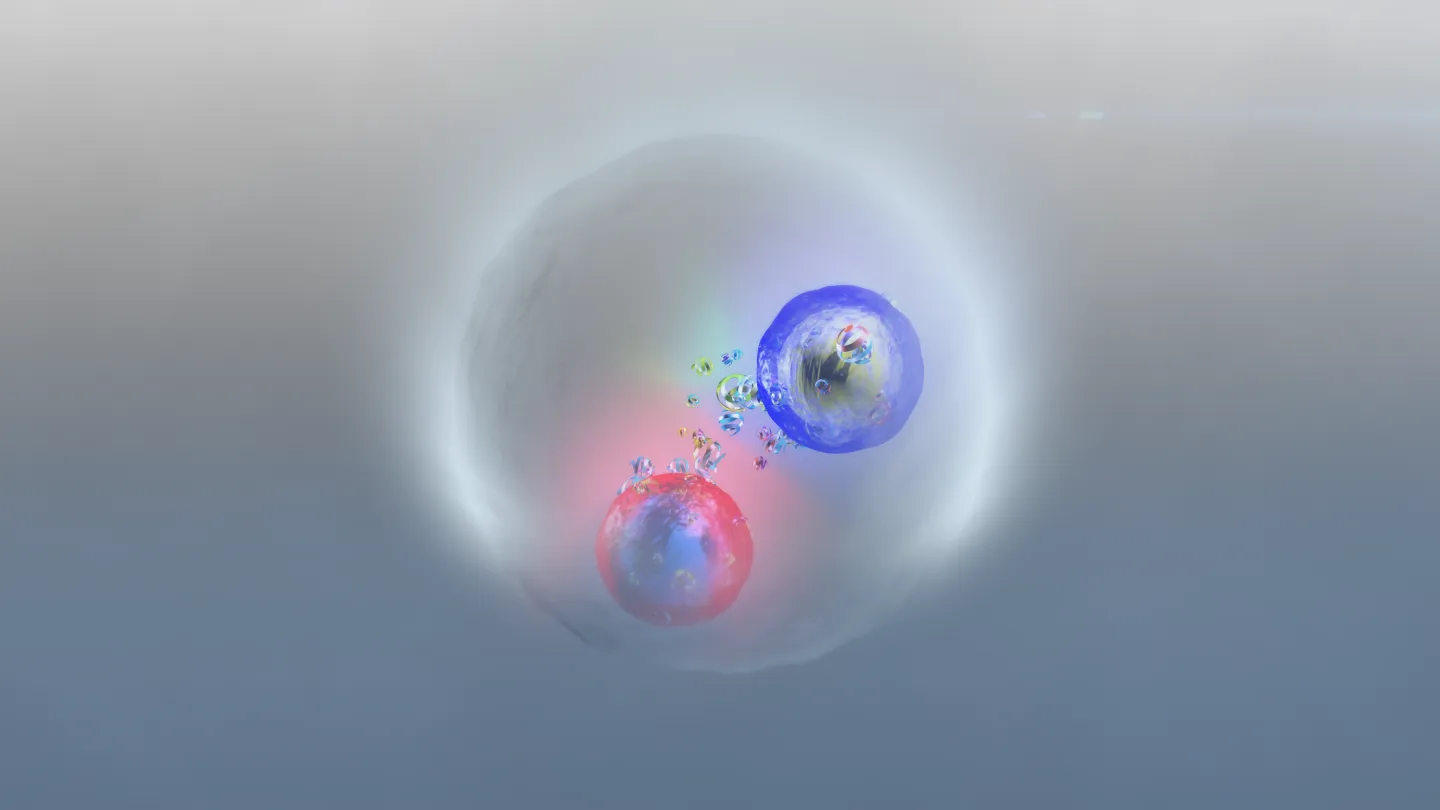
CMS strengthens the case for toponium
A new independent measurement by the CMS experiment at the LHC is consistent with the existence of the most massive composite particle ever observed, the momentary union of a top quark and its antiquark
-

CMS welcomes new management for 2026–2028
With more than 6000 scientists, engineers, technicians, administrators and students, CMS is one of the world’s largest scientific collaborations. From 1 January 2026 to 31 August 2028, Anadi Canepa has the important role of representing the Collaboration as its Spokesperson. Joining her as deputies are Hafeez Hoorani, who continues in his present role until 31
-
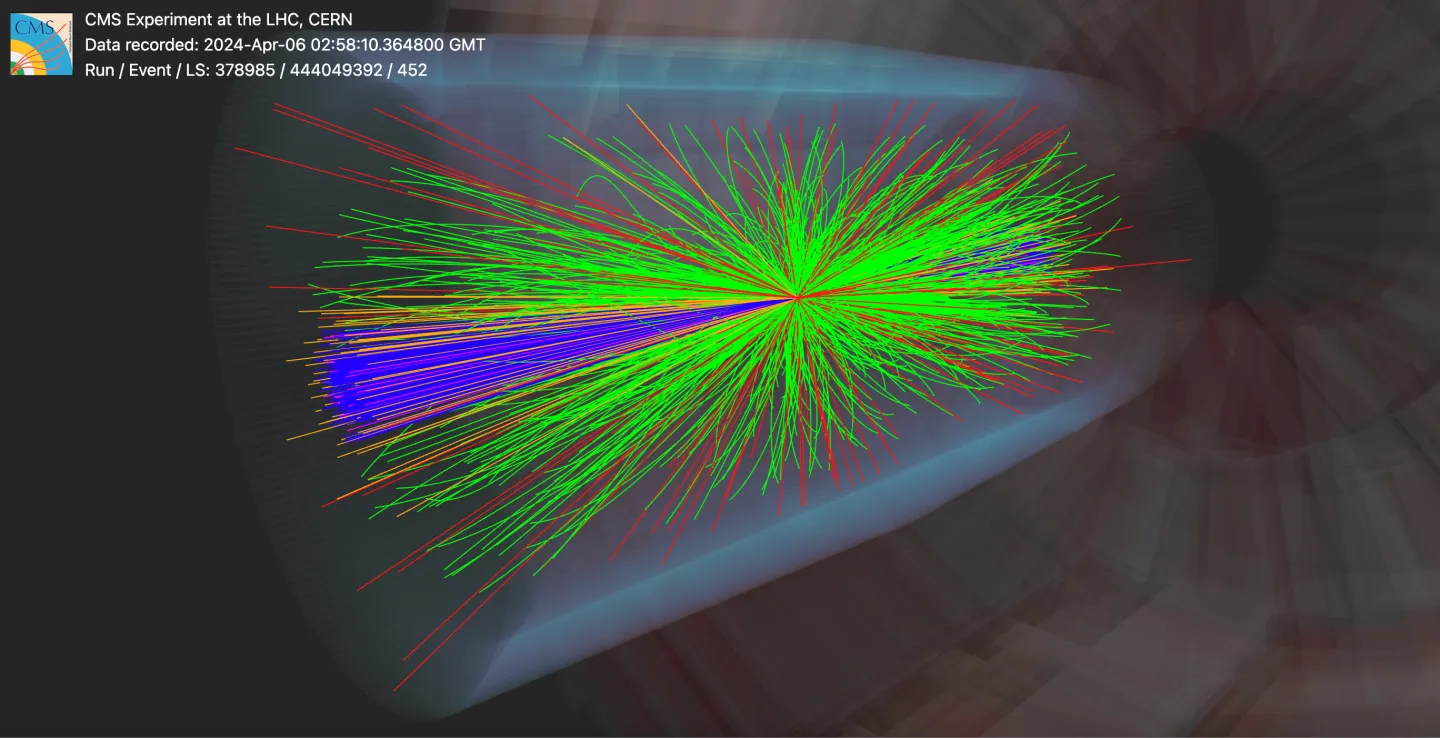
Machine learning to reveal more about LHC particle collisions
The CMS Collaboration demonstrates that machine learning can outperform traditional methods in the full reconstruction of particle collisions at the LHC
-

Groundbreaking CMS calorimeter for the High-Luminosity LHC
CMS has recently completed the first prototype slice of its innovative High-Granularity Calorimeter (HGCAL), which will be the largest silicon-based detector ever built
-

Deciphering the heavyweights of the tetraquark world
The CMS collaboration reports the first measurement of the quantum properties of a family of tetraquarks that was recently discovered at the LHC
-
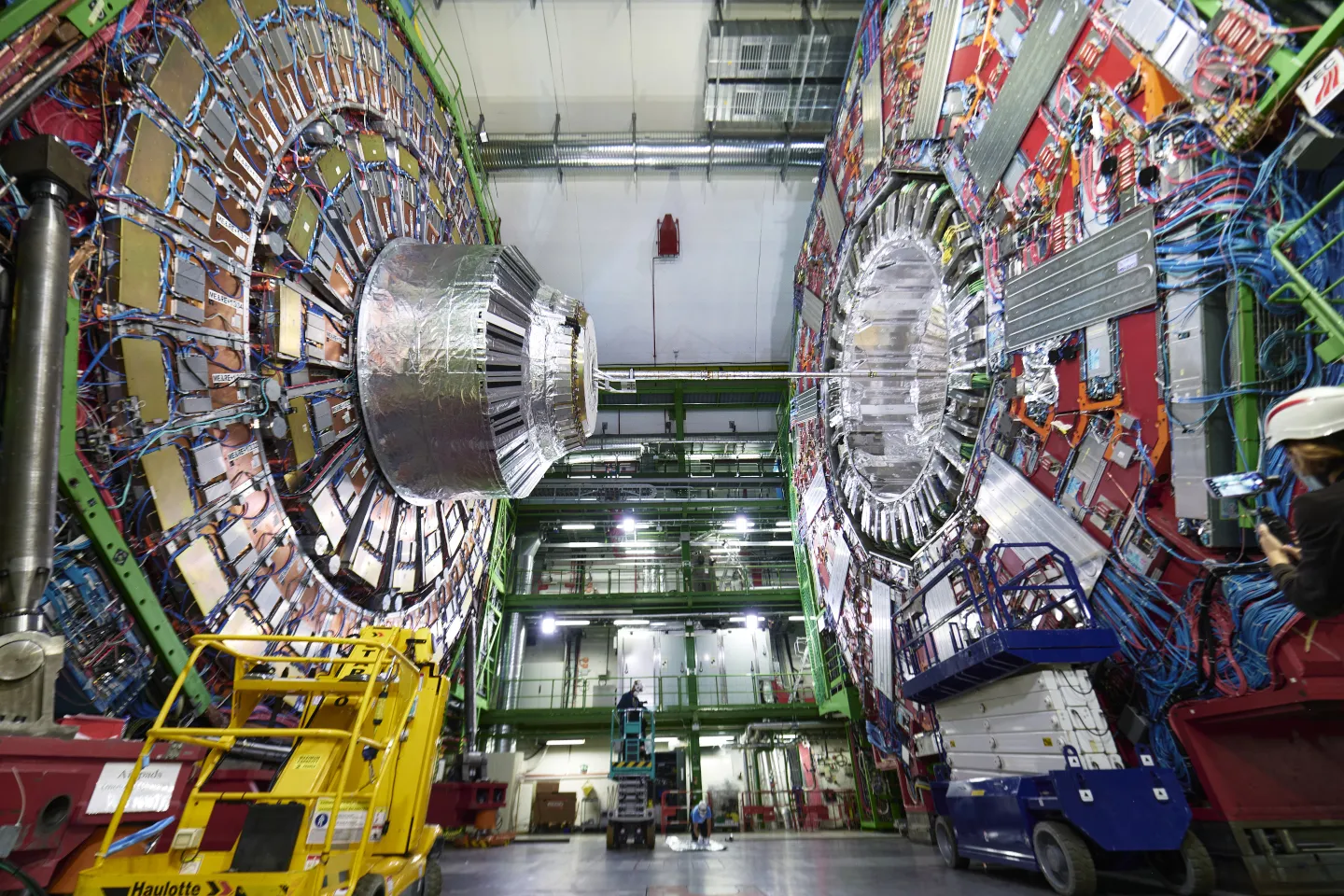
First observation of single top quark production with W and Z bosons
This incredibly rare phenomenon, observed at the CMS experiment, can help probe the fundamental forces of nature