
Tag: CMS
The Compact Muon Solenoid (CMS) is a general-purpose detector at the Large Hadron Collider (LHC). It is designed to investigate a wide range of physics, including the search for the Higgs boson, extra dimensions, and particles that could make up dark matter. Although it has the same scientific goals as the ATLAS experiment, it uses different technical solutions and a different magnet-system design.
-

CMS congratulates its 2024 Thesis Award and 2025 Young Researcher Prize winners
2024 CMS PhD Thesis Award During the September 2025 CMS week, the CMS collaboration announced the winners of the 2024 CMS PhD Thesis Award. After a rigorous evaluation of a remarkable pool of 19 nominees, the collaboration honoured Congqiao Li (Peking University, CN), Christina Wenlu Wang (California Institute of Technology (Caltech), US) and Ho Fung
-

Shape-shifting collisions probe secrets of early Universe
The first high-energy collisions between light nuclei at the Large Hadron Collider confirm the unusual “bowling-pin” shape of neon nuclei and offer up a new tool to study the extreme state of matter produced in the aftermath of the Big Bang
-

Elusive romance of top-quark pairs observed at the LHC
The CMS and ATLAS experiments at CERN’s Large Hadron Collider have observed an unforeseen feature in the behaviour of top quarks that suggests that these heaviest of all elementary particles form a fleeting union
-

AI enhances Higgs boson’s charm
The CMS collaboration presents a new search for the decay of a Higgs boson into charm quarks, bringing physicists closer to unravelling how this unique particle endows matter with mass
-

The LHC experiment collaborations at CERN receive Breakthrough Prize
The Breakthrough Prize in Fundamental Physics was awarded to the ALICE, ATLAS, CMS and LHCb collaborations during a ceremony held in Los Angeles on 5 April
-

CMS finds unexpected excess of top quarks
Data from the CMS experiment at CERN’s Large Hadron Collider reveals an intriguing excess of top-quark pairs, hinting at the first observation of a composite particle with unique properties
-
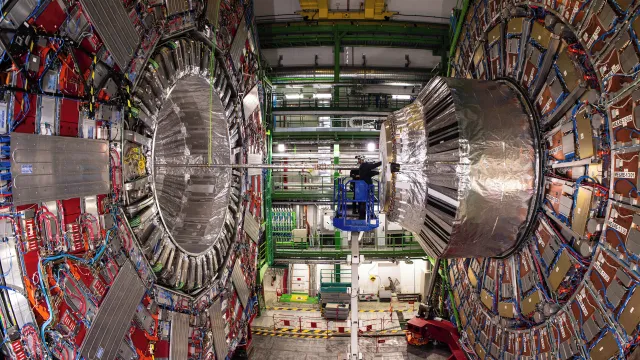
Clocking nature’s heaviest elementary particle
The CMS collaboration has tested whether top quarks play by Einstein’s rules all day and all night
-
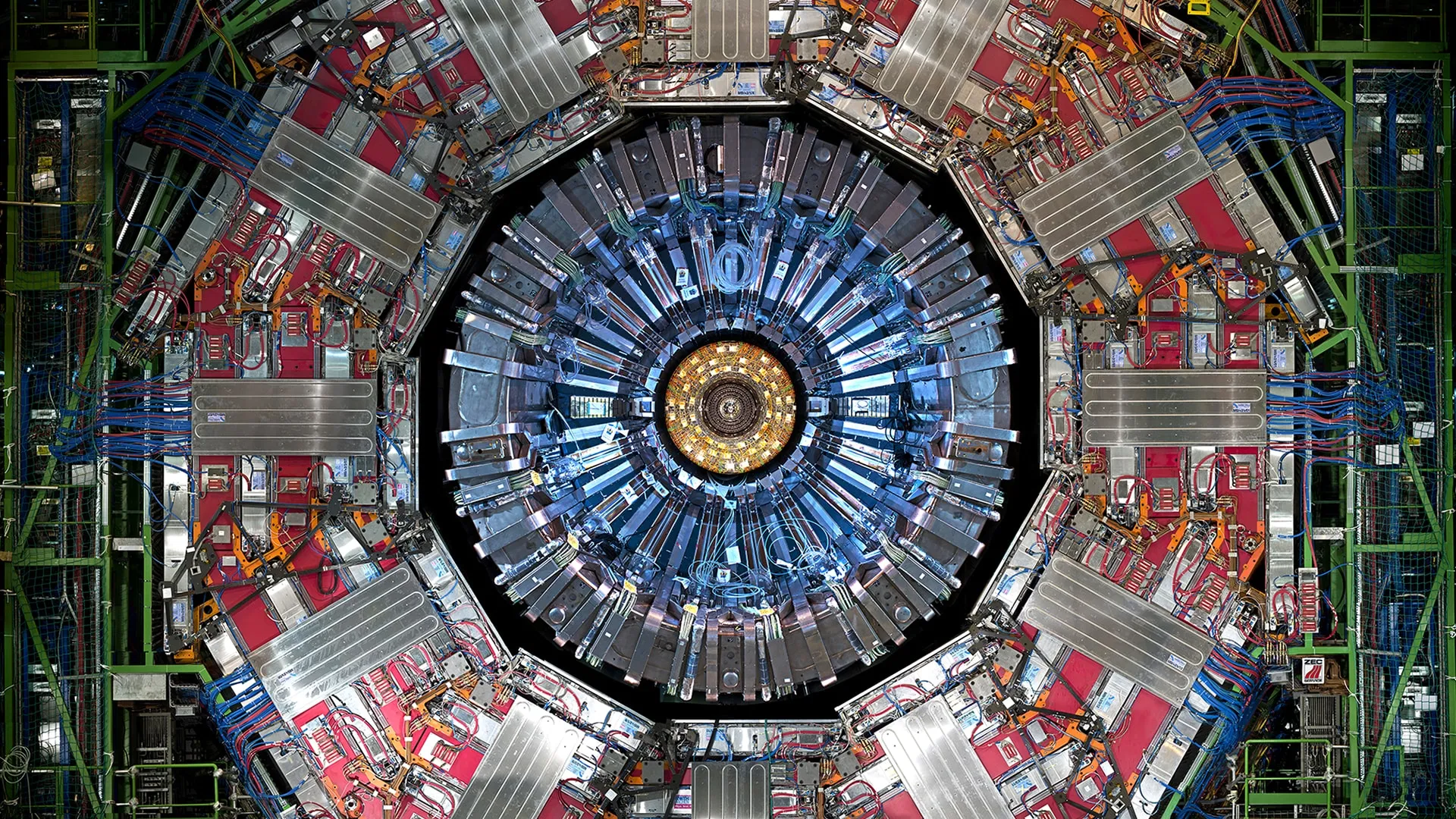
CMS develops new AI algorithm to detect anomalies
During LHC Run 3, researchers at the experiment have deployed an innovative machine learning technique that will improve the data quality of one of the detector’s most crucial components
-
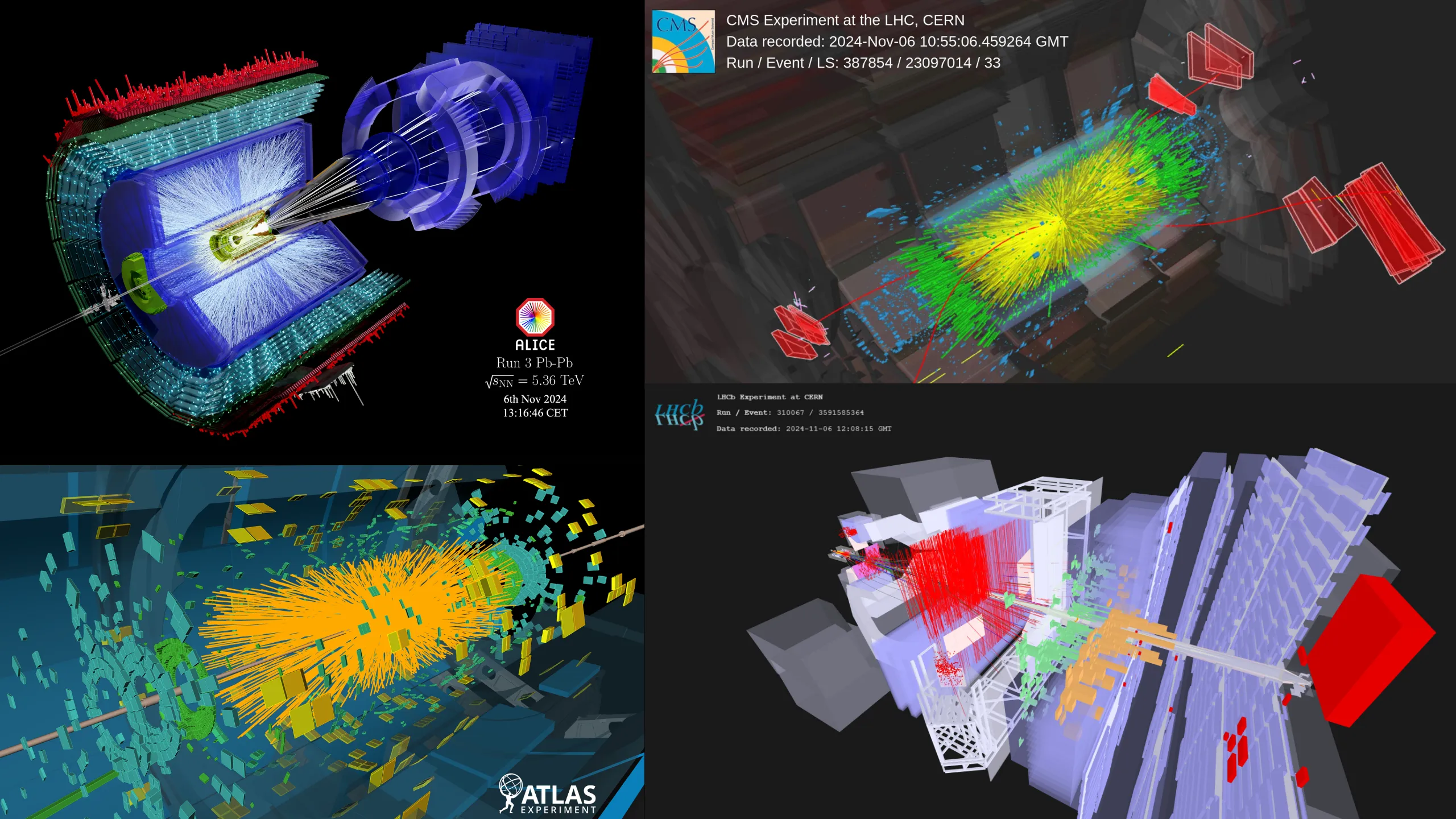
Heavy-ion run at the LHC begins
For the next 17 days, every minute counts when it comes to taking lead–lead collision data
-
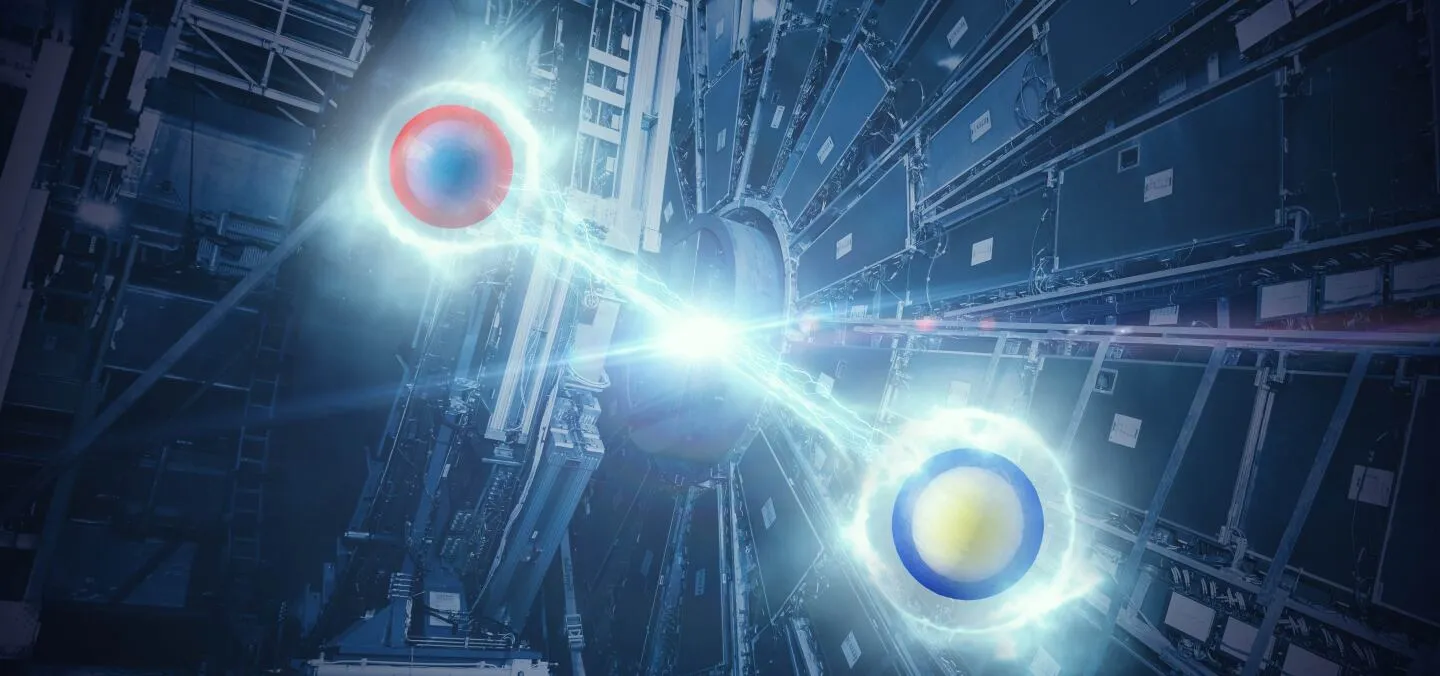
LHC experiments at CERN observe quantum entanglement at the highest energy yet
The results open up a new perspective on the complex world of quantum physics