
Tag: Media
-
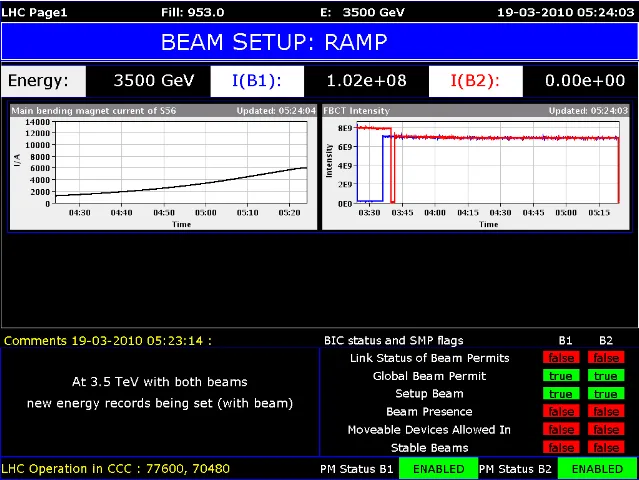
LHC sets new record – accelerates beam to 3.5 TeV
Geneva, 19 March 2010. At just after 5:20 this morning, two 3.5 TeV proton beams successfully circulated in the Large Hadron Collider for the first time. This is the highest energy yet achieved in a particle accelerator, and an important step on the way to the start of the LHC research programme. The first attempt
-
CERN to celebrate International Women’s day
Geneva, 4 March 2010. On Monday 8 March, CERN1 will take on a distinctly feminine look as the laboratory celebrates the role of women in physics. Often seen as a male preserve, the reality is rather different, with women playing key roles across all areas of CERN activity. “At CERN, and in particle physics the
-
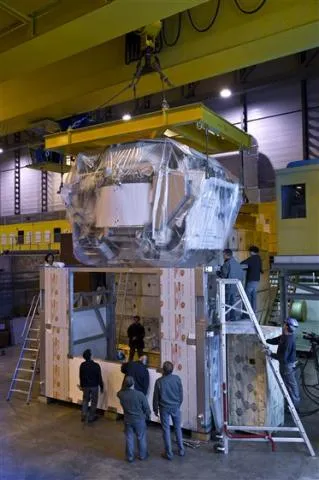
AMS experiment embarks on first leg of mission into space
Geneva, 12 February 2010. The Alpha Magnetic Spectrometer (AMS) left CERN1 this morning on the first leg of its journey to the International Space Station (ISS). A special convoy carrying the experiment is due to arrive at the European Space Agency’s research and technology centre, ESTEC, at Noordwijk in the Netherlands in six days time.
-
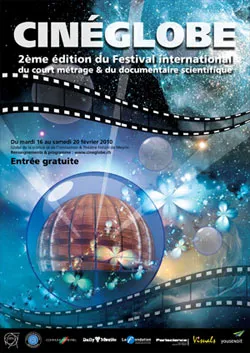
The CinéGlobe film festival at CERN and the Forum Meyrin Theatre
Geneva, 3 February 2010. The second edition of CinéGlobe, the international festival of short films and science documentaries, will be held from Tuesday, 16 February to Saturday, 20 February 2010. It is being organised by the club Open Your Eyes Films1 , CERN2 and the culture office of Meyrin. Geneva, 3 February 2010. The second
-
LHC ends 2009 run on a high note
Geneva, 18 December 2009. At its 153rd session today, the CERN1 Council heard that the Large Hadron Collider ended its first full period of operation in style on Wednesday 16 December. Collisions at 2.36TeV recorded since last weekend have set a new world record and brought to a close a successful first run for the
-
CERN Colour X-ray Technology Set to Save Lives
Geneva, 14 December 2009 Medical studies are soon to start with the MARS scanner, a revolutionary CT scanner developed by the University of Canterbury1, New Zealand. The scanner, which incorporates technology developed at the world’s leading particle physics research centre, CERN2, was recently shipped to research partners in North America. Today a student from Canterbury
-
LHC sets new world record
Geneva, 30 November 2009. CERN1’s Large Hadron Collider has today become the world’s highest energy particle accelerator, having accelerated its twin beams of protons to an energy of 1.18 TeV in the early hours of the morning. This exceeds the previous world record of 0.98 TeV, which had been held by the US Fermi National
-
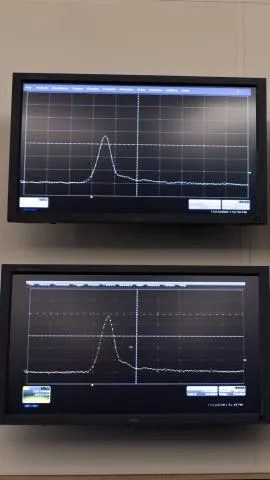
Two circulating beams bring first collisions in the LHC
Geneva, 23 November 2009. Today the LHC circulated two beams simultaneously for the first time, allowing the operators to test the synchronization of the beams and giving the experiments their first chance to look for proton-proton collisions. With just one bunch of particles circulating in each direction, the beams can be made to cross in
-
The LHC is back
Geneva, 20 November 2009. Particle beams are once again circulating in the world’s most powerful particle accelerator, CERN1’s Large Hadron Collider (LHC). This news comes after the machine was handed over for operation on Wednesday morning. A clockwise circulating beam was established at ten o’clock this evening. This is an important milestone on the road
-
“Voyage to the Heart of Matter” in pop-up form
Geneva, 19 October 2009. Voyage to the Heart of Matter, a new pop-up book about the science of CERN1‘s Large Hadron Collider (LHC), focusing on the ATLAS experiment, will be published on 9 November in London. Other language editions will follow. Journalists are invited to the press launch of the UK edition at 10am on