
Young scientists win their way to CERN, DESY and the University of Bonn
The three laboratories welcomed the high-school students who won this year’s edition of Beamline for Schools
Written by:
Nicoletta Barzaghini
—
From 11 to 25 August, a bit earlier as usual due to Long Shutdown 3 (LS3), CERN, DESY (the German electron synchrotron facility in Hamburg) and ELSA (the electron accelerator at the University of Bonn) welcomed the winners of the 2026 Beamline for Schools (BL4S) competition.
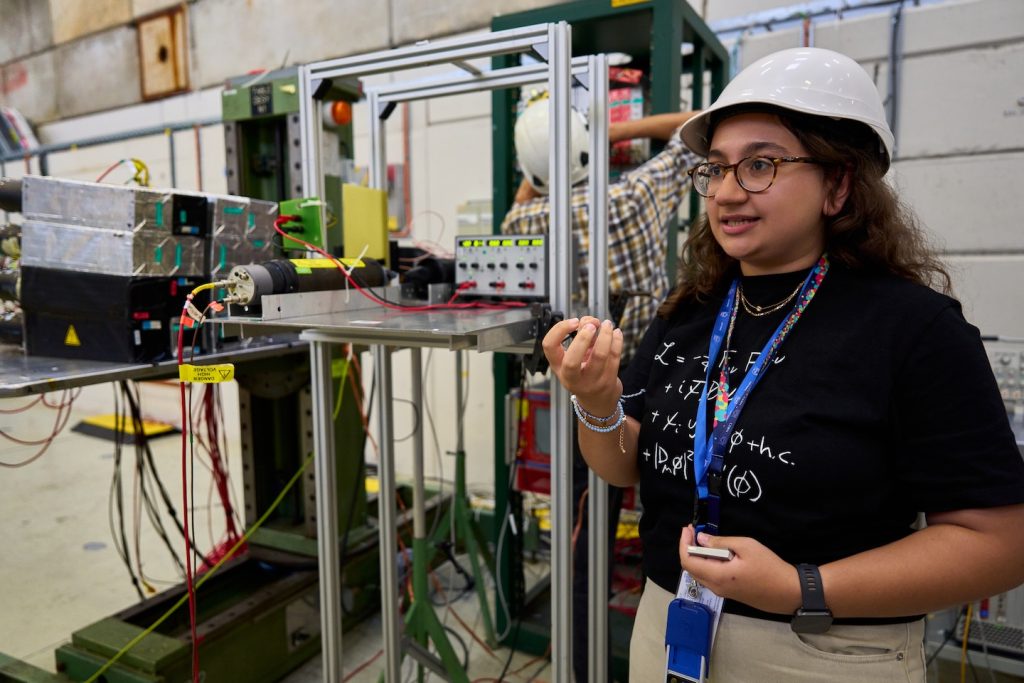
Launched in 2014 to mark CERN’s 60th anniversary, Beamline for Schools is an education and outreach project funded through the CERN & Society Foundation and made possible by the invaluable support of volunteers at CERN, DESY and ELSA. Multiple teams of high-school students from around the world take part in this competition by proposing an experiment to be performed on a beamline – an experience designed to inspire the scientists of tomorrow to continue their careers in STEM (science, technology, engineering and maths). The winning teams have the opportunity to run their experiment like true physicists, experiencing first-hand cutting-edge physics environments in one of the three laboratories.
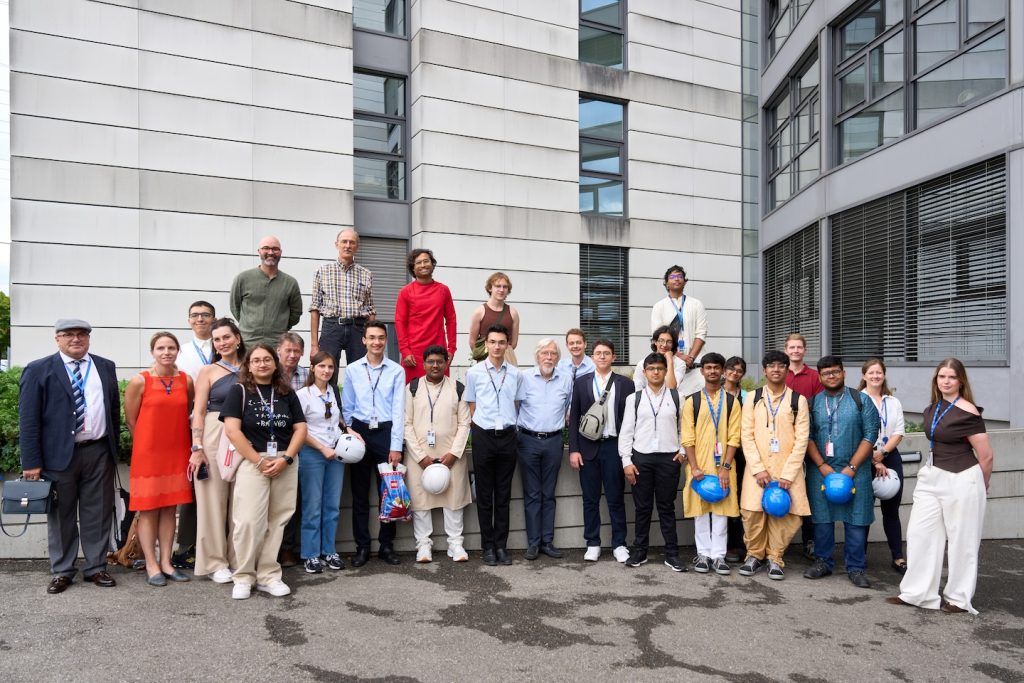
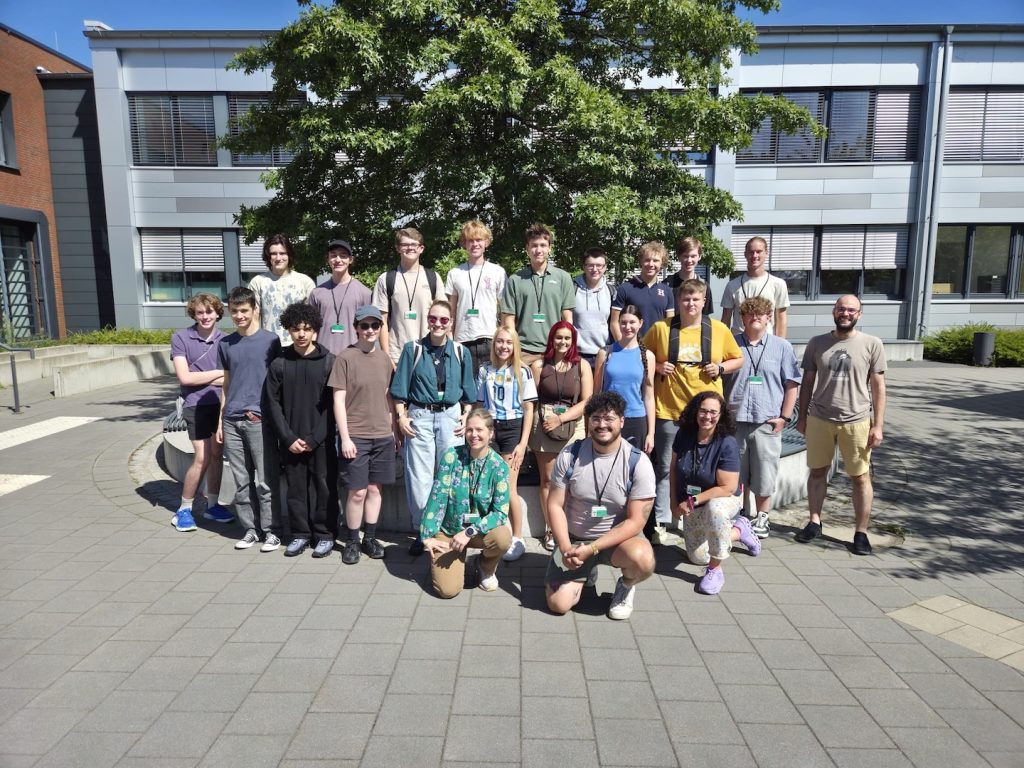
This year, high-school students from Bangladesh, India, Türkiye, the United Kingdom and the United States carried out their own experiments using accelerator beams. The team “attoPION”, made up of students from several schools in India, and the team “PionIST 3”, made up of students from several schools in Türkiye, came to CERN, while DESY hosted the team “Mobile MIPs”, from the United Kingdom, and the team “Centauri Stars” from the United States. The team “POLARIS”, made up of students from several schools in Bangladesh, was welcomed by the University of Bonn, to use its electron accelerator ELSA.
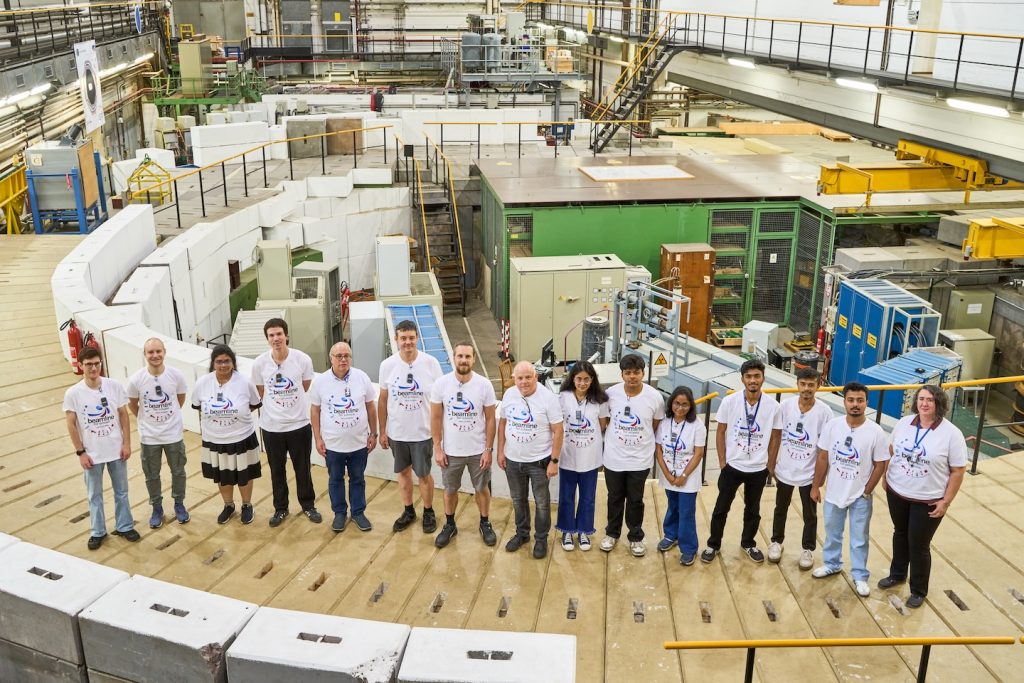
The collaboration between CERN and DESY on Beamline for Schools took shape in 2019 and, for the second year running, the ELSA facility at the University of Bonn also welcomed a team. This year the programme reached a remarkable participation rate, with more than 4500 high-school students registered, 38% of which being young women, and with a new record number of 712 teams from 89 countries submitting an experiment proposal.
How Beamline for Schools inspired a student in engineering
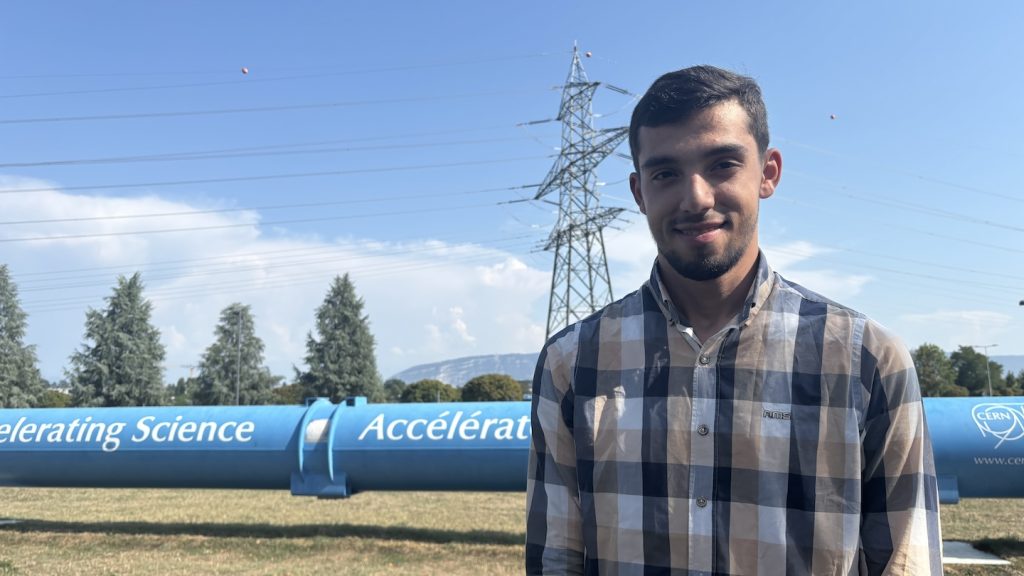
Members of the CERN community can forget that for some, the Laboratory can seem a dream place far way, almost unreachable. Initiatives like Beamline for Schools (BL4S) can make that dream seem more realistic. For Mahmoud Elrasheedy, student in engineering from Egypt, winning the Beamline for Schools (BL4S) competition in 2022 encouraged him to return to CERN in 2026, this time as a summer student.
In 2022, as an undergraduate student, Mahmoud coached a group of high school students for the BL4S competition, guiding them to submit a research proposal entitled “Investigating MRPC Detector Performance with Eco-friendly Gas Mixture”. After months of hard work, his team, STA, was selected as one of the winners. This success gave them the opportunity to come to CERN to develop their experiment and made them the first team from a Middle Eastern country to win the competition. “The experiment involved many technical measurements, electronics, and checking the signals reaching the detectors. Although it was sometimes quite abstract to us, we enjoyed trying to understand what the signals were telling us about the physics we were observing”, says Mahmoud. This experience working in a team at CERN fundamentally changed Mahmoud’s perspective on how physics is done and reshaped his future.
After his BL4S experience, Mahmoud returned to Egypt and pursued his interest in engineering, focusing on the connection between electronics, hardware and software. Years after first visiting CERN as a BL4S coach, he returned as a CERN Summer Student and discovered the place from a new perspective, appreciating its advanced technologies and their potential applications beyond particle physics. For him, BL4S was a defining moment that helped shape his journey. His advice to students is simple: “never give up on science, stay curious and be patient. Even if your path changes, you can always find a way to apply scientific thinking to what you do”.
by Jorge A. Villa-Vélez (BL4S),
and Muminah Al-Islam and Hannah Gabriella Adams (CERN & Society Foundation)