Sustainability
CERN is committed to sustainability. Today, waste heat from the Large Hadron Collider is already reused to heat towns and villages in the vicinity. CERN’s Future Circular Collider (FCC) project is set to be designed, built and operated as sustainably as possible from the outset.
The FCC Feasibility Study was key for this effort. The Study included a life cycle analysis of the construction phase to develop approaches that would minimise the effects of the collider’s construction on the climate. With the help of soil tests and seismic studies and using cutting-edge techniques to obtain accurate images of the subsoil in order to determine its composition, nature and stability, scientists were able to determine the optimal location for the infrastructure.
The FCC project is based on an approach called ARC, which stands for avoid-reduce-compensate. The primary objective is to avoid environmental impacts wherever possible or minimise those that cannot be fully avoided. Any remaining unavoidable impacts are compensated for through measures such as restoration or ecological offsets.
The FCC will follow this principle by optimising the use of resources, limiting greenhouse gas emissions and prioritising sustainable excavation and reuse of materials. Here are a few examples of how sustainability will play a major role in the FCC right from the very start.
Protecting local biodiversity
The lush, rolling hills of the countryside under which the future FCC would be located are framed by the Alps to the east and south and the Jura mountains to the north and west, with the FCC tunnel tracing a wide circle around the Salève mountain. The unique look and feel of the countryside will remain unchanged – even with the world’s largest accelerator running beneath it.
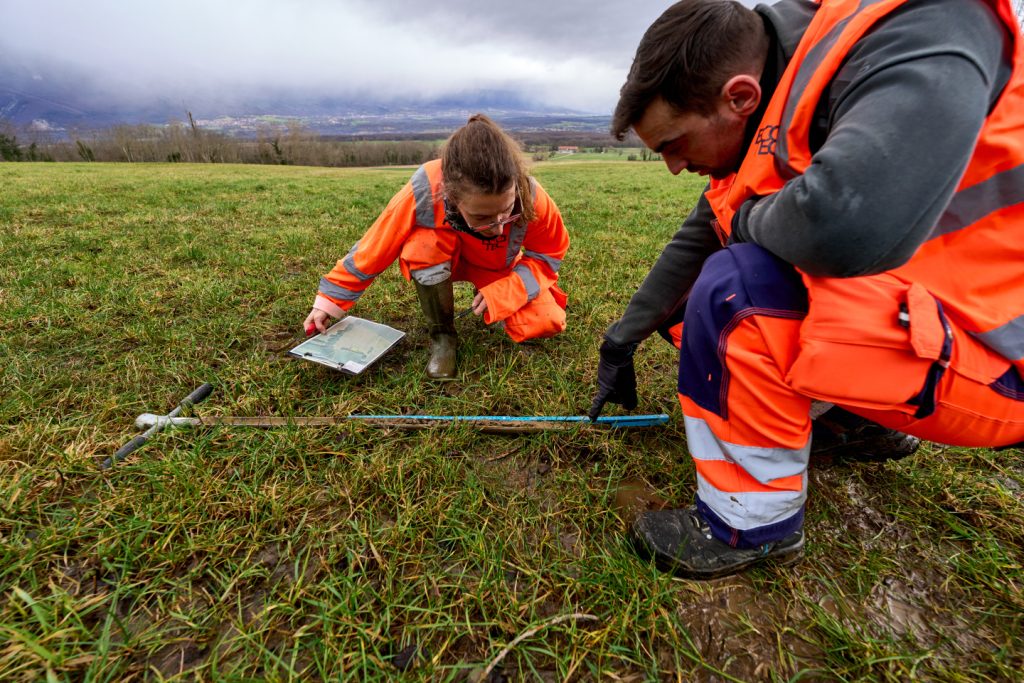
For the FCC Feasibility Study, surveys of the entire ecosystem, including flora and fauna, were carried out to identify ecologically valuable elements and each site’s impact on the ecological infrastructure as a whole. The Study had a number of voluntary objectives to protect the natural environment and surrounding communities: views will be preserved, and protected forests, farmland, vineyards and orchards will be avoided to preserve biodiversity and local character. The existing ecological infrastructure, including wildlife corridors, will be maintained or even reinforced.
The FCC’s energy consumption
The FCC would be the largest particle accelerator ever built and would need power to drive its acceleration components. Both the electricity for the construction and a large part of the electricity for the operation are likely to be supplied by renewable energy sources.
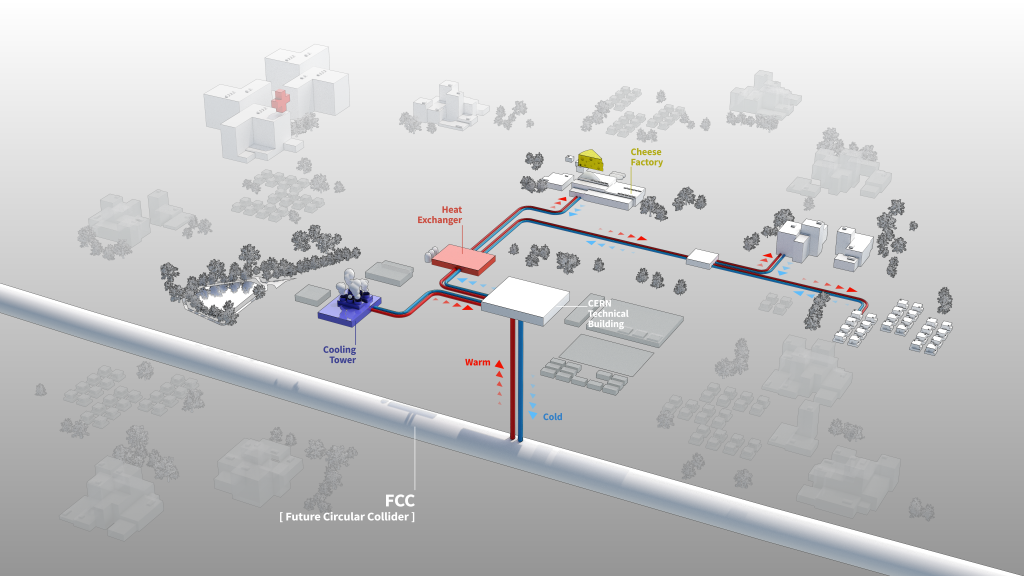
The FCC’s electricity consumption is expected to vary between 1.1 and 1.8 TWh per year, depending on the operation mode. The FCC team is working with engineering companies to identify opportunities to reuse the energy to provide heating for public institutes, local industries and households. They are also looking at ways to reduce power consumption through new energy-saving operating modes for the accelerator systems, as well as new technologies.
Power would mainly be supplied by the French electricity grid.
The FCC and water
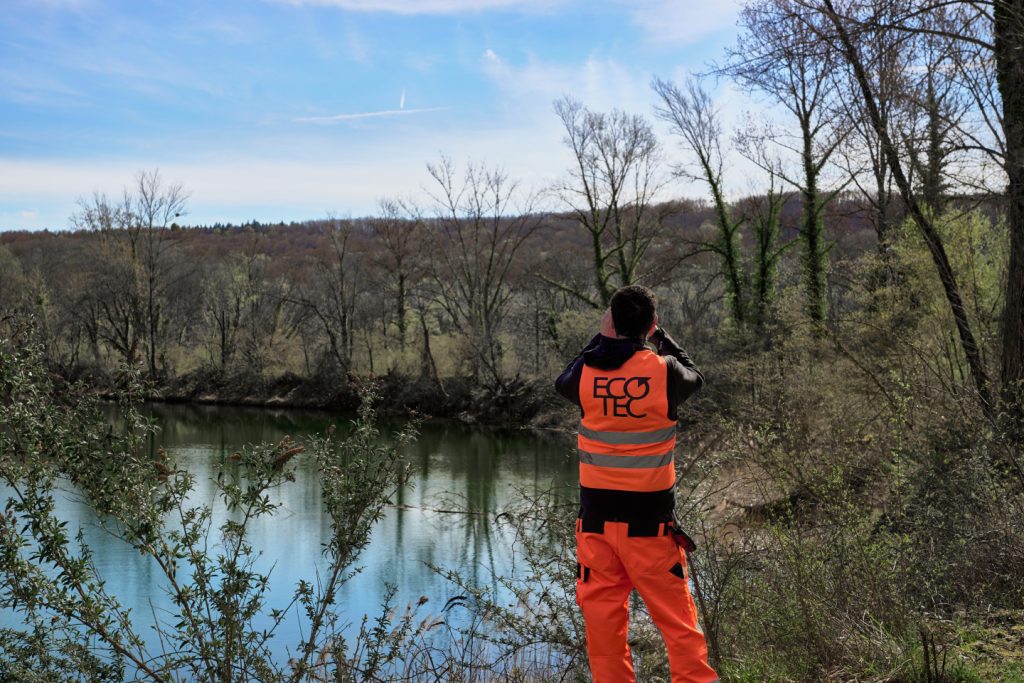
The location of the various sites has been chosen in a way that ensures that construction does not affect protected water zones, rivers and streams or areas where raw water is sourced for drinking water systems.
During the operation phase of the FCC, the maximum water requirement at the highest collision energy can be kept below 3 million cubic metres per year. This corresponds approximately to the volumes of water currently used for the Large Hadron Collider. The water consumption during the first ten years of the FCC research programme has been calculated to be well below this volume, of the order of 1 million cubic metres per year.
Innovative solutions for a greener collider
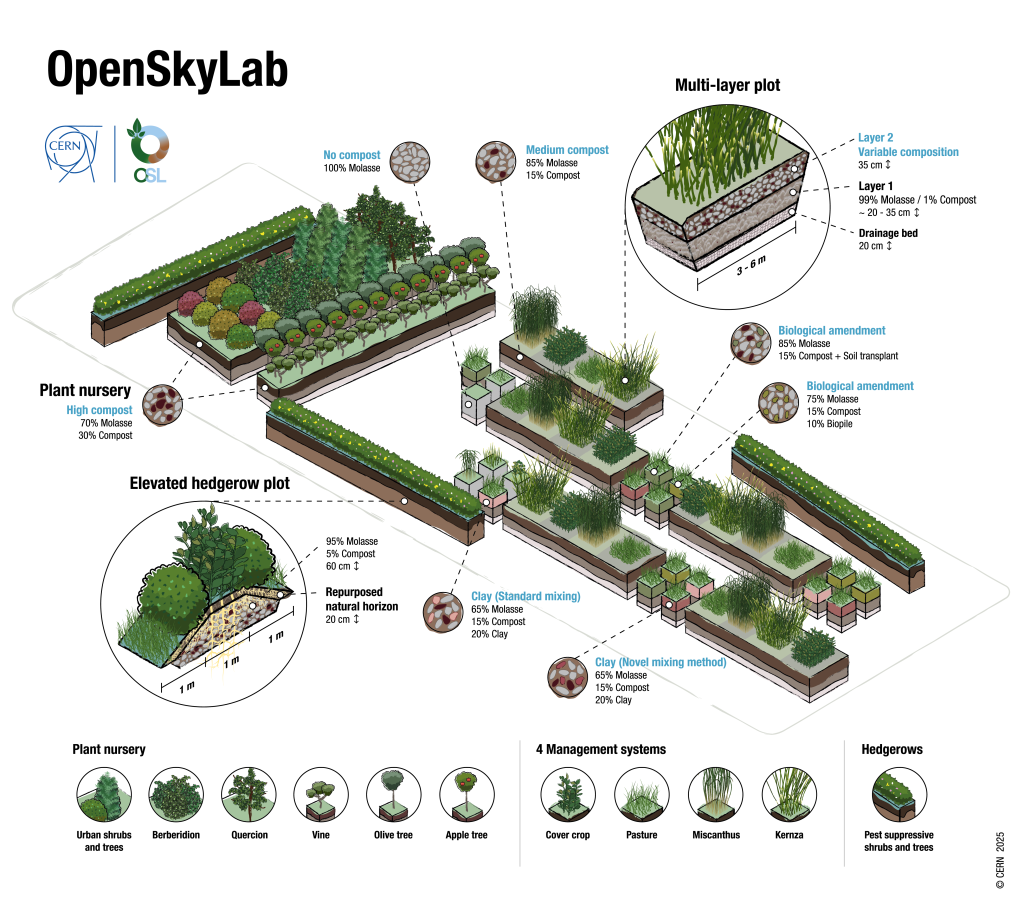
The construction of the FCC is likely to generate approximately 16 million tonnes of excavation materials. What can be done with all this rock? CERN is studying different ways to reuse it in a sustainable way. The “Mining the Future” competition, launched in 2021, called for credible and innovative ways to reuse some of the excavated materials, such as limestone for concrete production and stabilisation of construction work within the FCC project itself. One ingenious idea proposes the transformation of rock into fertile soil. In a project called OpenSkyLab, tests of this idea are currently running on an area of land at CERN covering 10 000 m2.
The excavated rock is a soft and heterogeneous rock called molasse that doesn’t contain any nutrients – it is sterile and would normally be classified as waste and dumped in landfills. To avoid this, scientists are studying ways to turn it into functional soil for urban greening, agriculture, forestry and rewilding.