Technology
The innovation machine
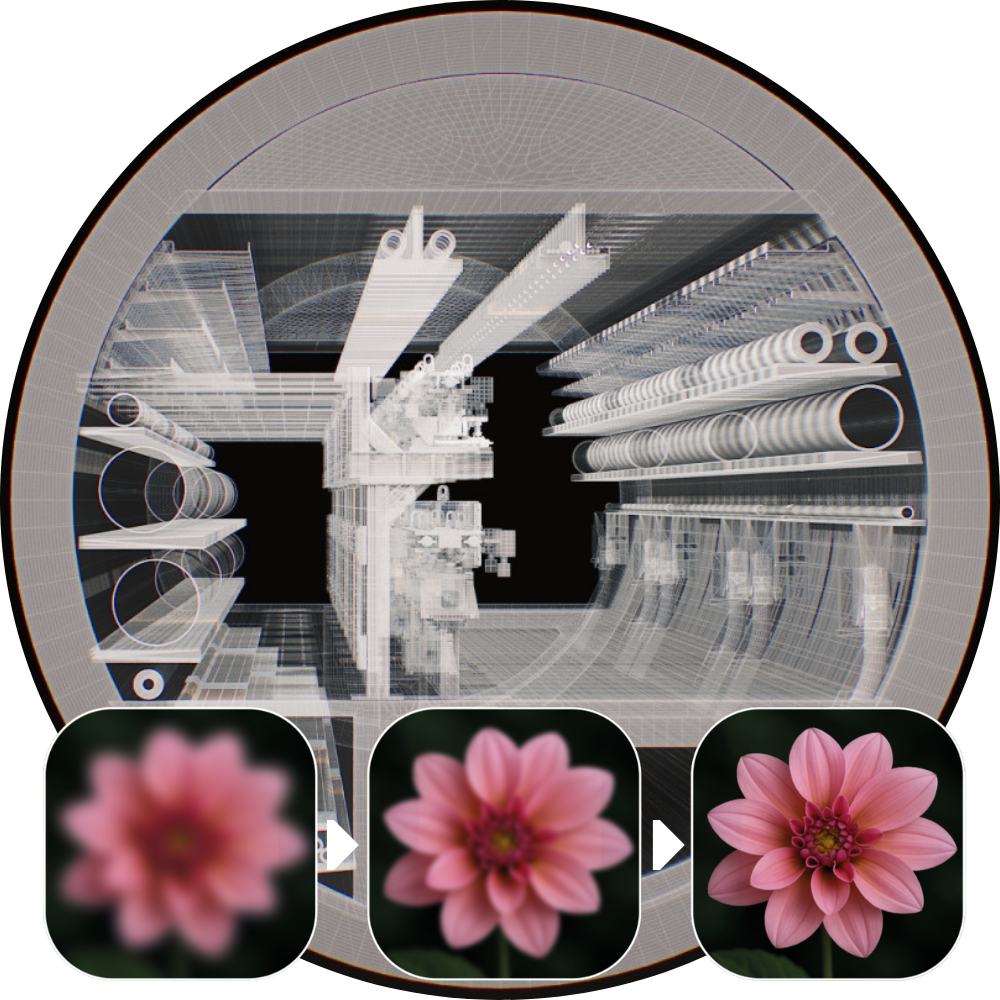
The FCC will break new ground in terms of precision. To use an analogy from photography, if previous colliders have already delivered a very sharp picture of certain tiny particles, a bit like a good photo on your phone, the FCC would be like switching to a camera that makes that picture more than 50 times sharper, so you suddenly see details that were completely invisible before.
Building the FCC requires breakthroughs in superconducting materials, efficient acceleration systems, advanced vacuum technologies, precision detectors, AI-driven control systems and sustainable cooling infrastructures. These technologies have direct relevance for other areas like medical imaging and therapy, fusion energy, transport systems, industrial automation and large-scale data centres.
Accelerator technologies
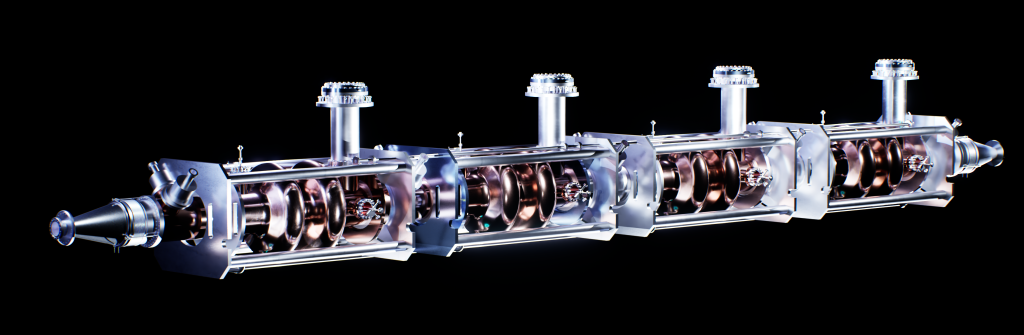
The electrons and positrons in the future FCC will be accelerated with a technology called radiofrequency (RF). The RF system will be the centrepiece of the FCC because it is here where the charged particles will actually be accelerated. This RF system can provide the optimum configuration for each collision energy, resulting in maximum beam current and beam performance in each running mode. Ongoing research and development focuses on high-quality cavities that will efficiently transfer energy from the RF power source to the particle beam with little power consumption. The first prototypes show very promising results, and ongoing R&D efforts aim to increase performance from 50% to 70% or more.
Detectors and computing
Collecting and interpreting the data that would be created at the FCC is a significant challenge, in terms of both computing capabilities and the software required to support them.
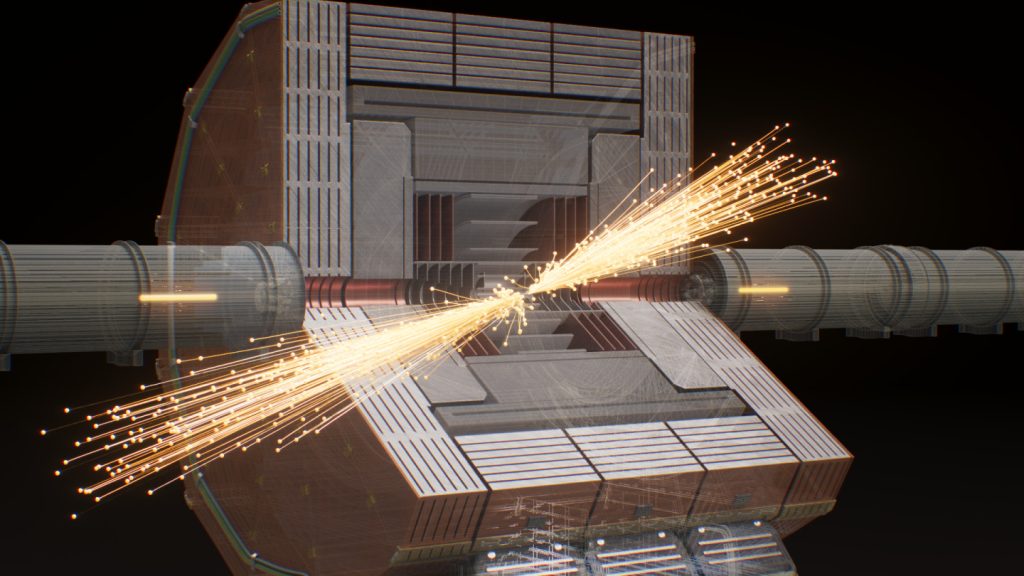
The FCC will be unprecedented in the precision it can deliver. It will handle enormous numbers of particle collisions per second. Because the FCC will operate with continuous particle beams, collisions will occur all the time.
This presents a challenge to detector developers, who need to make sure that the detectors can record every detail of the particle collisions with the highest possible sensitivity, while also keeping them lightweight and precise. Very fast and energy-efficient electronics will also be required, together with innovative solutions for powering and cooling them.
Research and development on different detector designs that meet these challenges is already under way at CERN and in the institutes involved in the FCC.