
Q&A with CERN’s Chief Information Officer (CIO)
From 2026, CERN’s senior management includes the new role of CIO – Enrica Porcari answers questions about what this means for the Organization
Written by:
Kate Kahle
—
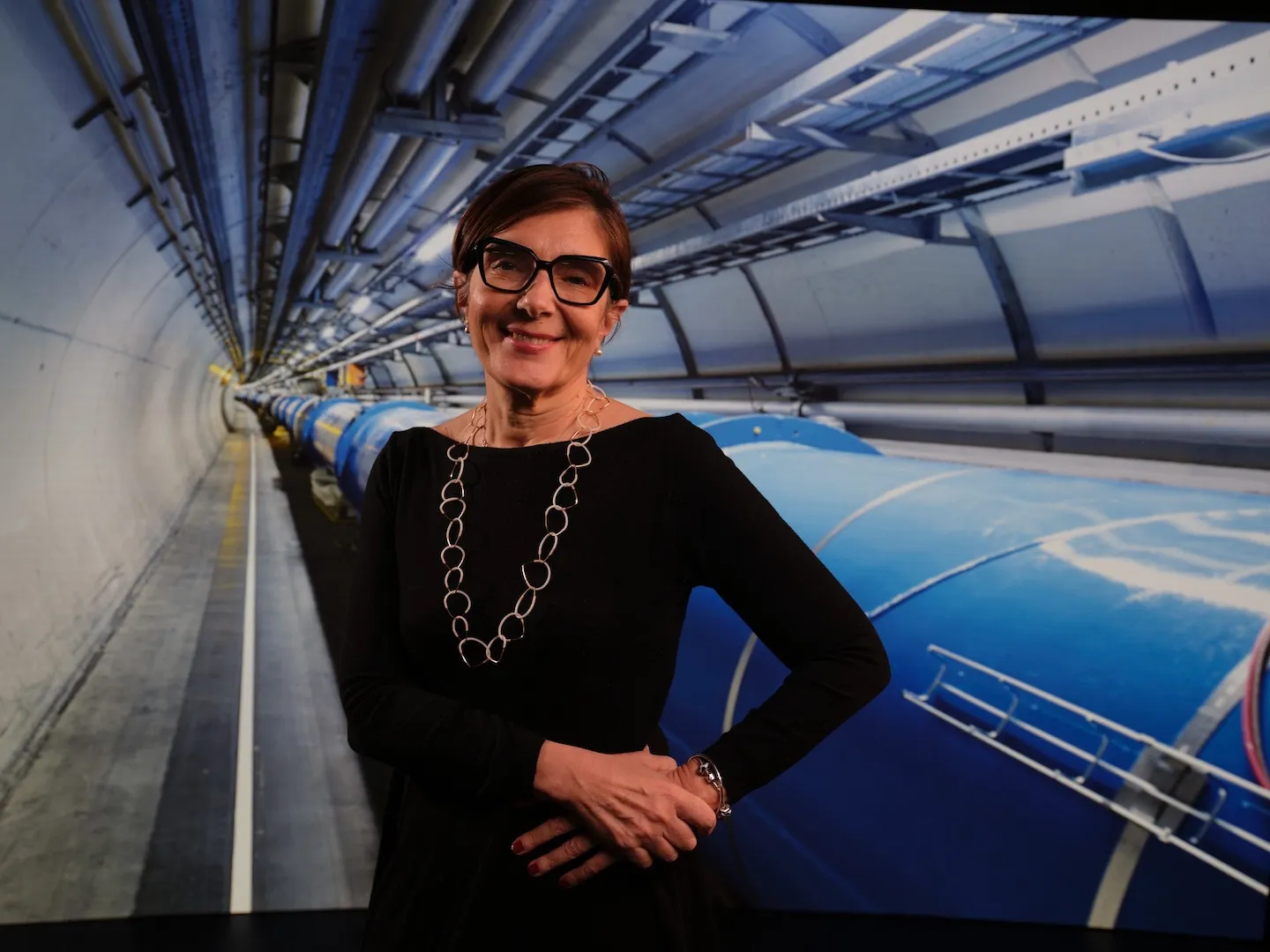
Q1. What does the creation of the CIO role mean for CERN?
CERN’s digital landscape is expanding continuously, with new tools, new capabilities and new ideas. In this context, CERN has established the role of Chief Information Officer (CIO) to bring together and strengthen digital efforts that already exist across the Organization, ensuring that they are secure, efficient and future-proof, in service of both current and future physics research.
Q2. What does your role as CERN CIO involve?
My goal is to provide the Organization with a unified digital strategy. My remit spans the full range of the Organization’s digital, data and technology functions, from artificial intelligence and cybersecurity to open science, ensuring they work together rather than in isolation. This means working closely with all the departments and experiments to build an integrated, CERN-wide view, strengthening what we do collectively and ensuring it creates value for our Member States and Associate Member States, while enabling greater clarity in how we engage with partners in Europe and beyond.
With more than 30 years of experience in the technology sector, including leading CERN’s IT Department from 2021 to 2025, I have seen how diversity of thought, background and experience fuels innovation, and how strategic alignment turns ambition into results. I intend to use that experience in service of the more than 18 000 researchers from 110 countries whose work depends on getting this right.
Q3. How does this work in practice?
In practice, this means engaging across the Organization, listening to what teams need and understanding where greater coherence would help.
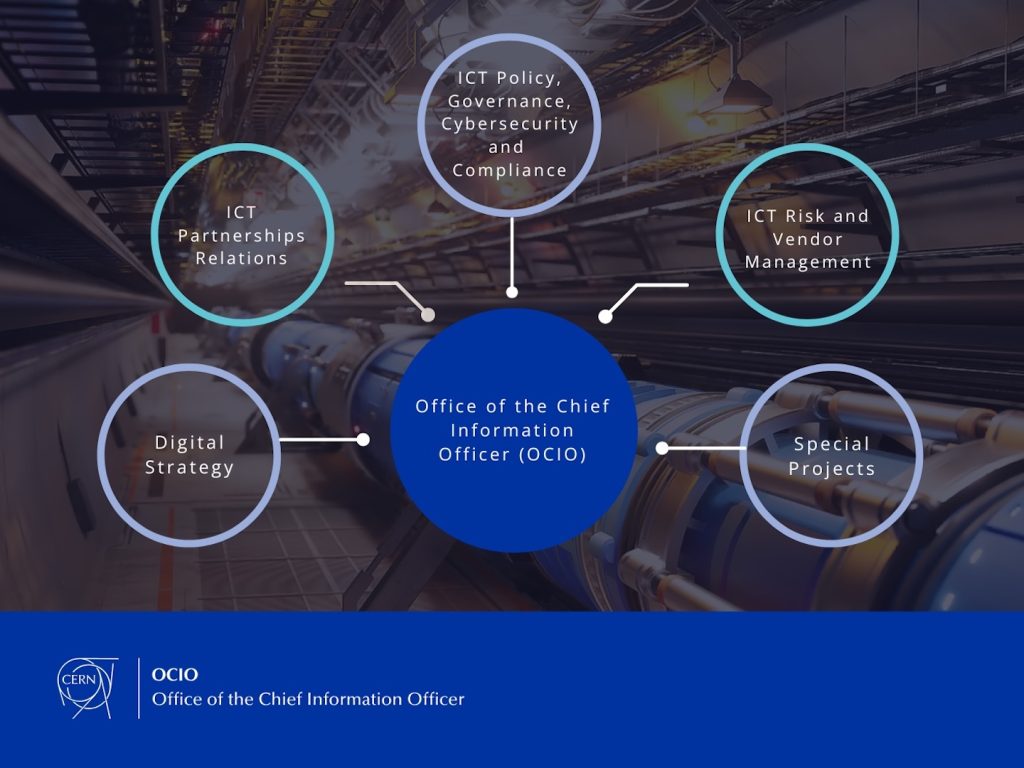
This is why the Office of the CIO (OCIO)was established with a matrix-based structure, bringing together people from different departments and experiments. This model ensures that decisions are informed by those closest to the work and reflect the needs of the Organization.
Day-to-day activities remain within the departments and experiments themselves. This is what we mean by “freedom within a framework”: the OCIO provides common principles and shared direction, while innovation and delivery remain driven by the community.
Q4. How did you approach the start of your mandate?
As a new role, it is being shaped together with the community, guided by where it can bring the most value. The first step was to listen, gather input and understand what mattered most. An initial plan was then built from that input and shared widely across CERN, welcoming perspectives, priorities and concerns.
The expectation that emerged was clear: streamlined processes for greater efficiency and the secure adoption of new technology. The role will continue to evolve as we learn, always guided by where it can make the greatest difference.
Q5. What are the priorities?
The priority themes that emerged from feedback gathered across the Organization were:
- Guidance on artificial intelligence (AI). The community wants shared, CERN-supported tools and processes that allow innovation while ensuring security, ethics and trust, as well as knowledge exchange on the functionality and capabilities of the technologies deployed. To deliver this in a coherent and sustainable way, a shared AI strategy is also needed, providing a common direction for how AI is developed and used.
- Strengthened digital autonomy. Concerns were raised about growing dependence on external tools and services. There is an expectation that the OCIO take a pragmatic, risk-based approach to strengthen digital independence and reduce unnecessary exposure.
- Data governance should support open science. There is a shared commitment to openness, combined with a need for clear, enabling principles that protect data while allowing reuse, collaboration and long-term preservation.
- Cybersecurity must be simpler and clearer. People want practical guidance and secure tools that enable their work, particularly as the use of cloud services and AI tools becomes more widespread.
- Coherent and trusted digital services. The community is not asking for more platforms, but for clearer choices, better integration and greater consistency across CERN.
Q6. What have been the main actions taken so far, and what comes next?
The first major focus has been the formalisation of CERN’s AI strategy, building on the work already done. That strategy is being translated into an implementation plan, and we are now putting in place the governance needed to ensure that AI is deployed responsibly and that resources are aligned with our ambitions. More information will be shared with the community soon.
The Office of the CIO will also consolidate, review and enforce CERN’s computing rules, develop an open science strategy for this mandate and update our policy accordingly. Central to this is developing an Organization-wide approach to ICT governance and vendor risk.
Looking ahead, the work spans both the continued development of high-performance computing and engagement with emerging fields. Quantum computing is one such area, and through the Open Quantum Institute (OQI) CERN is extending its longstanding role as a neutral, trusted place for international collaboration, positioning the Organization at the forefront of a field expected to drive major technological change in the coming decades. The OQI will also ensure that quantum computing evolves as an open, interoperable capability with societal benefit, building on the momentum of the International Year of Quantum Science and Technology in 2025.
What makes all of this possible is the exceptional expertise and collaborative spirit already present across CERN. The role of the CIO is not to replace what already exists, but to connect, strengthen and build on it, in service of the science that drives everything we do.
To learn more about the mandate, priorities and structure of the Office of the CIO, visit the OCIO website.