
Tag: luminosity
Luminosity is an important indicator of the performance of an accelerator: it is proportional to the number of collisions that occur in a given amount of time. The higher the luminosity, the more data the experiments can gather to allow them to observe rare processes.
-
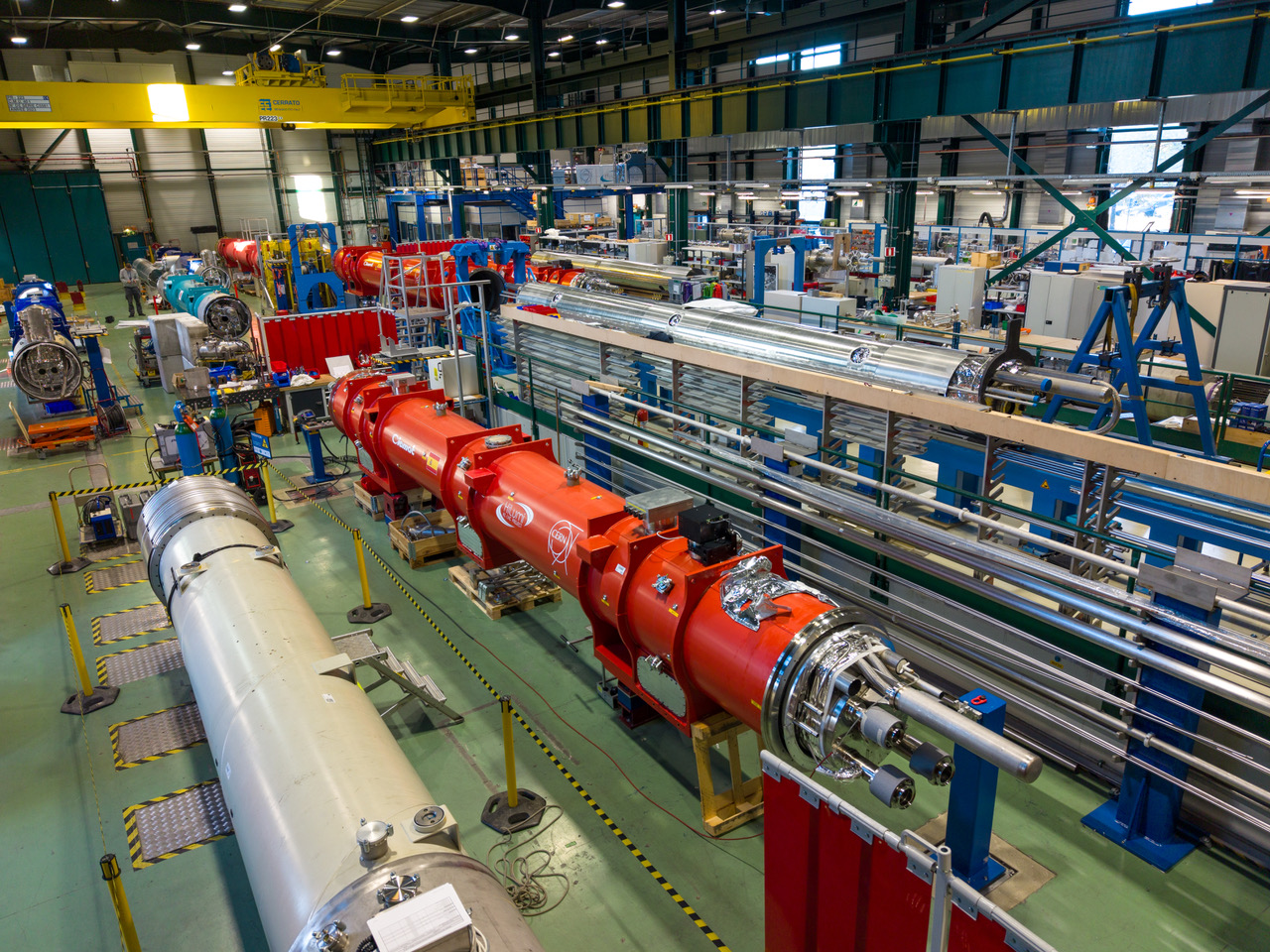
CERN-made HiLumi LHC quadrupoles ready for installation
After years of design, manufacturing and testing, the High-Luminosity (HiLumi) LHC magnet programme has reached a landmark point: all eight new CERN-made quadrupole magnets needed for installation are ready for the tunnel (with two spares produced and entering their final stages). Known as the new inner triplets, these magnets are now complete and have been fully
-
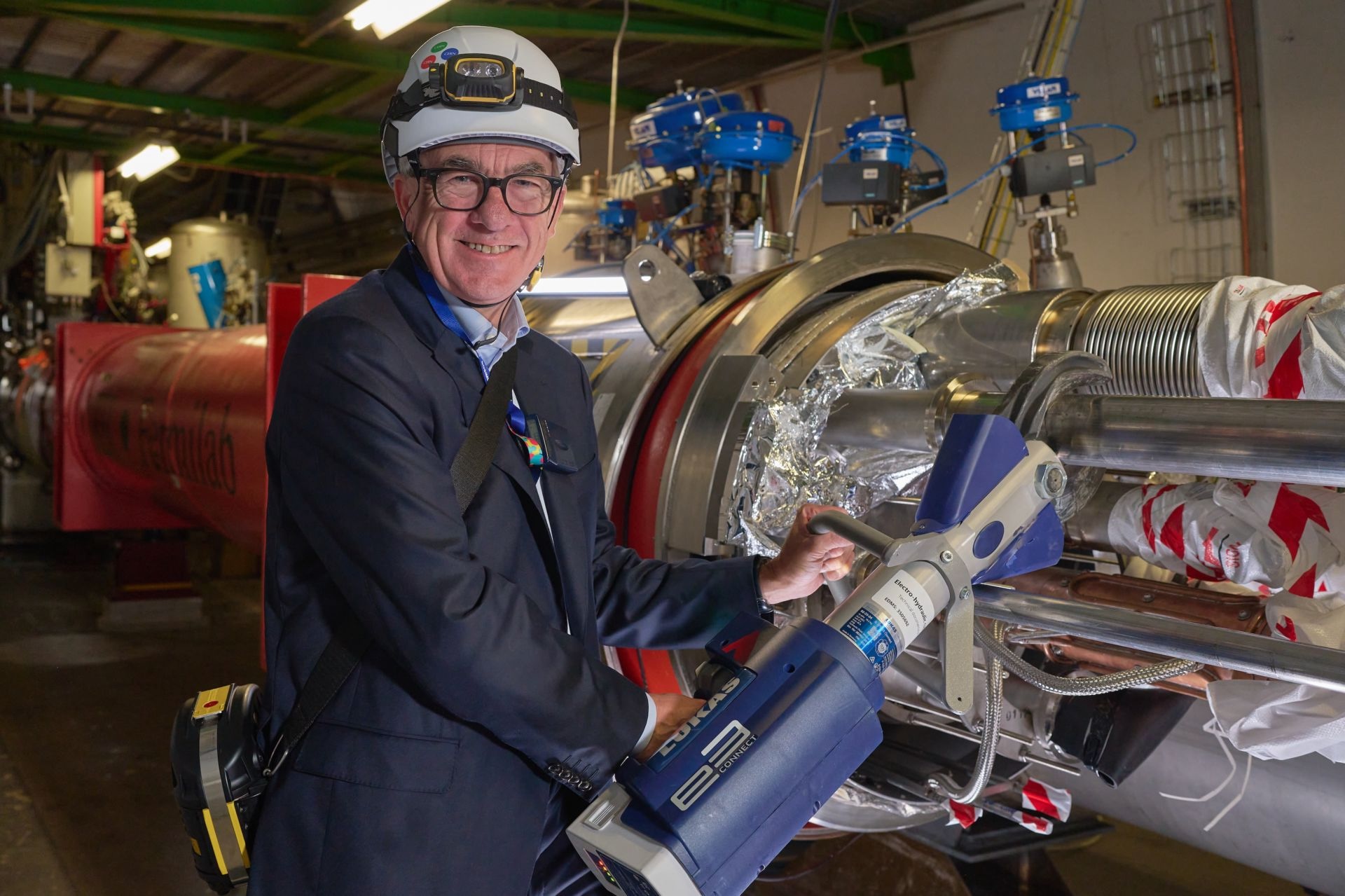
The disconnection of the LHC has begun
The 27 km circumference of the Large Hadron Collider (LHC) contains thousands of magnets of different types – dipoles, quadrupoles, sextupoles, octupoles, decapoles, etc. – which each play a very specific role. Among them are the inner triplets: sets of three quadrupoles (hence the name) located on either side of the four main LHC experiments
-
Accelerator Report: From protons to ions – the LHC and its injectors prepare for the Run 3 finale
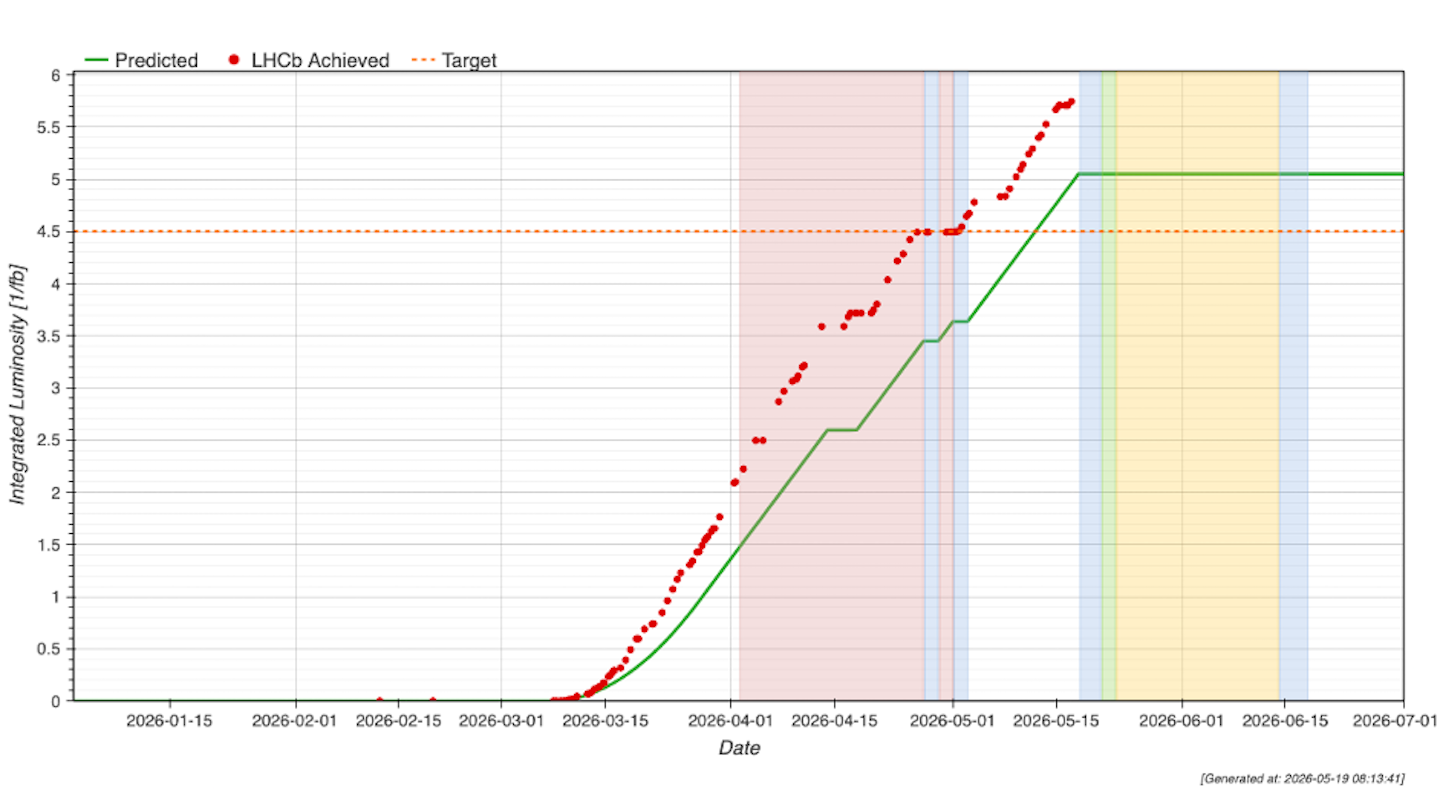
At 6 a.m. on 19 May, the LHC Run 3 proton physics programme officially came to an end. Thanks to the excellent performance and availability of both the LHC and its injector chain, this year’s integrated luminosity surpassed all expectations, with all four main LHC experiments recording values well above the original projections (fig. 1).
-
Accelerator Report: Excellent performance at the LHC
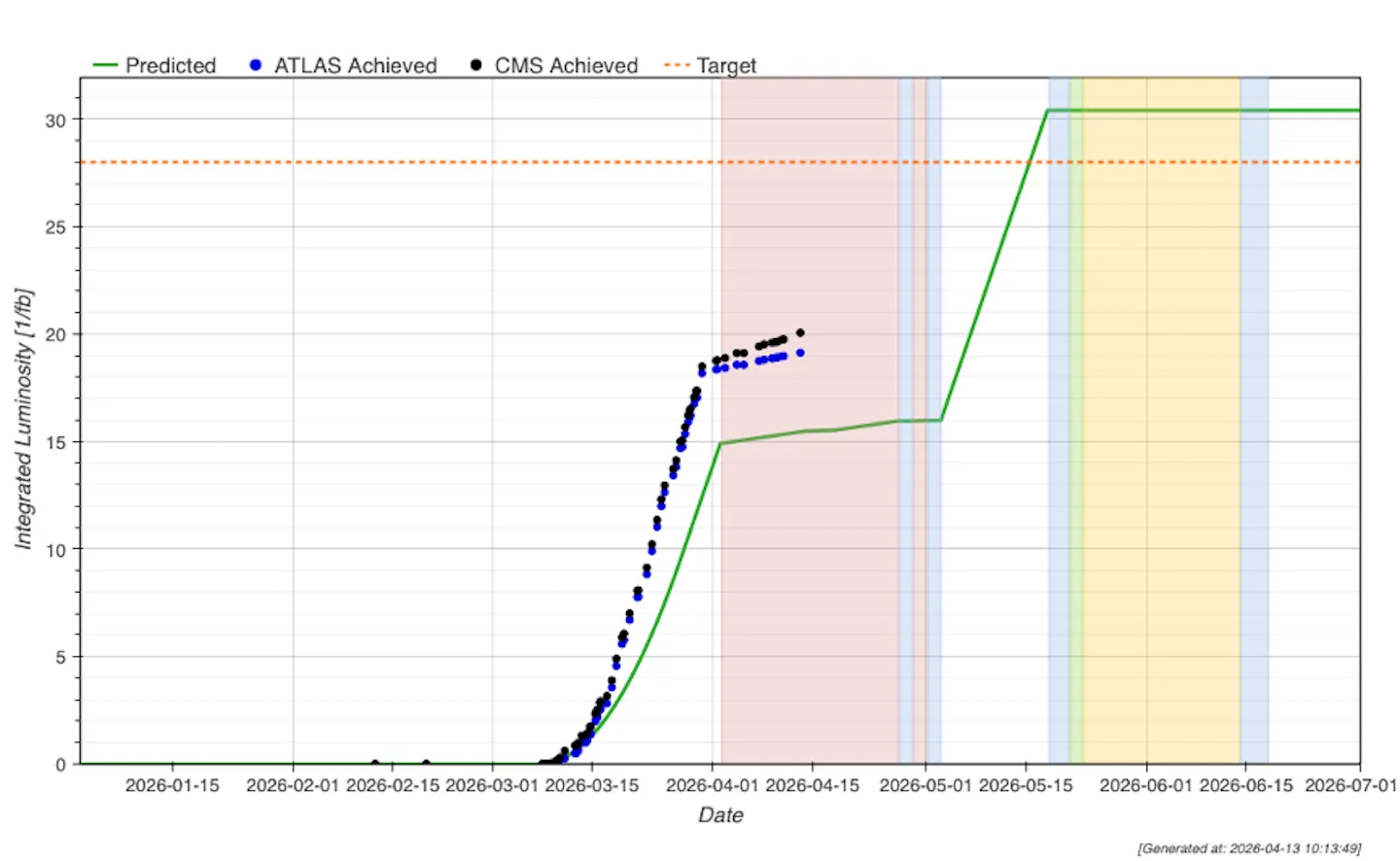
The LHC has successfully reached the nominal performance required for Run 3, marking an important milestone in the 2026 physics programme. It has now entered a special run with a reduced number of collisions per bunch crossing
-

Accelerator Report: A strong finish and a swift transition into the winter break
The 2025 run was successfully completed on 8 December at 6.00 a.m., signalling the start of the year-end technical stop for the LHC and the injector complex
-

LHC delivers a record number of particle collisions in 2025
All experiments broke records in the final full operating year of the third run of the LHC
-

Accelerator Report: The final countdown
With only three weeks left until CERN’s annual closure, the end of the 2025 run is approaching fast. In less than two weeks, all the beams throughout the accelerator complex will be stopped
-

Accelerator Report: 2025 is another record-breaking year for protons in the LHC
The 2025 LHC proton run has come to a close, with record performance delivered to all experiments. The LHC now gears up for the upcoming lead-ion run
-

Accelerator Report: When plans meet reality…
The two beams circulating in the LHC are currently running with different bunch intensities – an unexpected (but successful) premiere, giving us a good chance to reach last year’s luminosity record
-

Accelerator Report: We reached 100!
On 6 October, the total integrated luminosity passed the symbolic mark of 100 fb⁻¹, exceeding the forecast curve. This allowed the bunch intensity to be increased to explore the intensity reach and limitations in view of the HL-LHC era