
Tag: CMS
The Compact Muon Solenoid (CMS) is a general-purpose detector at the Large Hadron Collider (LHC). It is designed to investigate a wide range of physics, including the search for the Higgs boson, extra dimensions, and particles that could make up dark matter. Although it has the same scientific goals as the ATLAS experiment, it uses different technical solutions and a different magnet-system design.
-
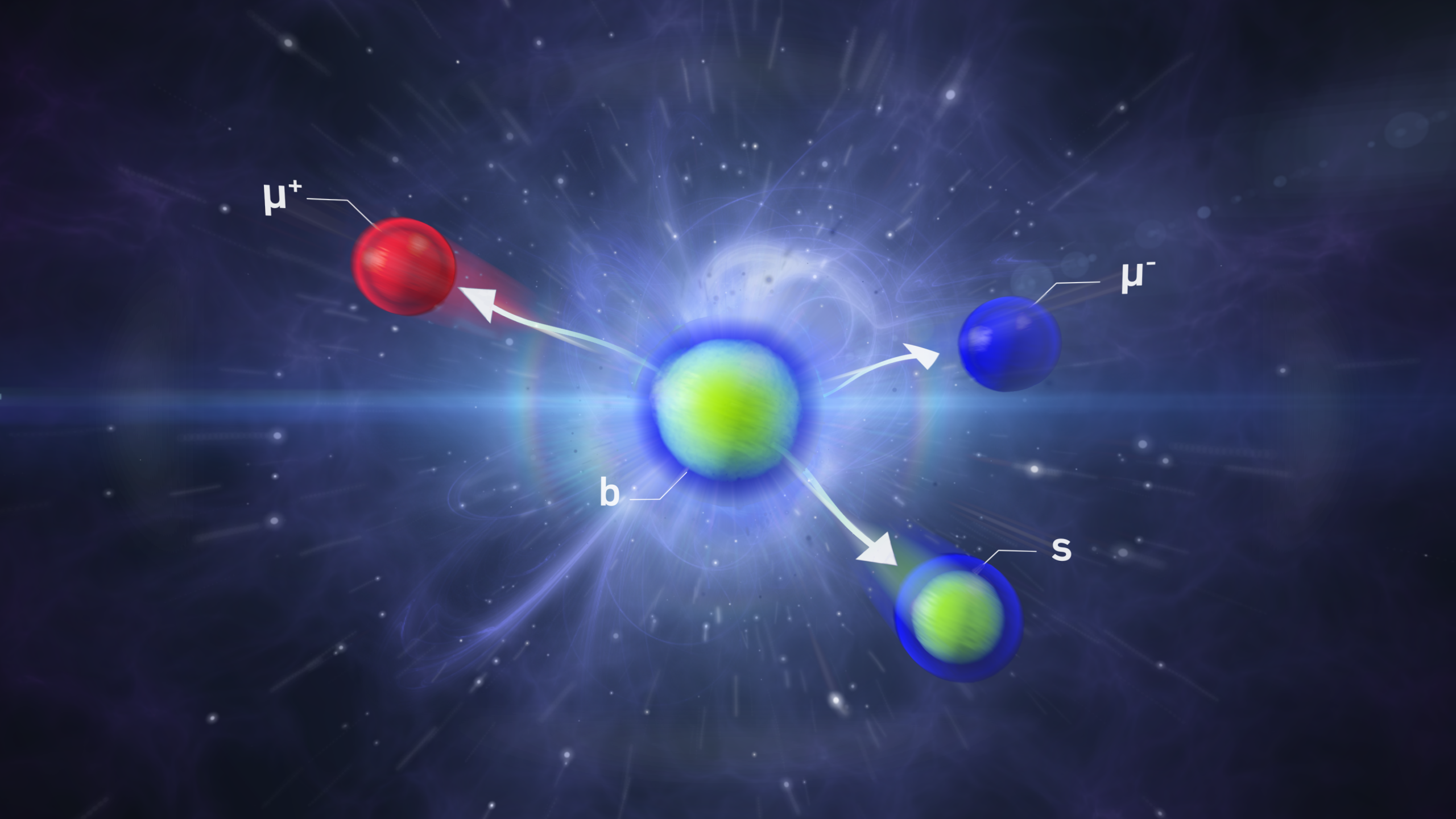
Studying beautiful flavour transitions
Studying rare processes is part and parcel of particle physics, providing stringent tests of the Standard Model. At the recent International Conference on High Energy Physics (ICHEP), the CMS and LHCb Collaborations presented their latest research into one such process: the transformation of a beauty quark into a strange quark, a muon and the oppositely charged antimuon (b→sμ+μ–). Flavour transitions – when
-
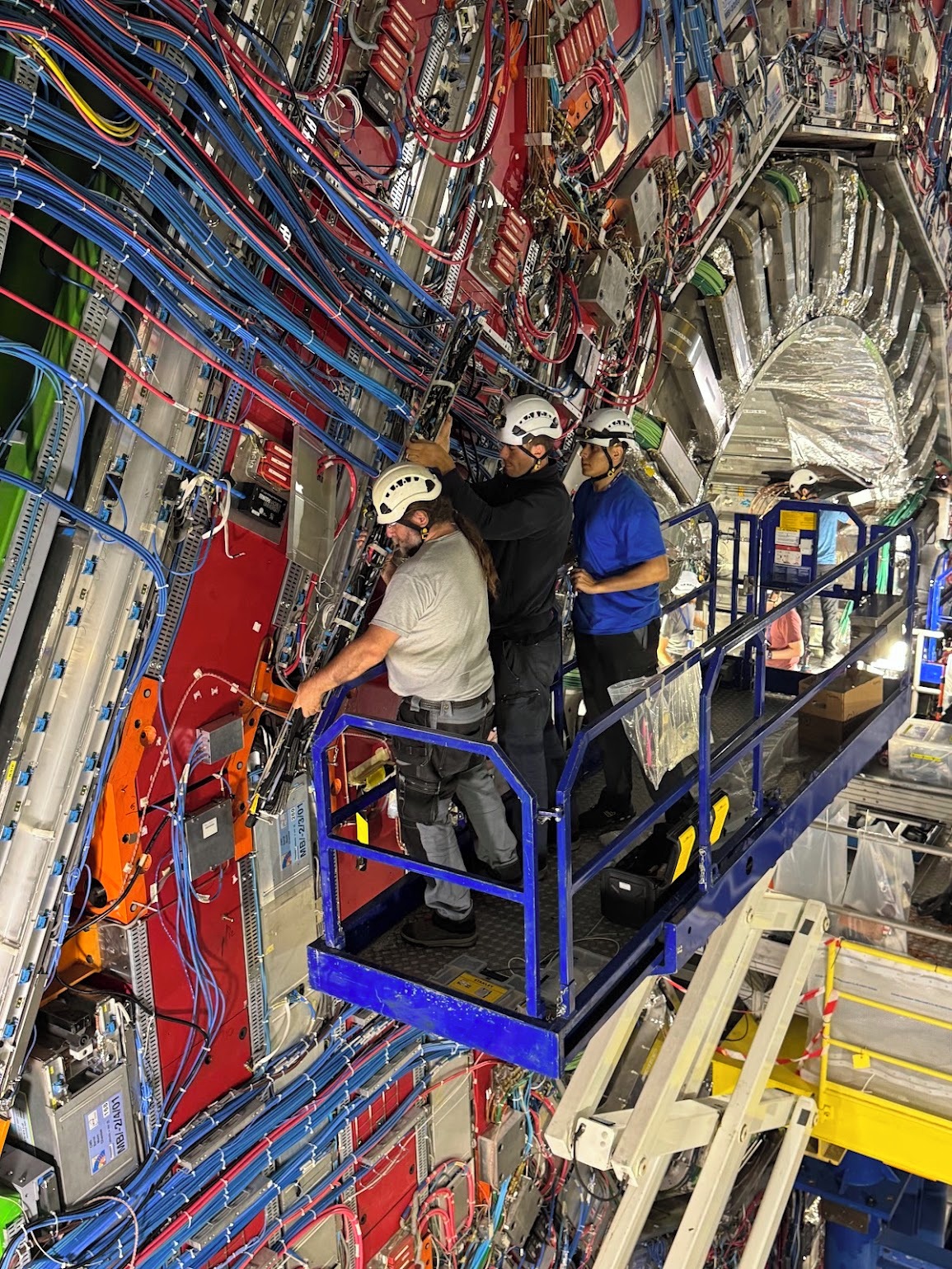
Upgrading the CMS muon chamber electronics
-
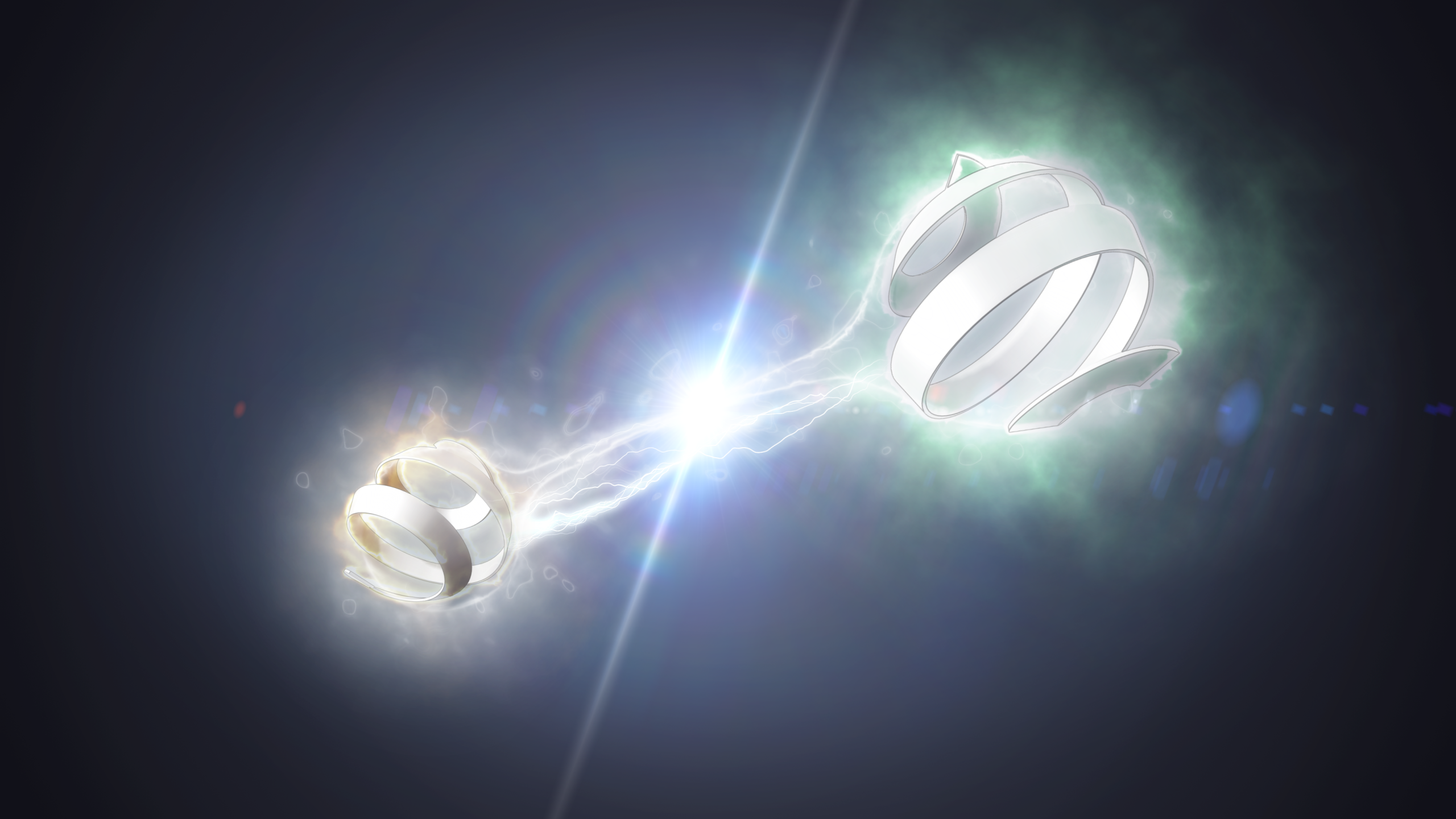
Strong evidence for quantum entanglement between Z bosons found by ATLAS and CMS
Quantum entanglement is certainly one of the stranger concepts to have emerged from the melting pot of 20th-century physics. Many great physicists, including Einstein, struggled to accept that the phenomenon could be real but, for decades now, the number of examples demonstrating it has been increasing. And, recently, the ATLAS and CMS Collaborations have added to these results by
-
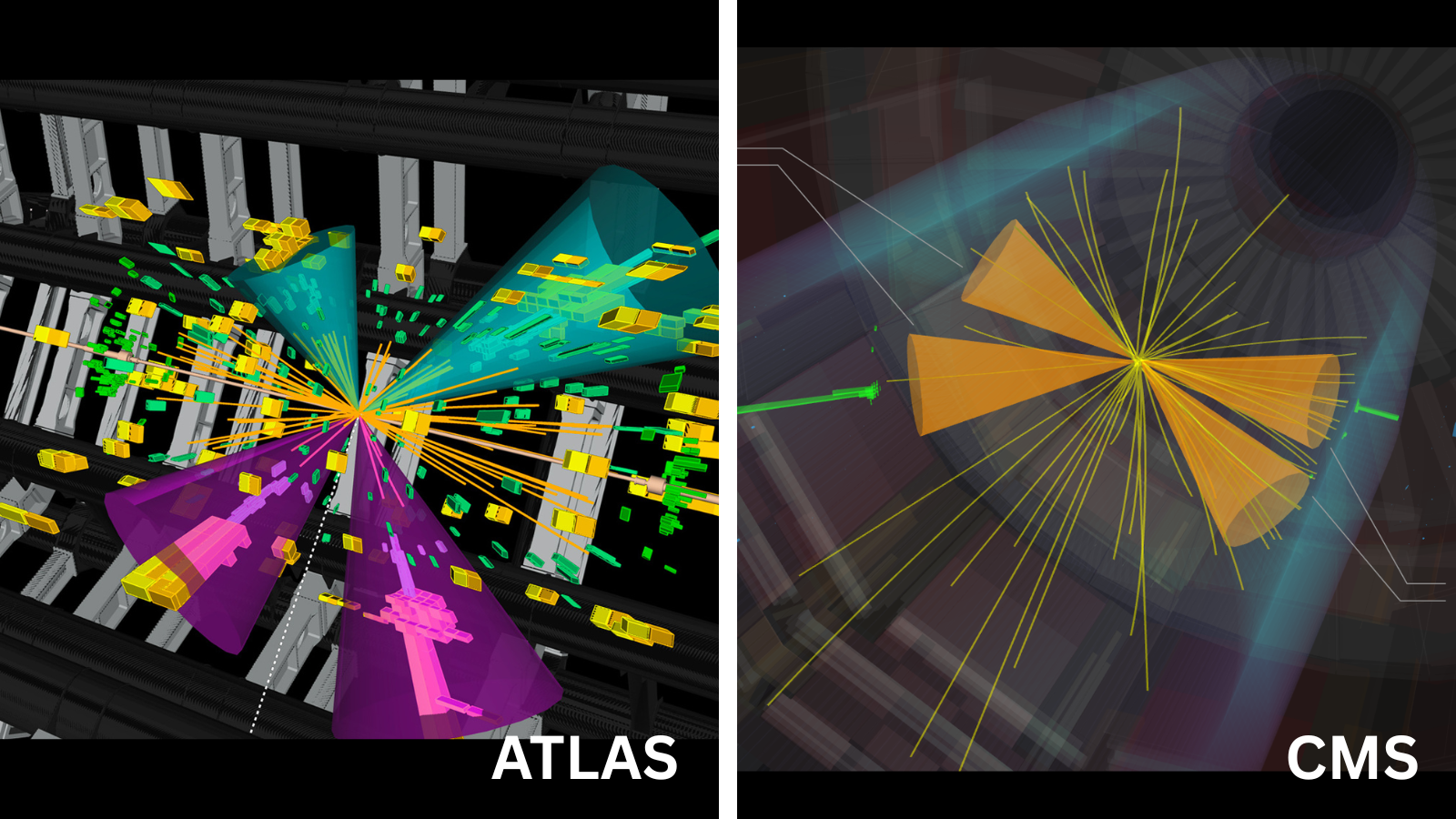
ATLAS and CMS narrow in on double-Higgs production
Finding one Higgs boson was hard enough, but physicists at the Large Hadron Collider (LHC) are hunting for something even more elusive: pairs of Higgs bosons. At the recent International Conference on High Energy Physics 2026, the ATLAS and CMS Collaborations presented new constraints on the double-Higgs production rate, providing insight into how the Higgs
-

Oxygen collisions at the LHC show new indications of extreme state of matter
One year on from the first-ever collisions of oxygen at the Large Hadron Collider (LHC), the main LHC Collaborations – ALICE, ATLAS, CMS and LHCb – have each reported signs of the state of matter known as quark–gluon plasma (QGP) originating from these collisions. QGP is a state of matter that forms under intense pressure
-
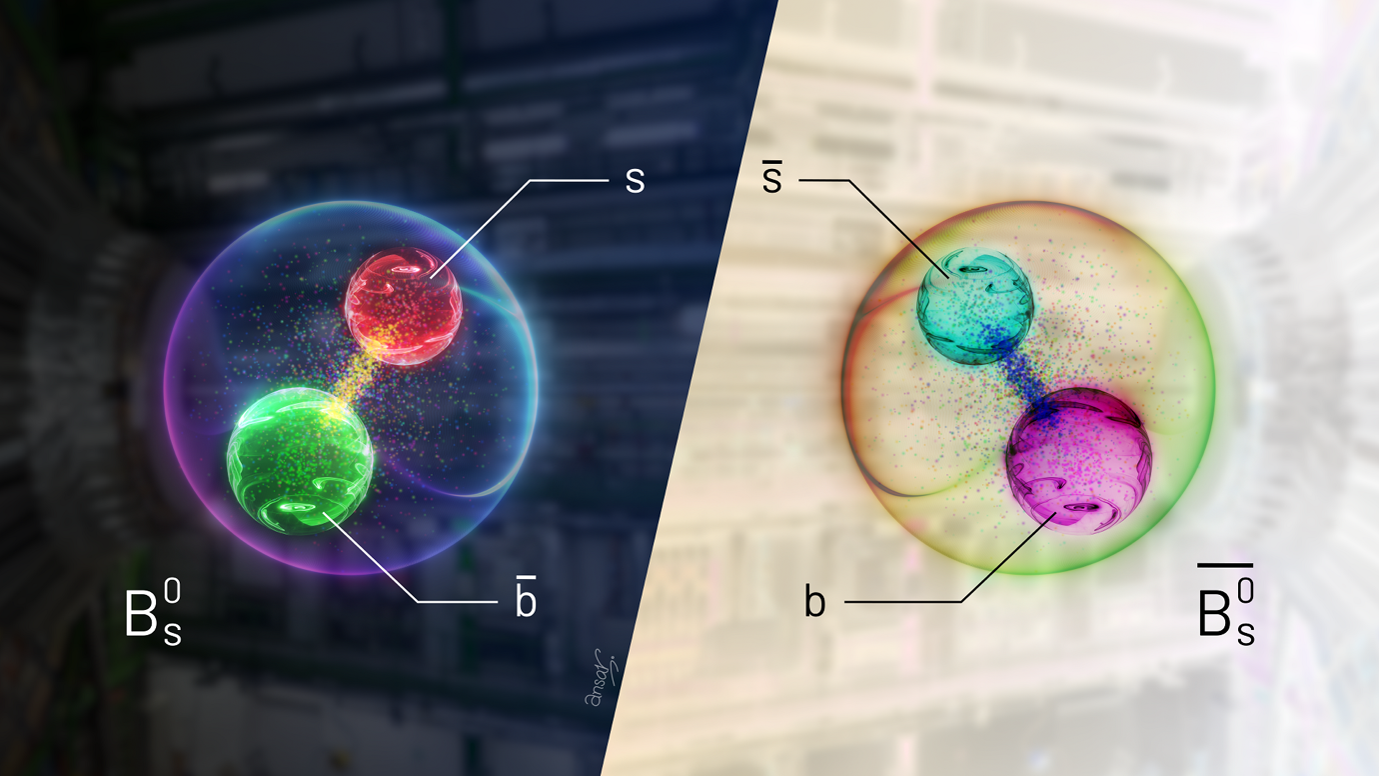
CMS explores subtle matter–antimatter difference using beauty mesons
The CMS experiment uses its largest sample of beauty mesons to date to perform a high-precision test of subtle differences between matter and antimatter
-
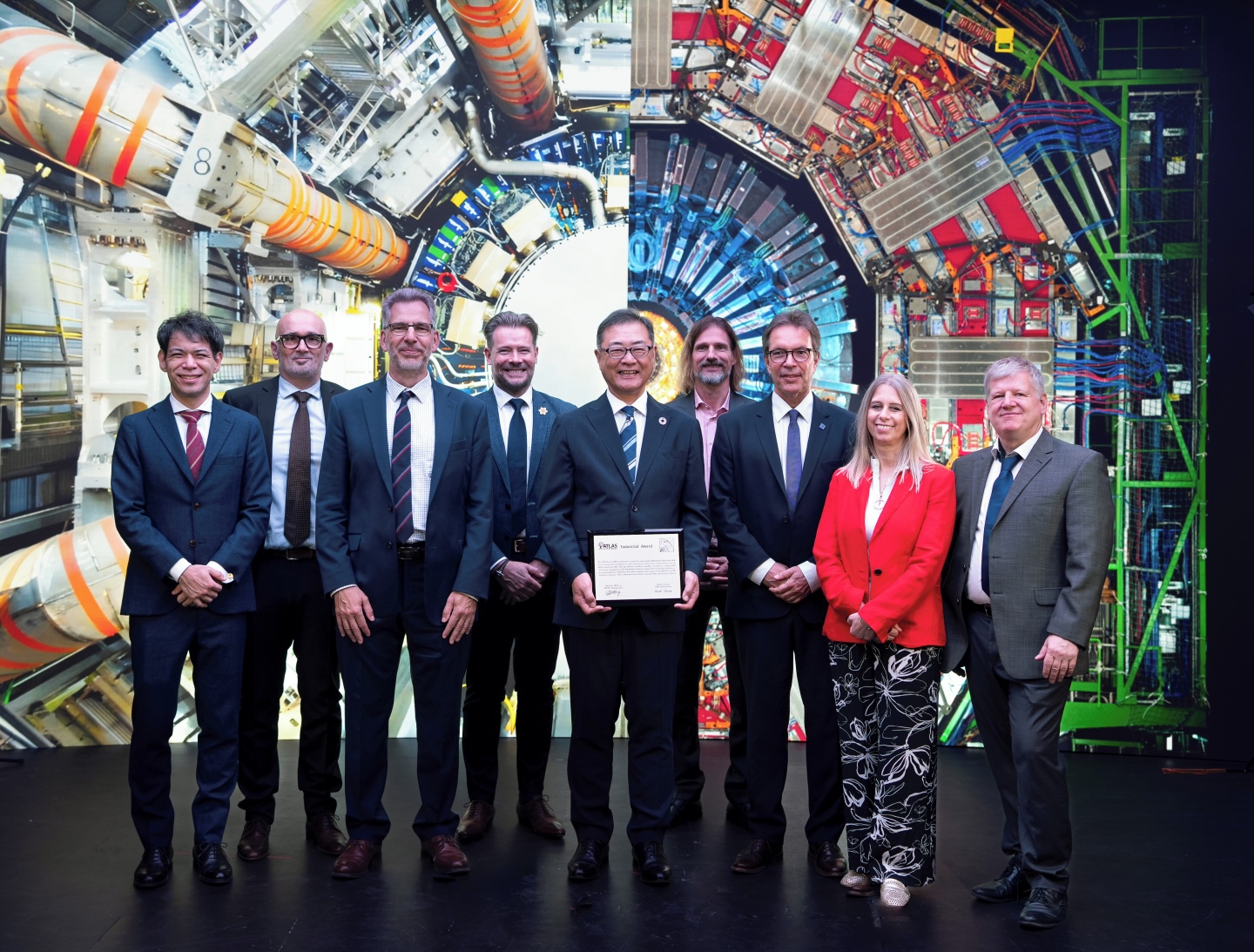
ATLAS and CMS recognise longstanding industrial partner Hamamatsu Photonics K.K.
With this award, the ATLAS and CMS Collaborations recognise the crucial role Hamamatsu Photonics K.K. has played in the development and production of advanced technologies, as well as the ongoing, deeply rooted partnership that has been established with both experiments over many years. Through this close collaboration, Hamamatsu Photonics has made exceptional contributions to the
-
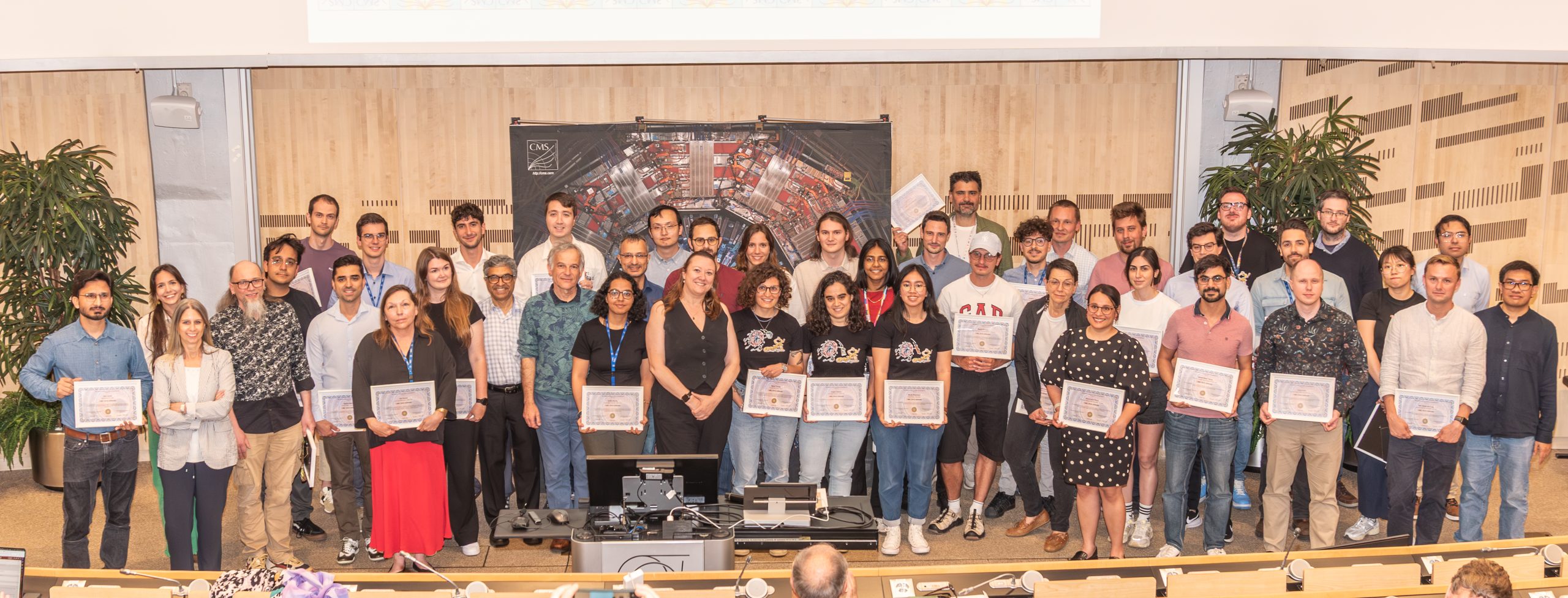
CMS celebrates the winners of its 2025 Awards
Every year, the CMS Collaboration congratulates individuals who have made significant contributions across the experiment by presenting them with a CMS Award. These Awards highlight the essential work done in detector operations, software development, data analysis, and overall efforts made on behalf of the Collaboration. “Within CMS, many colleagues make contributions that go beyond the
-
Efficiency meets environmental responsibility: commissioning CERN’s primary CO₂ cooling circuit
The ATLAS and CMS detectors require ultra-low, stable temperatures to protect their sensitive electronics. Traditional cooling systems rely on synthetic refrigerants like hydrofluorocarbons (HFCs), which, while effective, have a global warming potential thousands of times greater than CO₂. Seeking a sustainable alternative, CERN has turned to CO₂ itself – a natural refrigerant with a far
-
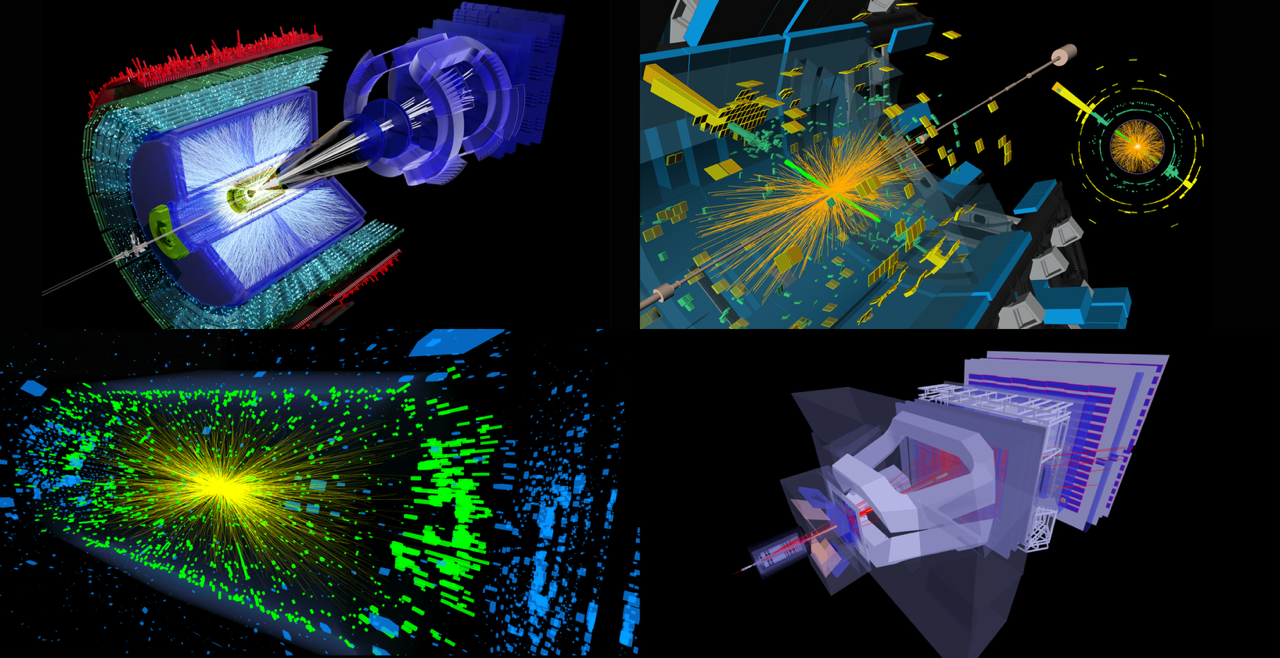
Final collisions, new horizons
In the early hours of Sunday, 14 June, the experiments at the Large Hadron Collider (LHC) had their last hurrah. In the control rooms of ALICE, ATLAS, CMS and LHCb – the four major experiments at the accelerator – scientists watched the final collisions burst across their screens like colourful fireworks. The collisions for physics