CERN’s strongest asset is its people.
The many great accomplishments we presented in our final Directorate meeting on 16 December would not have been possible without your competence, dedication and hard work, and we thank each and every one of you.
Our final meeting with you gave us the opportunity to look back over CERN’s achievements and challenges over the past ten years, with an emphasis on the last five years. Although time prevented an exhaustive review of all activities, we were able to highlight significant milestones and results.
These included the excellent performance of the accelerator complex, experiments and computing and the extraordinary scientific production, much broader than anticipated, with sensitivities beyond expectations.
Following the approval of the High-Luminosity LHC (HL-LHC) by the CERN Council in 2016, substantial progress was made on the accelerator upgrade and the Phase 2 upgrades of ATLAS and CMS. In parallel, CERN expanded its scientific diversity programme, establishing Physics Beyond Colliders and approving the high-intensity beam-dump facility in the North Area. Solid foundations for the future of CERN were laid with the successful completion of the FCC Feasibility Study, which was submitted as input for the ongoing 2026 update of the European Strategy for Particle Physics.
Over the past ten years, CERN has developed a closer connection with stakeholders across the world. Four new Member States (Estonia, Romania, Slovenia and Serbia) and eight new Associate Member States (Brazil, Croatia, Cyprus, India, Ireland, Latvia, Lithuania and Ukraine) have joined the CERN family since 2016. The return to Member and Associate Member States is steadily improving thanks to dedicated industry, knowledge transfer, training and human resources initiatives, including the new graduate programme.
The CERN Science Gateway, which opened to the public in October 2023, has helped to dramatically expand the Organization’s visibility and outreach to society, with more than 815 000 people from 180 countries having visited so far.
In addition, we have significantly boosted our environmental protection and sustainability activities, aiming to serve as a model of environmentally responsible research, and have achieved the stated objectives in terms of energy, water and gas consumption, emissions and non-hazardous waste recycling, to mention just a few examples.
Our sustained institutional resilience was another remarkable achievement, with CERN being able to deliver its full programme despite global shocks and external constraints, including COVID and Russia’s invasion of Ukraine. In particular, for COVID we succeeded in protecting the health of all people on the site, preventing the spread of infection while allowing the continued, safe operation of the facilities. This was possible thanks to dedicated, nimble emergency organisational and administrative procedures, tireless support from medical and other services, and the responsible behaviour of everyone on the site.
I would like to emphasise that CERN’s achievements over the past ten years would not have been possible without the continued, strong support of our Member and Associate Member States, our international partners and other stakeholders.
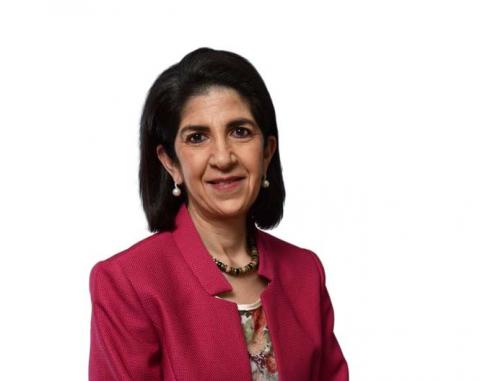
On a personal note, it has been a great privilege, honour and pleasure to serve as CERN Director-General for two terms, and I look forward to continuing to be part of our strong, engaged and vibrant community in the future. I wish Mark Thomson and all the members of the incoming management my very best as they begin their new mandate in January.
I wish all of you and your loved ones a pleasant festive period and a fantastic 2026.