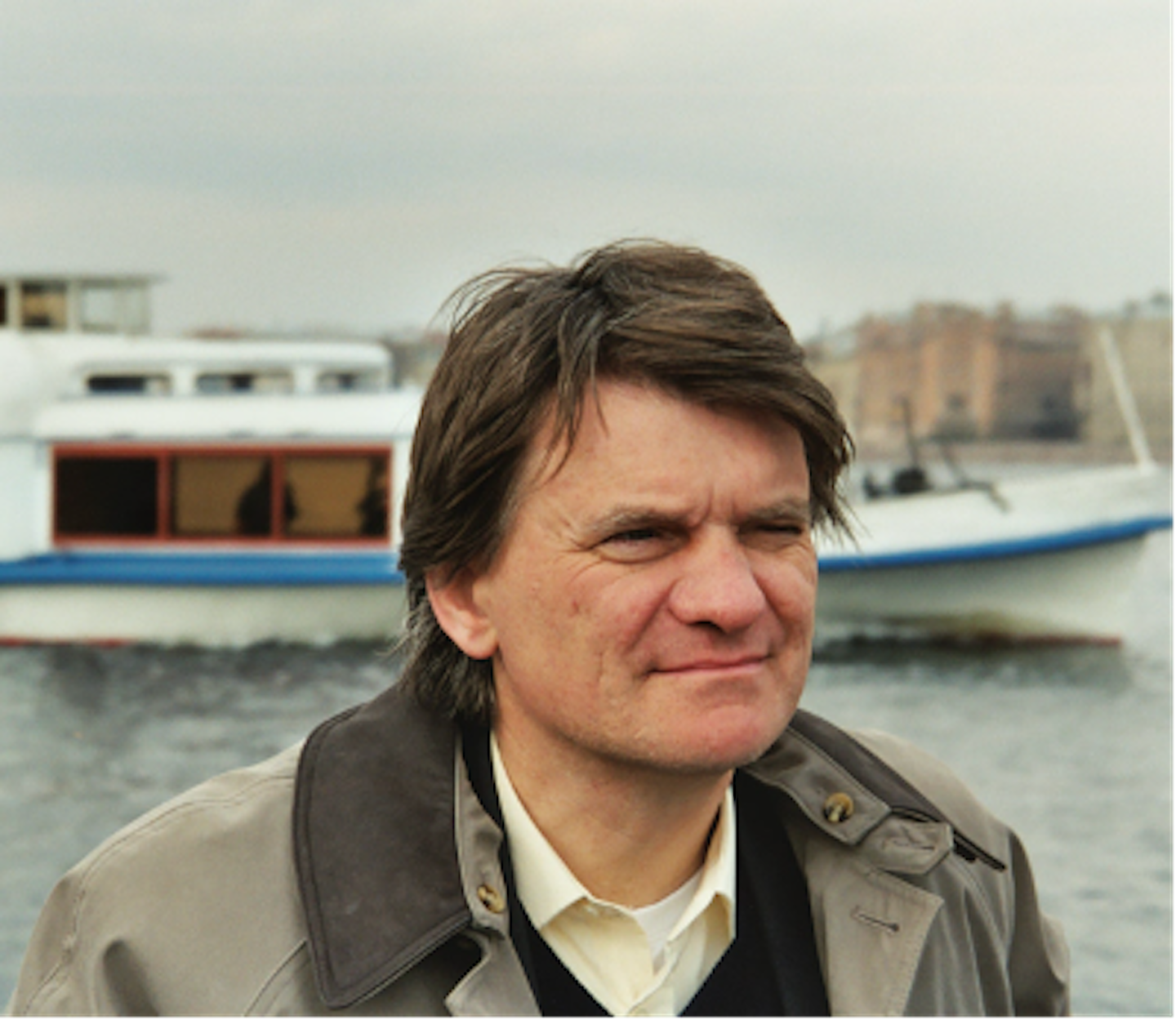
It was with deep sadness that we learned of the passing of our former colleague Knud Dahlerup-Petersen.
Knud Dahlerup-Petersen was a remarkable engineer, colleague and leader whose career at CERN spanned nearly four decades and whose influence on the design, protection and operation of superconducting magnet systems is deeply embedded in the success of the LHC. His passing marks the loss of one of the world’s foremost experts in electrical engineering for accelerator applications, and of a person whose competence, integrity and human values left a lasting impression on all who worked with him.
Knud joined CERN in the late 1970s as a fellow in the ISR-BOM Group, where he worked on the evaluation of materials for cryogenic and radiation environments and contributed to the design and construction of specialised cryogenic test facilities. From 1979 to 1984, as a CERN staff member and engineer-in-charge of the Intersecting Storage Rings, he played a central role in machine operation, specialising in beam optics, space-charge compensation, tune stabilisation and high-intensity beams. His responsibility for special ISR operations with non-standard configurations already demonstrated his ability to combine deep theoretical understanding with practical, operational excellence.
From 1984 onwards, Knud’s work became closely associated with the major accelerator projects that would define CERN for decades. In the LEP Power Converter Group, he contributed decisively to the design and development of high-power conversion systems, including the main dipole and quadrupole power converters, rectifier transformers and innovative test equipment such as the 4-MW, 100-kVDC load for klystron power supplies. He combined theoretical studies, computer simulations, industrial procurement and hands-on engineering, while also leading a team responsible for round-the-clock intervention during LEP commissioning and early operation.
His contributions continued seamlessly into the LHC era. Knud was responsible for the design and construction of prototype high-current converters, the String 1 powering systems, topology studies for the LHC main dipole converters, DC busbar developments and the 20-kA high-precision test facility that became a reference for current measurements. From 1996 to 2003, as project engineer for the LHC energy extraction facilities, he led the complete lifecycle of a vast and complex system, from concept and calculations to installation and commissioning of more than 300 tonnes of equipment for 232 extraction systems. He also played a key role in international collaborations with industry and with non-Member-State institutes, and in the integration of the extraction systems into the LHC underground infrastructure.
From 2003 until his retirement in 2016, Knud led the Circuit Protection Section and was responsible for the quench protection and energy extraction systems safeguarding all superconducting elements of the LHC. As leader of the “New QPS” project and a driving force behind the consolidation and upgrade programmes, he demonstrated exceptional leadership, technical authority and team-building skills. His success rested not only on his own expertise, but on his ability to bring together teams and external partners in a spirit of trust and shared purpose.
Beyond his many achievements, Knud was a reference person in his field and a valued mentor. He combined rigour with openness, authority with kindness and professionalism with deep human qualities. It was an outstanding privilege to work with him and to learn from his unique experience. His contributions have left CERN and the LHC stronger, safer and better prepared for the future, and his memory will remain with all those who had the good fortune to work alongside him.
Our thoughts are with his wife, children and grandchildren. Knud was someone very special to all of us and will be remembered with great personal warmth and professional respect.
His friends and colleagues