
Tag: LHC experiments
-
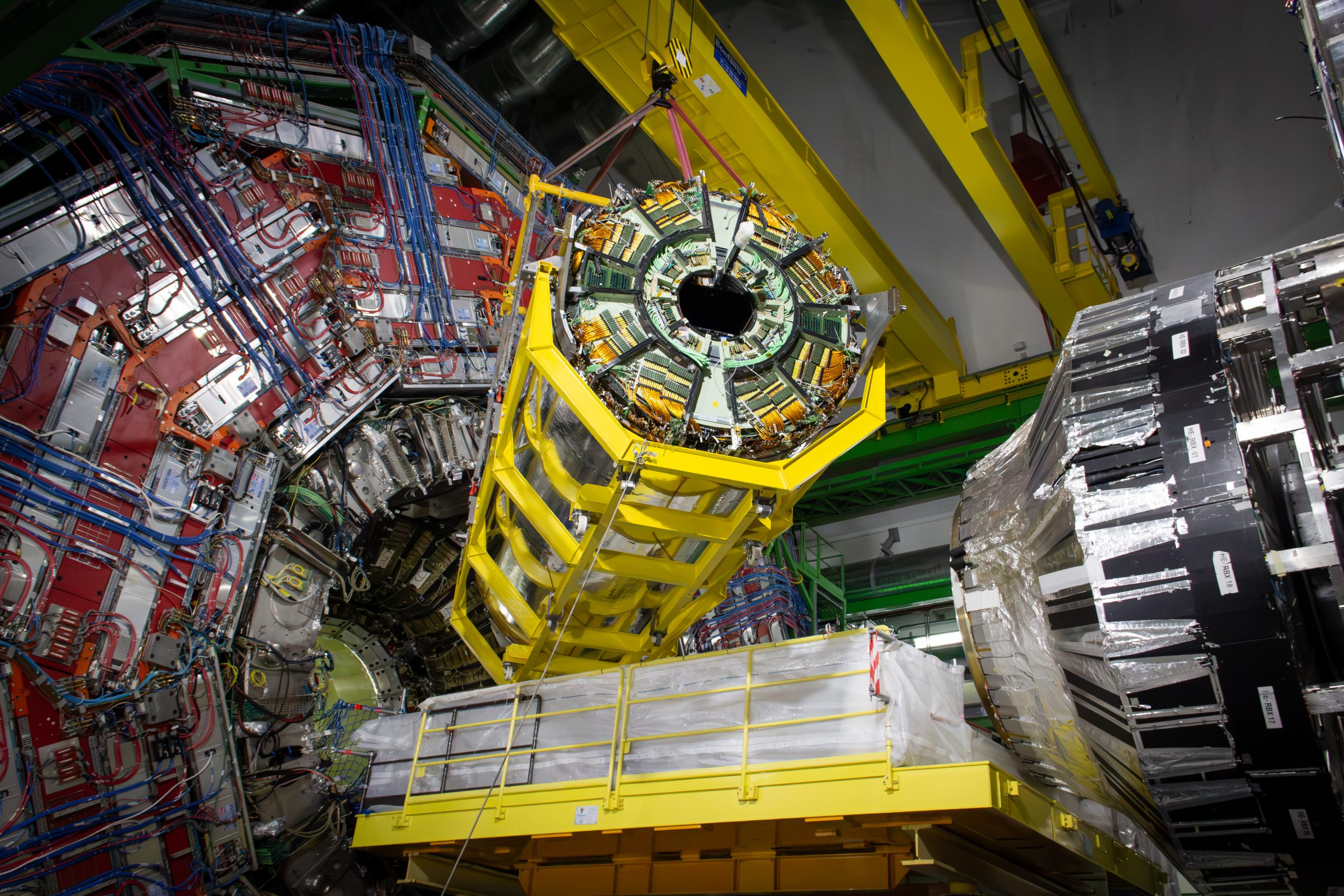
SND@LHC experiment set to push the neutrino frontier
Neutrinos – vanishingly light particles that scarcely interact with matter – remain deeply mysterious even 70 years after their discovery. These fundamental particles come in three flavours: electron, muon and tau. Experiments across the globe have worked to uncover the properties of these different flavours but the antimatter partner of the tau neutrino has still
-
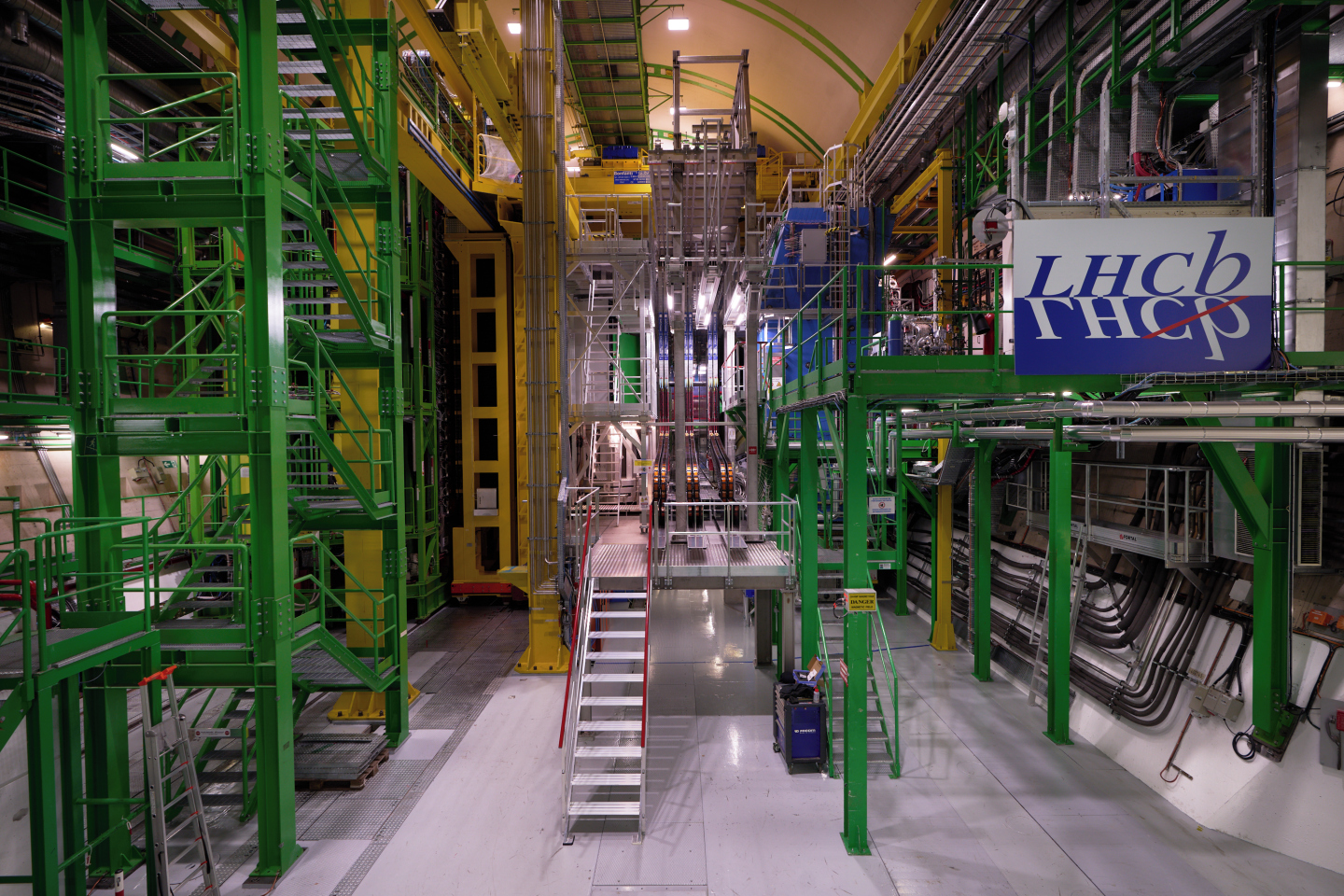
LHCb finds evidence of one-in-ten-billion particle decay
They say good things come to those who wait, and the LHCb Collaboration’s latest result marks a major milestone in a decades-long search. As announced in a seminar held at CERN today, the Collaboration has found evidence of a one-in-ten-billion decay of a beauty particle, becoming the first to do so using data from a single experiment.
-
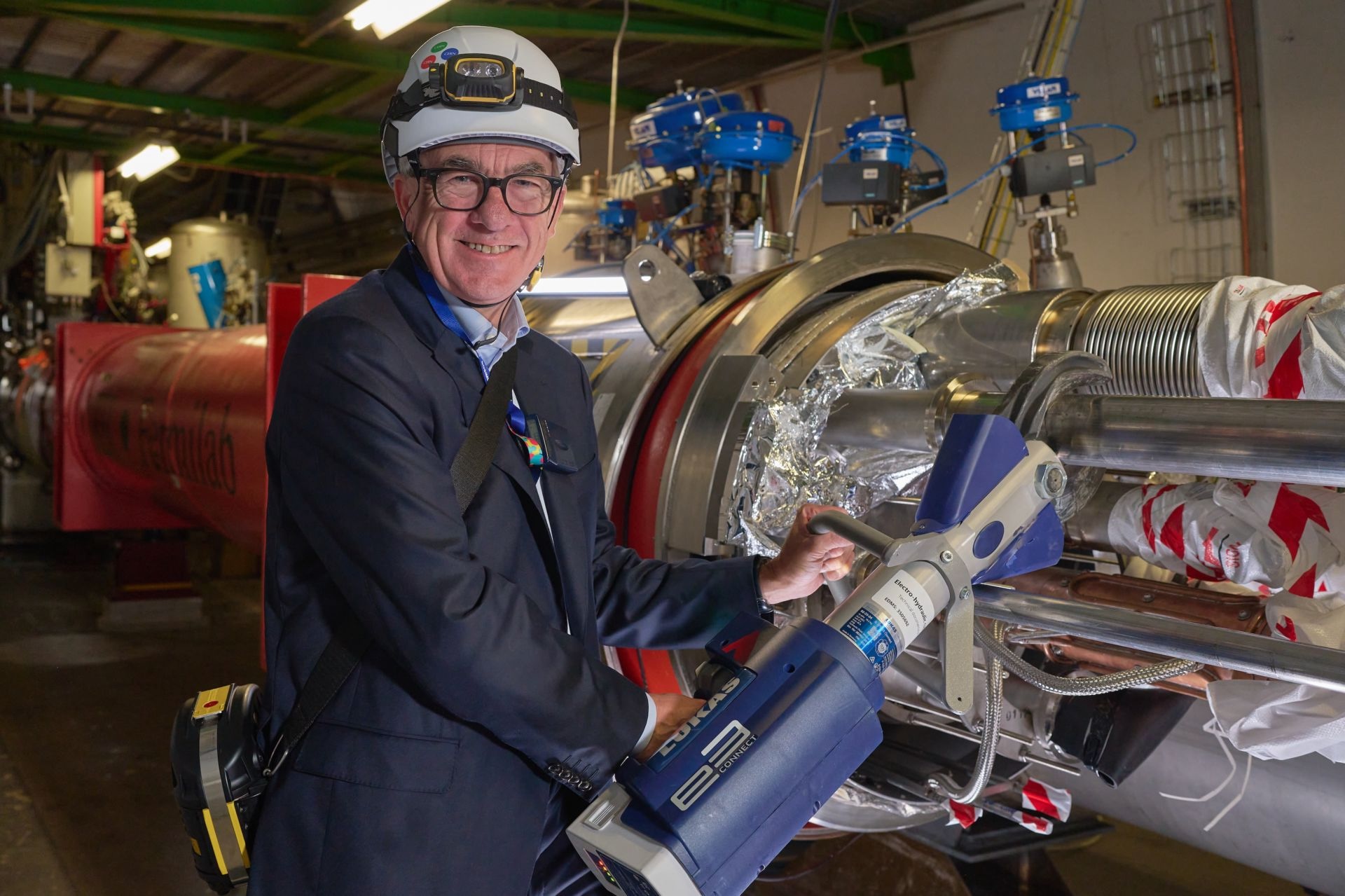
The disconnection of the LHC has begun
The 27 km circumference of the Large Hadron Collider (LHC) contains thousands of magnets of different types – dipoles, quadrupoles, sextupoles, octupoles, decapoles, etc. – which each play a very specific role. Among them are the inner triplets: sets of three quadrupoles (hence the name) located on either side of the four main LHC experiments
-

ALICE honours its 2026 PhD Thesis Award winners
On 22 July 2026, the ALICE Collaboration honoured the winners of its PhD Thesis Award during a special ceremony held as part of its meeting at CERN. The ALICE PhD Thesis Award is dedicated to the memory of Karel Šafařík (1953–2024). Since 2008, ALICE has recognised the most outstanding PhD theses based on the excellence of
-
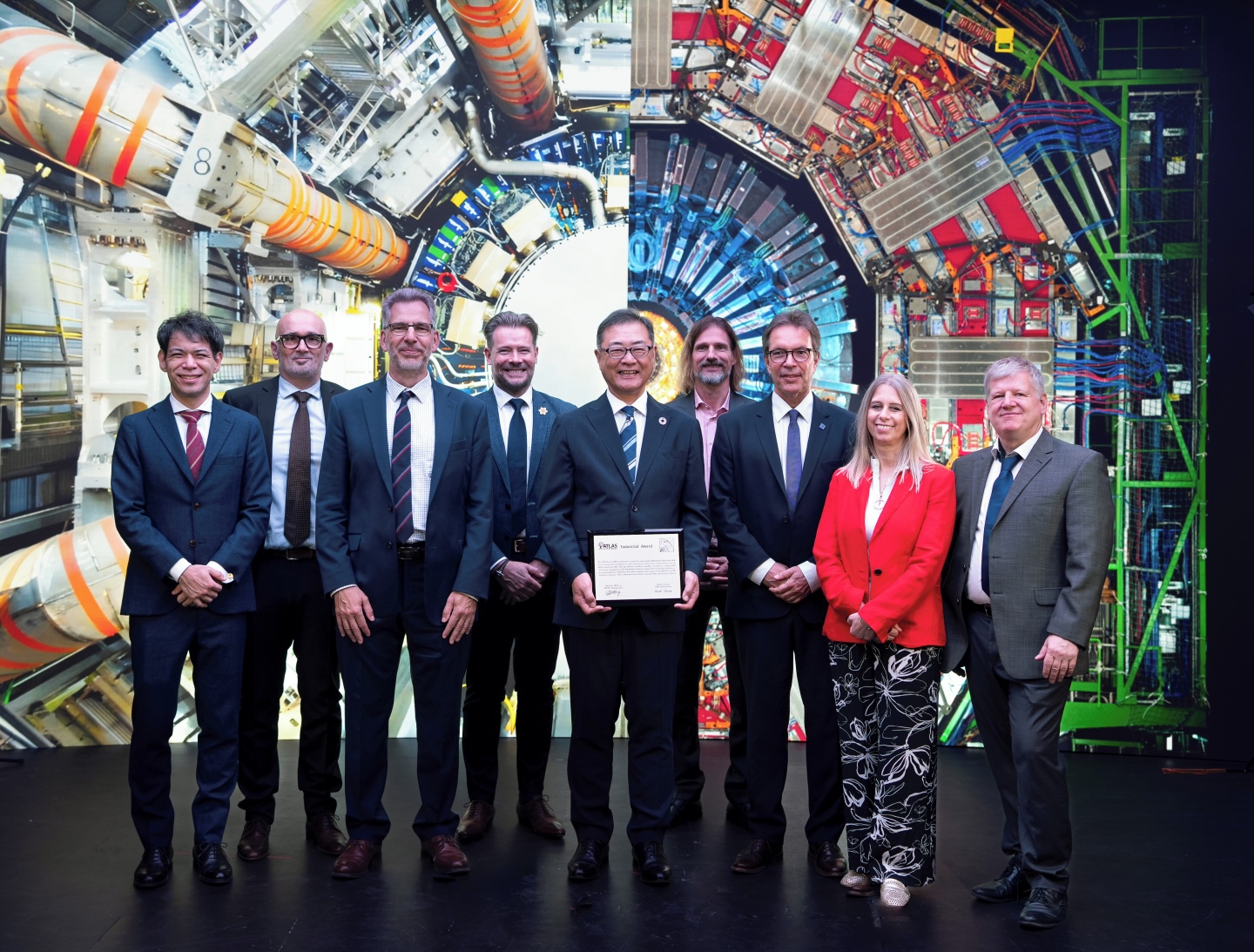
ATLAS and CMS recognise longstanding industrial partner Hamamatsu Photonics K.K.
With this award, the ATLAS and CMS Collaborations recognise the crucial role Hamamatsu Photonics K.K. has played in the development and production of advanced technologies, as well as the ongoing, deeply rooted partnership that has been established with both experiments over many years. Through this close collaboration, Hamamatsu Photonics has made exceptional contributions to the
-
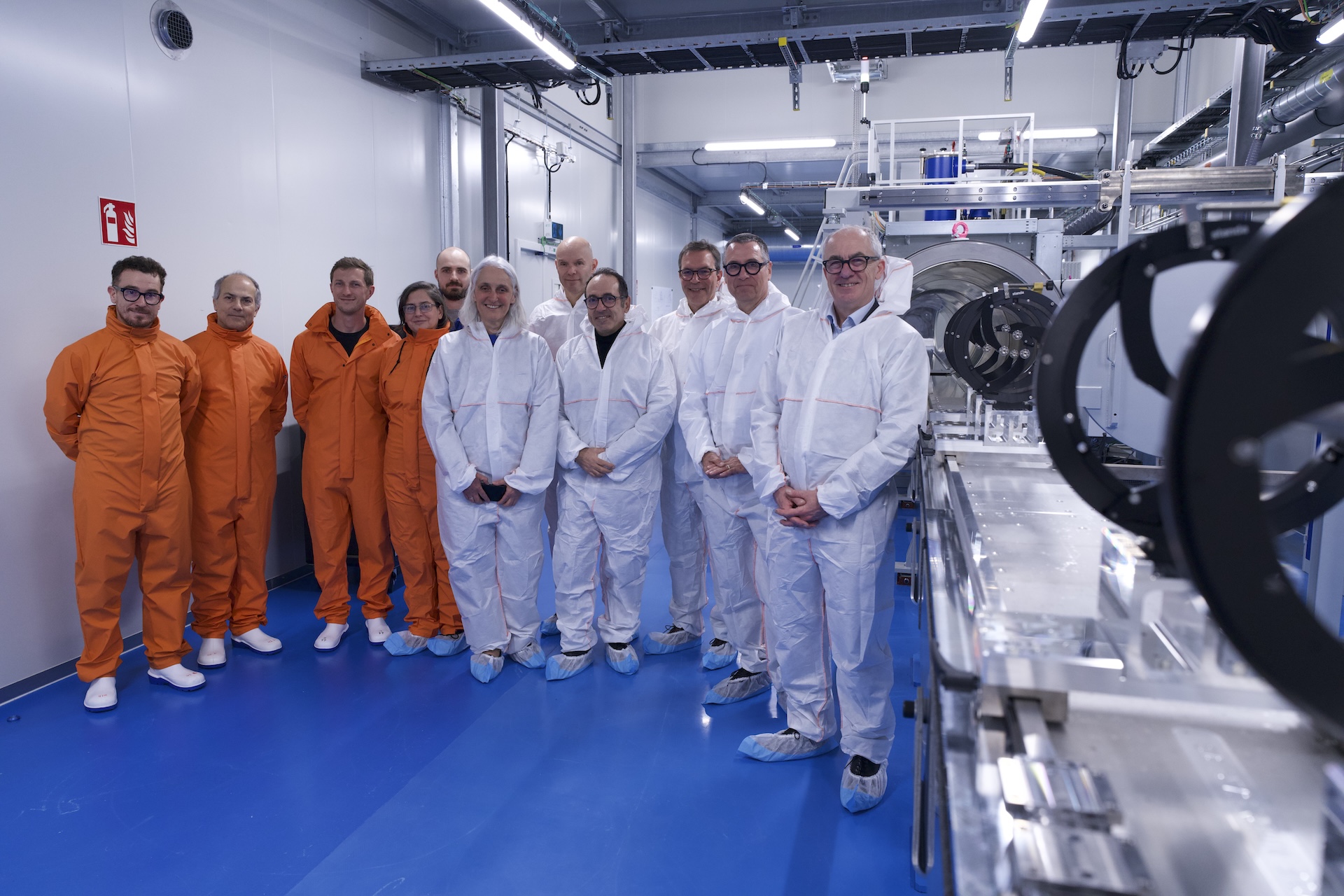
CERN begins beryllium beam-pipe production
Supported by CERN and the LHC experiment collaborations, the workshop will construct essential components for HiLumi LHC and future particle physics experiments
-
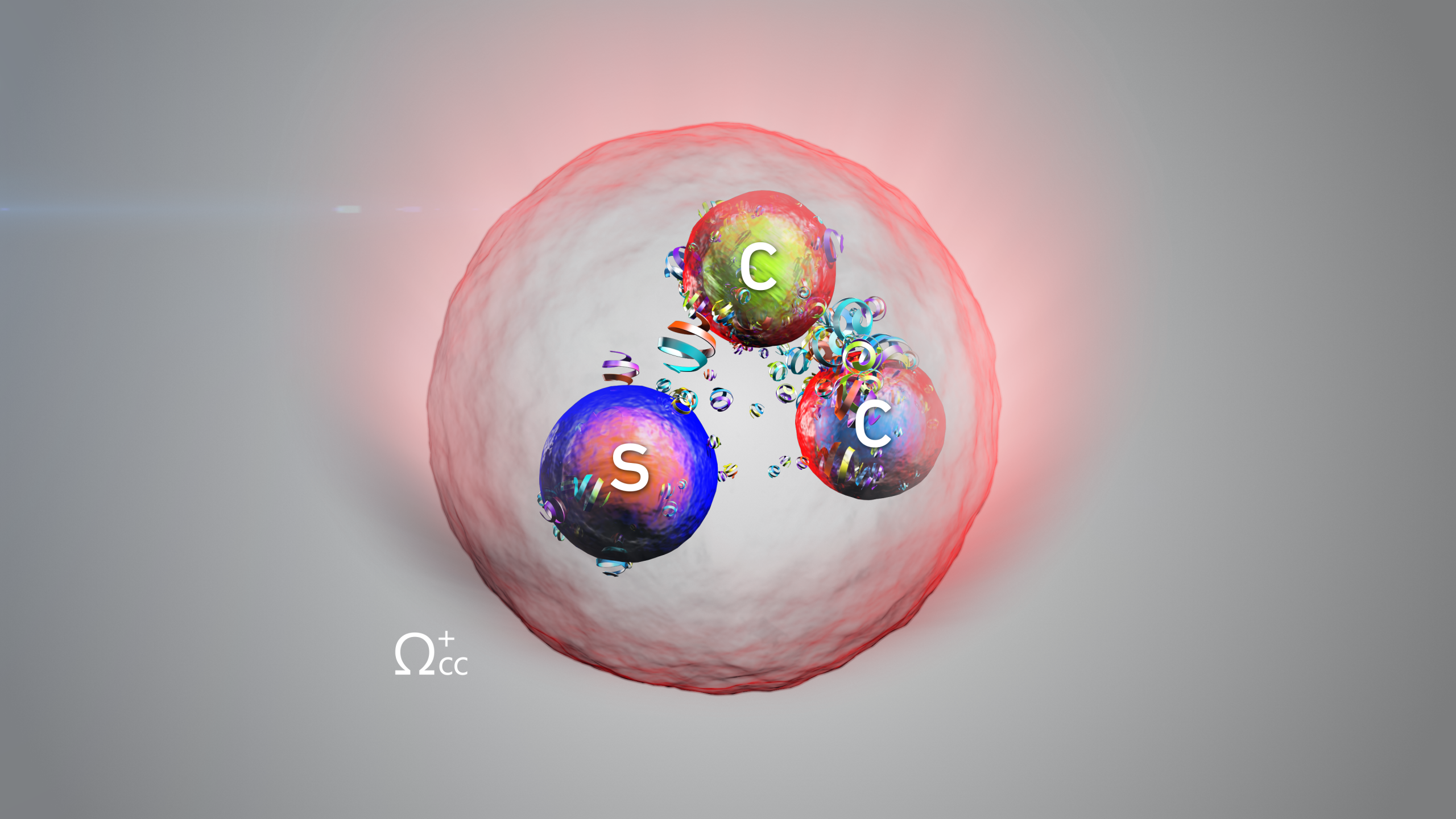
LHCb discovers the final missing member of a doubly charmed particle family
The LHCb Collaboration has found a new particle consisting of one strange quark and two charm quarks. With this finding, the Collaboration has discovered the final member of a family of doubly charmed baryons – particles made up of two charm quarks and one other quark – and closes a chapter of a story that
-

LHC season finale, up next… HiLumi
Join scientists in the CERN Control Centre as the Large Hadron Collider (LHC) delivers its last collisions to its experiments before it is transformed into a high luminosity machine. Host Davide De Biasio will guide you through the journey of the world’s most powerful particle collider through conversations with the Head of LHC Operations, the
-
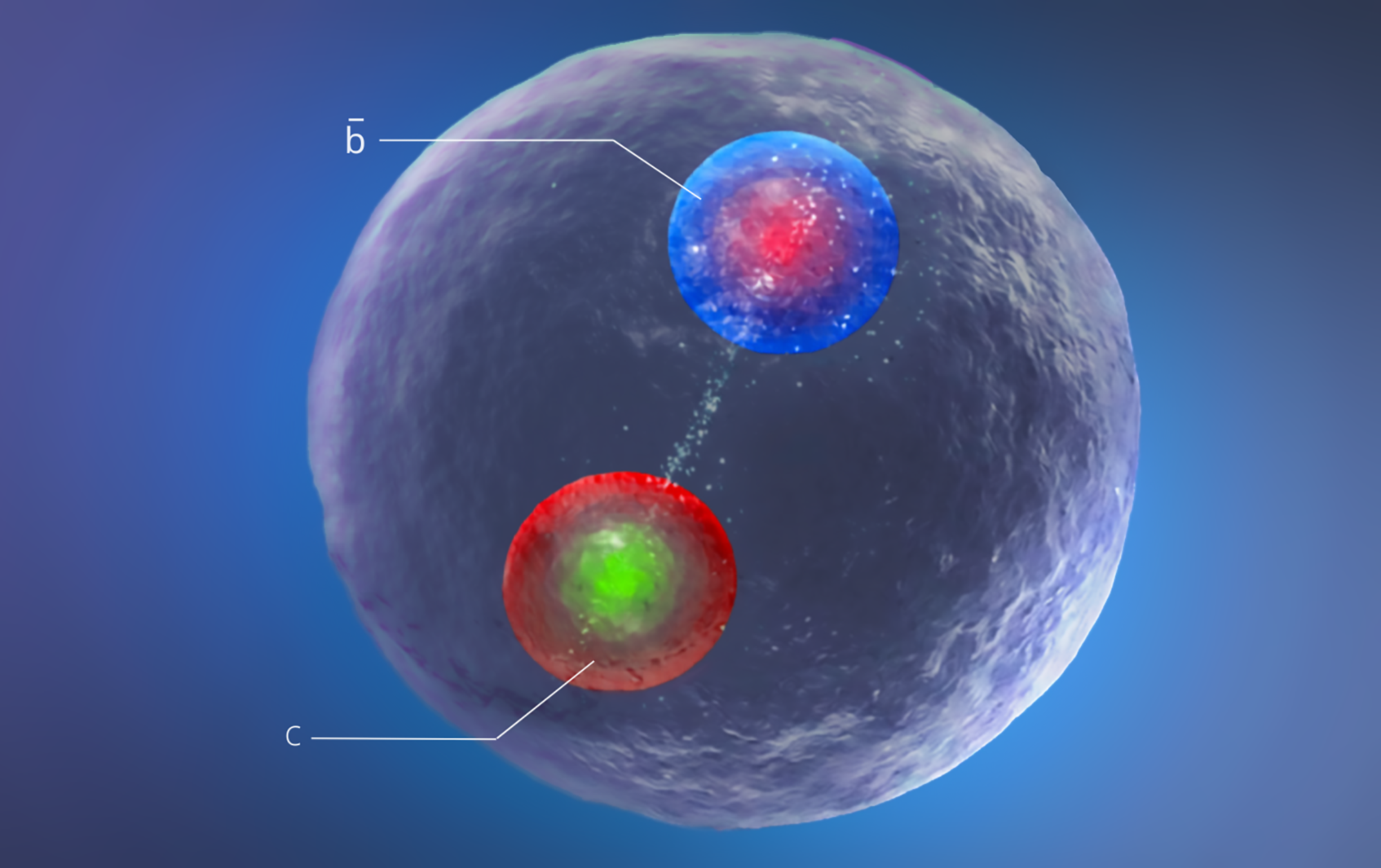
ATLAS observes new composite particle
Physicists from the ATLAS Collaboration reported the first observation of a new particle.
-
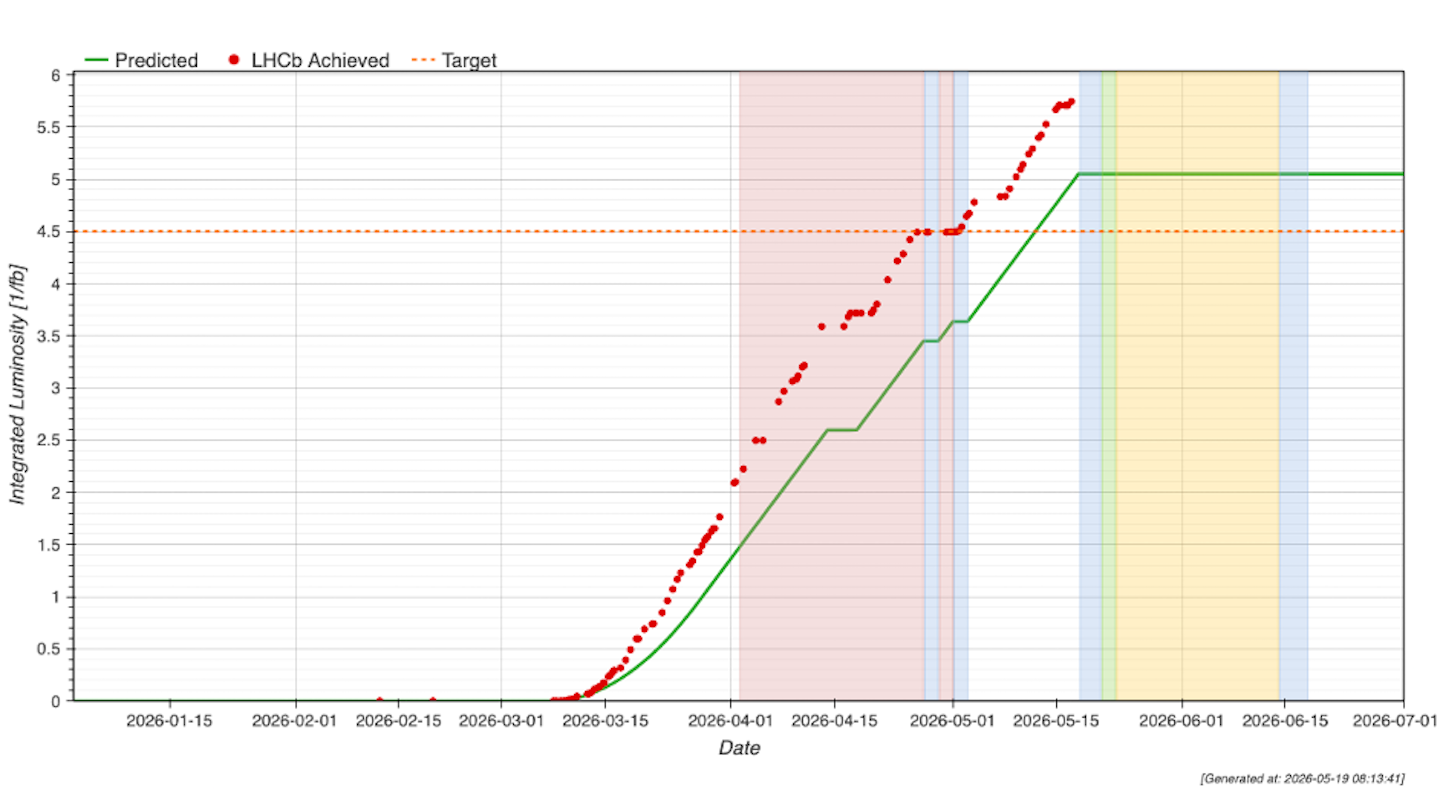
Accelerator Report: From protons to ions – the LHC and its injectors prepare for the Run 3 finale
At 6 a.m. on 19 May, the LHC Run 3 proton physics programme officially came to an end. Thanks to the excellent performance and availability of both the LHC and its injector chain, this year’s integrated luminosity surpassed all expectations, with all four main LHC experiments recording values well above the original projections (fig. 1).